NO/FOMO

Independent AI signal, once a day

The AI briefing worth opening.

ISSUE DATE2026-10-03DEFAULT EDITION
This issue
—
All time
—

AI Blog

3 stories
01

Anthropic commits $100M to training 10,000 engineers

Anthropic commits $100M to training 10,000 engineers

Anthropic announced Claude Frontier Academy with a $100 million commitment to train 10,000 Frontier Deployed Engineers by the end of 2027. The company says the program aims to train participants to the standard of its own engineers. The announcement puts implementation capacity alongside model capability as a strategic priority: organizations need people who can turn AI systems into working deployments. The target is a future training commitment, rather than a count of engineers already trained.

02

Chatham reports faster trade validation with OpenAI tools

An OpenAI customer story describes Chatham Financial using Codex and GPT-5.6 to build technology and redesign capital-markets workflows. The reported example cuts trade validation from 30 minutes to under four minutes. That makes the story a concrete deployment case rather than a general claim about model capability. The figures are presented in a vendor customer account, so they should be understood in that specific workflow context rather than assumed to transfer to other financial organizations.

03

a16z examines who captures value when AI handles shopping

Andreessen Horowitz published an analysis framed around who gets paid when AI does the shopping, placing assistants and marketplaces at the center of the question. The topic matters as agents become another interface between buyers and merchants: controlling recommendations and transactions can change where commercial value accumulates. The available article description establishes the subject, not a settled answer or measured market shift. Readers should approach it as an investment-oriented discussion of a developing business model.

Hacker News

2 stories
01

Aleph Alpha releases Kolibri with open weights and million-token context

Aleph Alpha releases Kolibri with open weights and million-token context

Aleph Alpha released Kolibri, an English and German mixture-of-experts model with roughly 78 billion total parameters and 3 billion active parameters. Its official announcement offers full weights under Apache 2.0 and context support up to one million tokens. The company targets regulated enterprise and government work, emphasizing deployment control, document grounding, and configurable reasoning effort. Its reported benchmark results are vendor evaluations; teams should test the model on their own language, latency, and accuracy requirements.

02

Offrun offers one workspace for multiple coding agents

Offrun offers one workspace for multiple coding agents

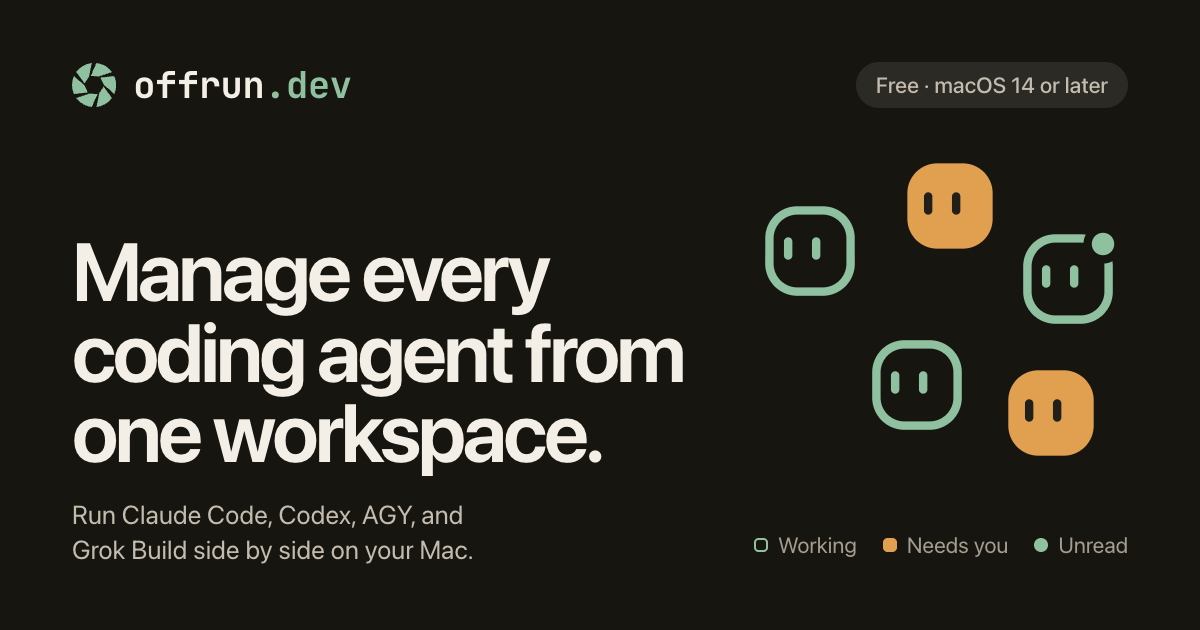
Offrun appeared on Hacker News as a workspace for running several coding agents side by side, including Claude Code, Codex, AGY, and Grok Build. Its description emphasizes visibility into which agent is working, which needs attention, and remaining account capacity. The project addresses the coordination problem that emerges when developers use multiple assistants at once. The listing describes intended functionality, without independent evidence that this arrangement improves code quality or reduces total development time.

Twitter

11 stories
01

Sam Altman calls surrendering human judgment to AI a safety issue

Sam Altman said he is uncomfortable with efforts to give AI models religious authority or encourage people to surrender human judgment to them, calling this a real safety issue. The statement drew substantial engagement and places user dependence within the public debate over AI safety. It is a statement of concern, without a new product policy or technical mitigation attached. The practical question it raises is how assistants preserve independent human decision making as their influence grows.

02

Altman reaffirms OpenAI’s Cerebras partnership around speed

Sam Altman responded to speculation about OpenAI’s relationship with Cerebras by describing the company as a close partner with a deep engagement focused on speed. The statement signals that faster AI delivery remains an active area of collaboration. It does not disclose new contract terms, hardware volumes, performance measurements, or a deployment timetable. Readers should distinguish the confirmed partnership emphasis from any broader claims about what infrastructure OpenAI will buy or replace.

03

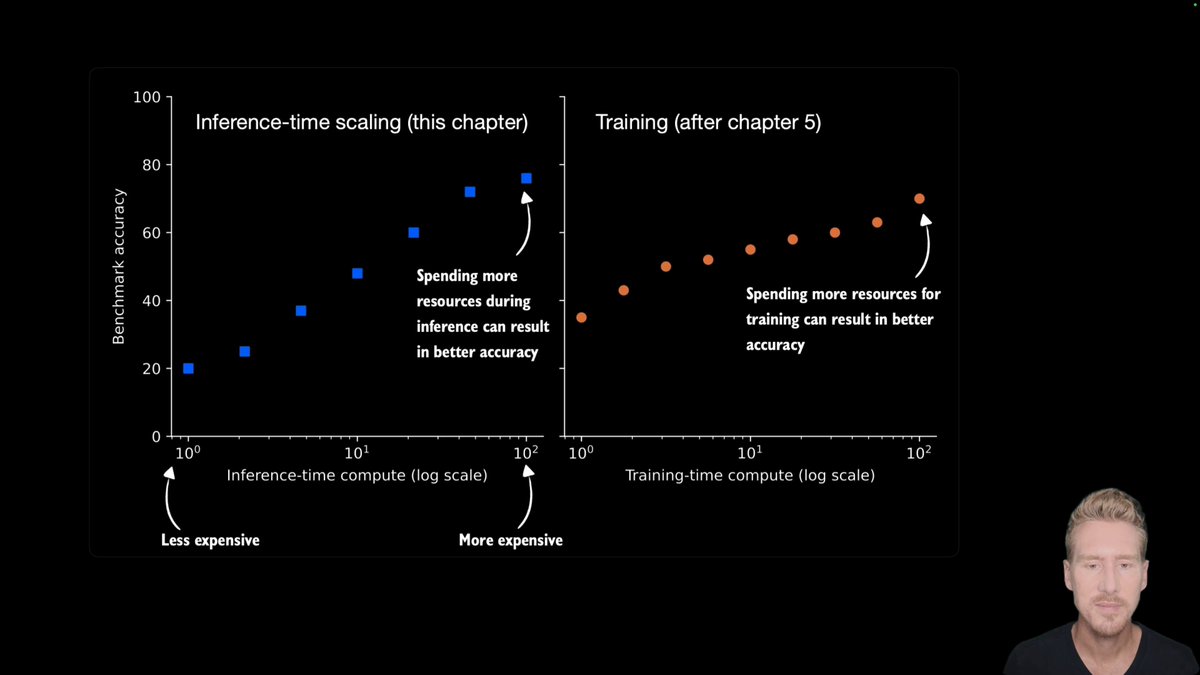
Sebastian Raschka teaches RLVR and GRPO from scratch

Sebastian Raschka teaches RLVR and GRPO from scratch

Sebastian Raschka released the sixth installment of his reasoning-from-scratch material, introducing Reinforcement Learning with Verifiable Rewards and Group Relative Policy Optimization. The post describes both an introduction and an implementation, with sections on what distinguishes a reasoning model and how reasoning traces fit into the picture. This is an educational resource for understanding post-training methods, rather than a new model release or benchmark result. It offers a concrete starting point for engineers studying reinforcement learning for reasoning.

04

Pika redesigns its video creation experience around creator choice

Pika redesigns its video creation experience around creator choice

Pika says it has redesigned its video creation experience to let creators choose how they want to generate content. The company highlights a Video Studio for people who want to focus on making videos without choosing the underlying technology. The announcement reflects a product emphasis on workflow and accessibility around generative video. It does not provide comparative quality measurements or pricing details, so the value of the redesign will depend on how well it supports actual creative tasks.

05

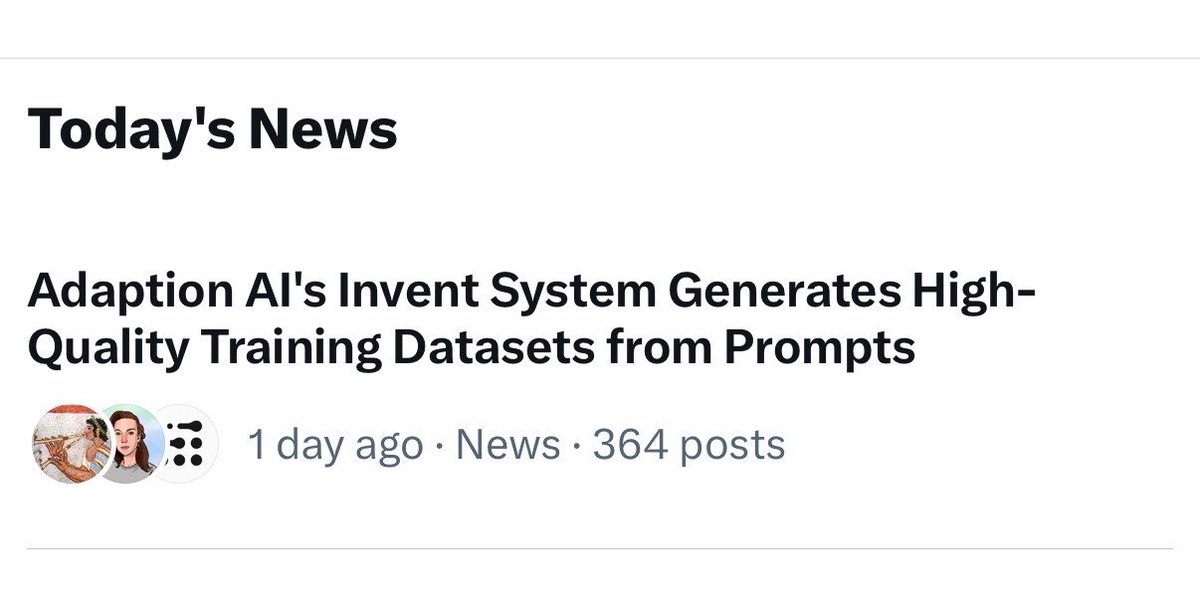
Adaption makes Invent available through its API

Adaption makes Invent available through its API

Sara Hooker announced that Invent is available through the Adaption API with only a few lines of code. The update gives developers an integration route for the company’s dataset-generation offering, moving the discussion from demonstrations toward use inside development workflows. The short announcement does not supply pricing, benchmark methodology, or production reliability figures. Teams considering it should evaluate the generated data against their own coverage and quality requirements before relying on it for post-training.

06

François Chollet frames reasoning models as a shift toward induction

François Chollet argues that the key difference between earlier base language models and modern reasoning models is a shift from intuiting an answer to intuiting a program or instructions that produce the answer. He explicitly separates this account from symbolic tool use alone. The post offers a conceptual framework for interpreting reasoning progress, not a controlled experimental result. It is useful for discussions about whether systems are learning reusable solution procedures or primarily producing plausible responses.

07

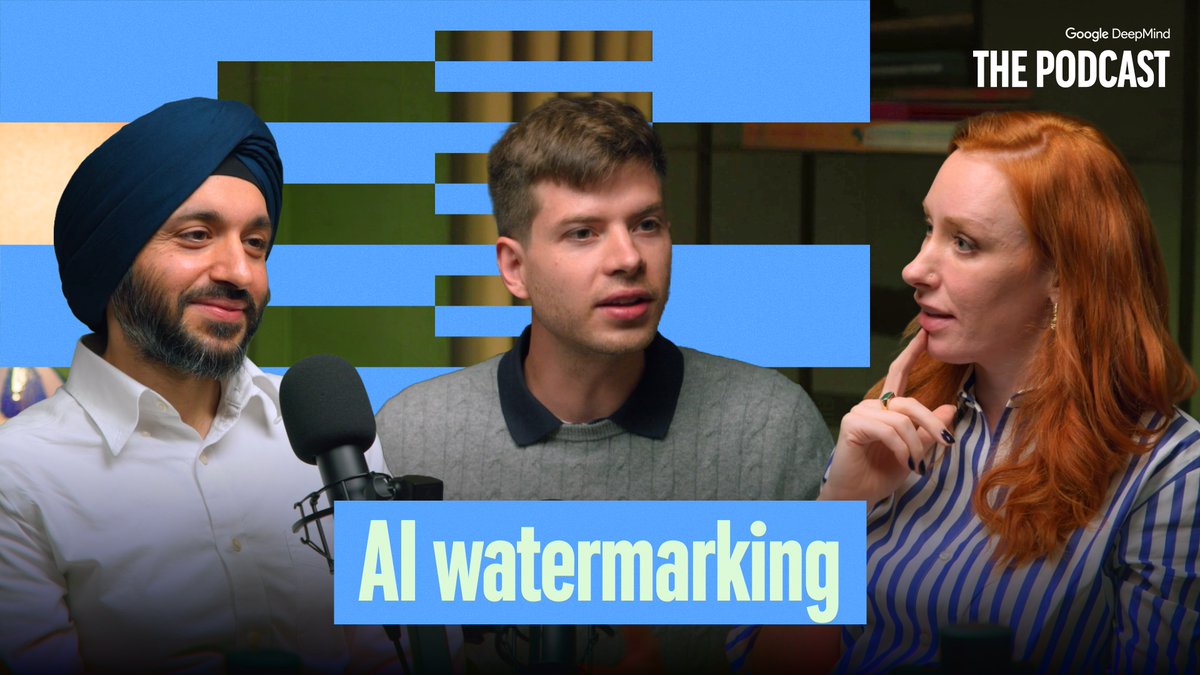
DeepMind discusses provenance for synthetic media and biological designs

DeepMind discusses provenance for synthetic media and biological designs

Google DeepMind’s podcast examines how provenance and imperceptible watermarking can help distinguish AI-generated material from human or natural origins. The episode connects digital media with biological designs, extending the discussion beyond familiar image and video labels. The post announces a discussion rather than presenting a complete validation study. Its relevance is the widening scope of authenticity tools as generative systems produce outputs in domains where origin and traceability can matter as much as visual quality.

08

Runway previews Continuum for real-time video interfaces

Runway previews Continuum for real-time video interfaces

Runway co-founder Cristóbal Valenzuela shared a preview of Continuum, describing it as a research paradigm for building an operating system around real-time video. The concept places generated visual interaction at the center of the interface rather than limiting generation to a finished clip. The post is a preview and supplies no general availability date or performance specification. It is a signal of research direction, with responsiveness and user control remaining important questions for practical applications.

09

Runway introduces its open-weight world-action model Praxis-1

Runway introduces its open-weight world-action model Praxis-1

Runway highlighted Praxis-1 at its AI Summit as an open-weight world-action model, following a presentation by its head of robotics on the company’s robotics approach. The announcement invites people to learn more and request early access. It links Runway’s work in generative environments with systems that act in the physical world. The post does not establish broad availability, licensing details, or independently measured robotics performance, so those deployment questions remain separate from the announcement.

10

Runway announces an autonomous performance-marketing engine

Runway announces an autonomous performance-marketing engine

Runway introduced Runway Ads at its AI Summit, describing it as an autonomous engine for performance marketing and opening requests for early access. The announcement shows how generative tools are being packaged around a business workflow with measurable commercial goals. It does not report conversion improvements, customer outcomes, or operating costs. Marketers evaluating the offering will need to assess how creative generation, campaign decisions, and human review fit together before attributing performance gains to the system.

11

DeepMind researcher highlights Gemini 4 Argon progress

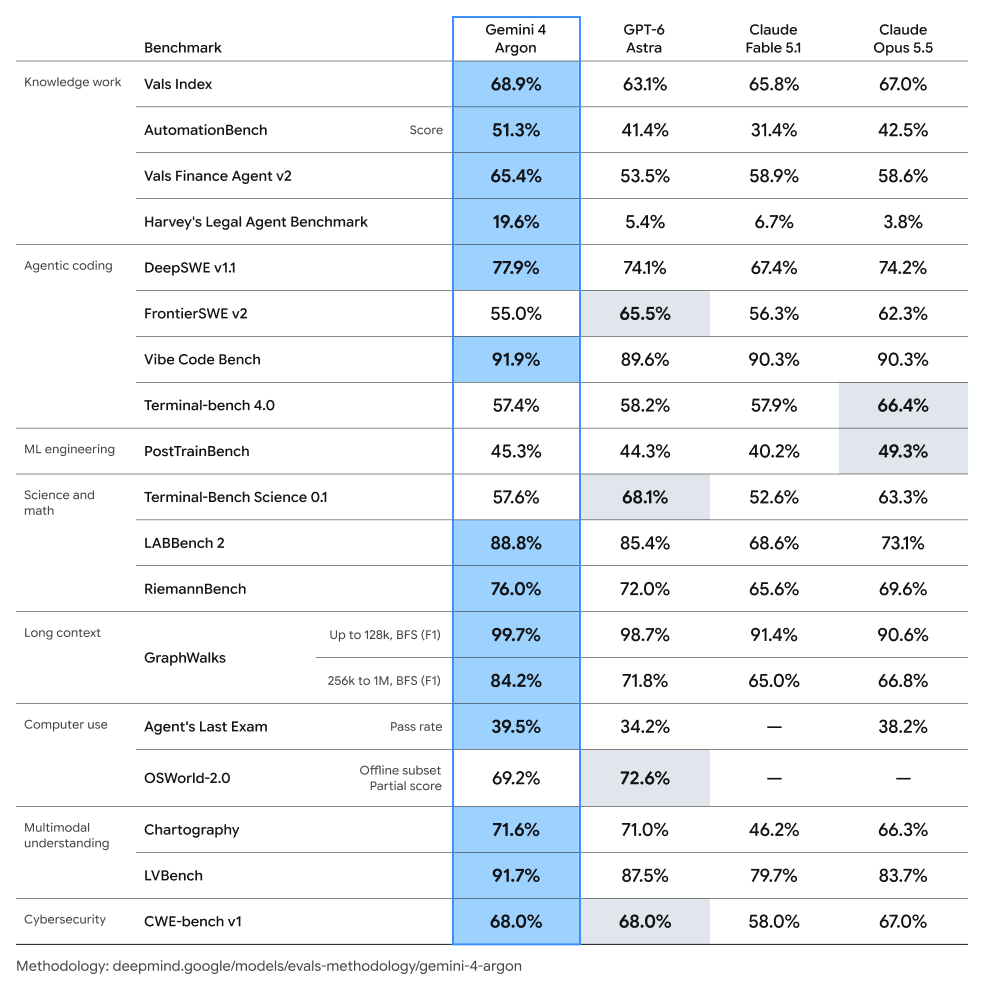
DeepMind researcher highlights Gemini 4 Argon progress

Google DeepMind researcher posting as @vivnat described Gemini 4 Argon as a substantial step across capabilities and safety, expressing particular interest in its potential for science and medicine. The statement adds a research-leadership perspective to the discussion around the model. It is an enthusiastic qualitative assessment, without supporting benchmark tables or deployment conditions in the post. Readers should treat the scientific and medical implications as anticipated possibilities rather than demonstrated clinical or research outcomes.

GitHub

2 stories
01

Ponytail promotes restraint in AI-generated code

Ponytail promotes restraint in AI-generated code

Ponytail is a JavaScript repository that frames its goal as making an AI agent behave like an experienced developer who avoids unnecessary work. Its stated principle is that the best code can be code that never needs to be written. The project represents interest in steering agents toward smaller, simpler changes. The repository description alone does not establish how consistently it achieves that behavior, so adoption should be judged against real tasks and review outcomes.

02

ECC combines skills, memory, and security for coding-agent workflows

ECC combines skills, memory, and security for coding-agent workflows

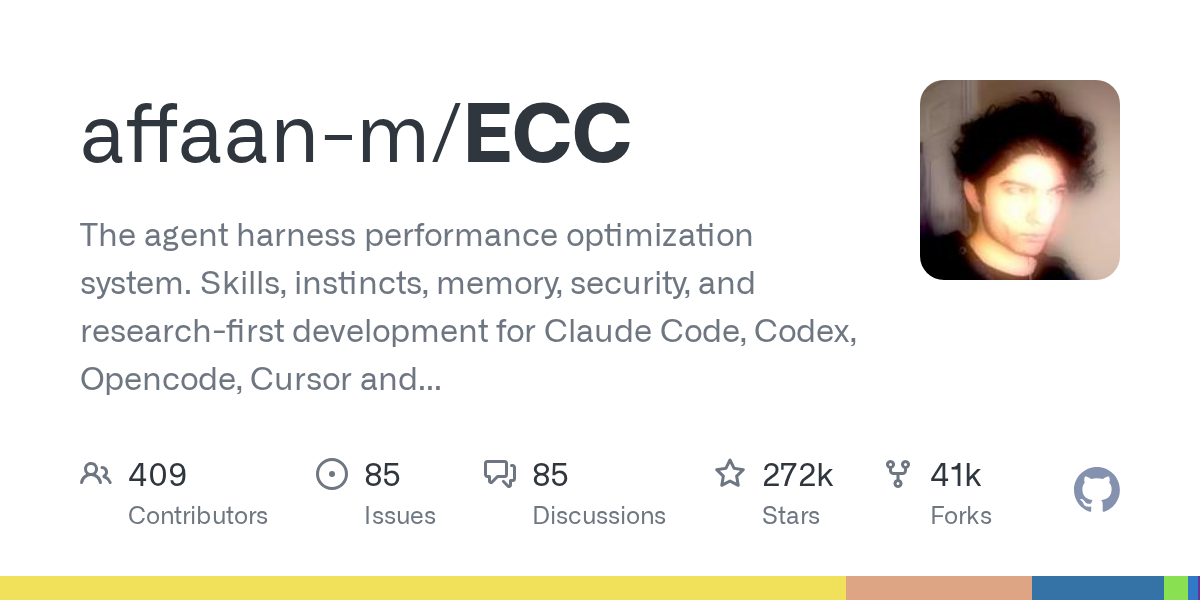
ECC describes itself as a performance-optimization system for agent harnesses, covering skills, memory, security, and research-first development. Its listed targets include Claude Code, Codex, Opencode, and Cursor. The repository reflects a growing focus on the surrounding execution workflow as a contributor to agent usefulness. Its description is not an independent performance evaluation; teams should inspect the instructions and integration behavior and test whether the system improves outcomes for their own repositories.