NO/FOMO

Independent AI signal, once a day

The AI briefing worth opening.

ISSUE DATE2026-10-05DEFAULT EDITION
This issue
—
All time
—

AI Blog

2 stories
01

OpenAI outlines its approach to EU text provenance

OpenAI has published its approach to text watermarking under European Union rules, covering where watermarks apply, how detection works, and why access begins with researchers. The announcement puts text provenance on the practical deployment agenda for AI products. Its central issues are the scope of marking and access to detection, rather than a blanket claim that every generated passage can be identified. Teams distributing generated text should examine those boundaries when assessing compliance and provenance workflows.


02

ChatGPT adds a visual advertising format and measurement tools

OpenAI is introducing a new visual advertising format in ChatGPT alongside expanded measurement tools, attribution partnerships, and brand suitability capabilities for advertisers. The announcement signals further development of the commercial infrastructure around conversational AI. For product teams and marketers, the relevant change spans both the presentation of advertisements and the systems used to assess their performance. The collected announcement does not specify pricing or quantified advertising results, so those should not be inferred from the launch.

Hacker News

3 stories
01

RobCo reportedly reaches a $1 billion valuation

RobCo reportedly reaches a $1 billion valuation

Tech Funding News reports that German robotics company RobCo has reached a one billion dollar valuation. The story drew substantial discussion on Hacker News, with 297 points and 279 comments at collection time, making it one of the strongest industry signals in this edition. The valuation milestone places industrial robotics alongside the broader AI investment conversation. The collected evidence supports the reported valuation, but does not establish financing terms, revenue, or deployment performance.

02

Voters turn to chatbots for ballot research

Voters turn to chatbots for ballot research

NPR reports that voters are using ChatGPT and other chatbots to research candidates, compare positions, and navigate down-ballot races ahead of the US midterms. The reporting also describes concerns that agreeable answers and opaque source selection can reinforce existing preferences without improving understanding. This is a consequential deployment of general-purpose assistants in civic information. Comparing multiple chatbot answers may feel reassuring, but the report notes that evidence for the effectiveness of that checking method remains limited.

03

Cloudflare launches a Web Search API beta for agents

Cloudflare launches a Web Search API beta for agents

Cloudflare has introduced a Web Search API beta that lets agents and applications retrieve live information through AI Gateway. The initial providers are Ceramic.ai, Exa, and Linkup, with requests appearing in gateway logs and billed at provider list prices without an additional markup. Cloudflare says all three support zero data retention for these requests. The API gives developers a common integration point for search, while leaving provider choice and retrieval quality as application-level decisions.

Twitter

7 stories
01

NYC hearing brings AI safety commitments under scrutiny

Gary Marcus reports testimony at a New York City AI hearing by a former Google DeepMind researcher, describing efforts to secure safety commitments and alleging that earlier commitments were weakened. The post is an account of testimony, not an independently established finding about the company. Its significance is the public examination of whether voluntary assurances survive competitive pressure. Readers should distinguish the witness account and Marcus’s interpretation from a formal regulatory conclusion or adjudicated fact.

02

AlphaProtein Novo preprint announced for enzyme design

A post by Pushmeet Kohli, reshared by Vidhya Natarajan, announces a preprint introducing AlphaProtein Novo for generative de novo enzyme design. The available post identifies the system and research direction but is truncated before technical details or results. It is a useful signal of generative AI expanding into functional biological design. No claims about experimental success rates, release availability, or comparative performance can be established from this short announcement alone.

03

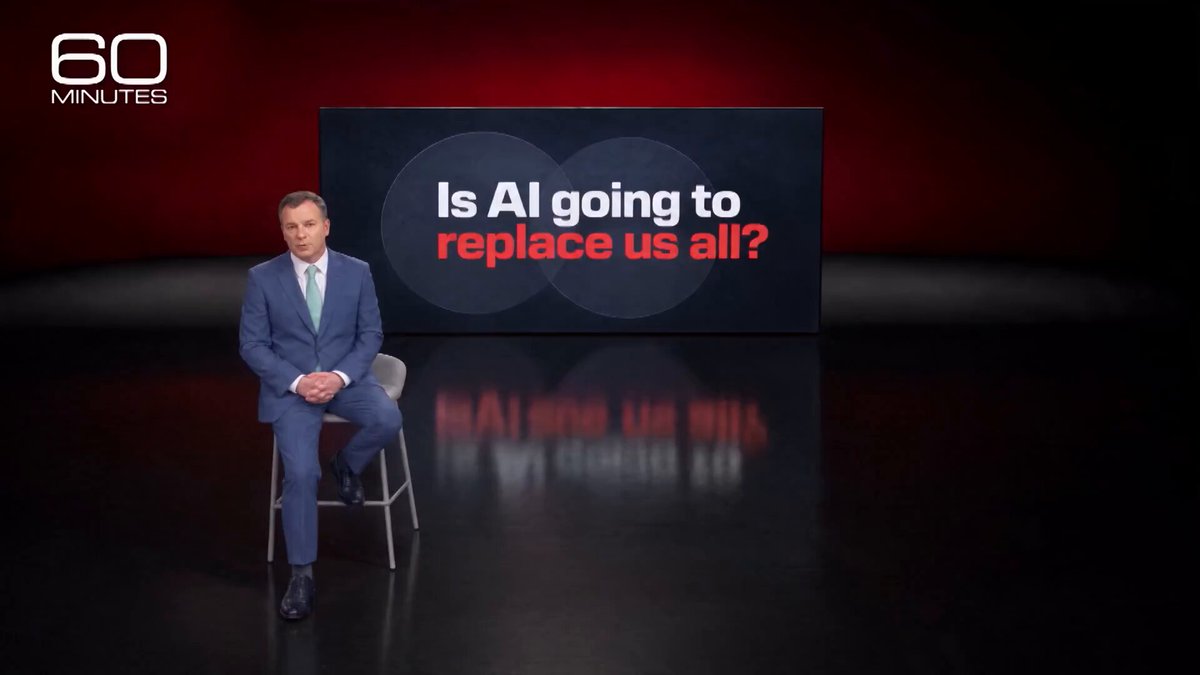
Runway shows how it made a 60 Minutes episode intro

Runway shows how it made a 60 Minutes episode intro

Runway cofounder Cristóbal Valenzuela has shared a behind-the-scenes look at the introduction created for a new 60 Minutes episode featuring Jon Wertheim. The post offers a concrete example of generative creative tooling entering a recognizable broadcast production workflow. Its value is the production case itself rather than an unreported model benchmark. The short announcement does not establish which model version was used, how much material was generated, or the level of human editing involved.

04

Schmidhuber joins Sakana AI as chief scientific advisor

Schmidhuber joins Sakana AI as chief scientific advisor

David Ha’s announcement of an October 26 Tokyo symposium states that Jürgen Schmidhuber recently joined Sakana AI as chief scientific advisor. The planned event centers on world models and real-world AI, with a keynote and questions session featuring Schmidhuber. The organizational appointment is the substantive news, beyond event registration. It connects Sakana’s research agenda with a researcher associated with recurrent learning and intrinsic motivation, without establishing any new model release or commercial deployment.

05

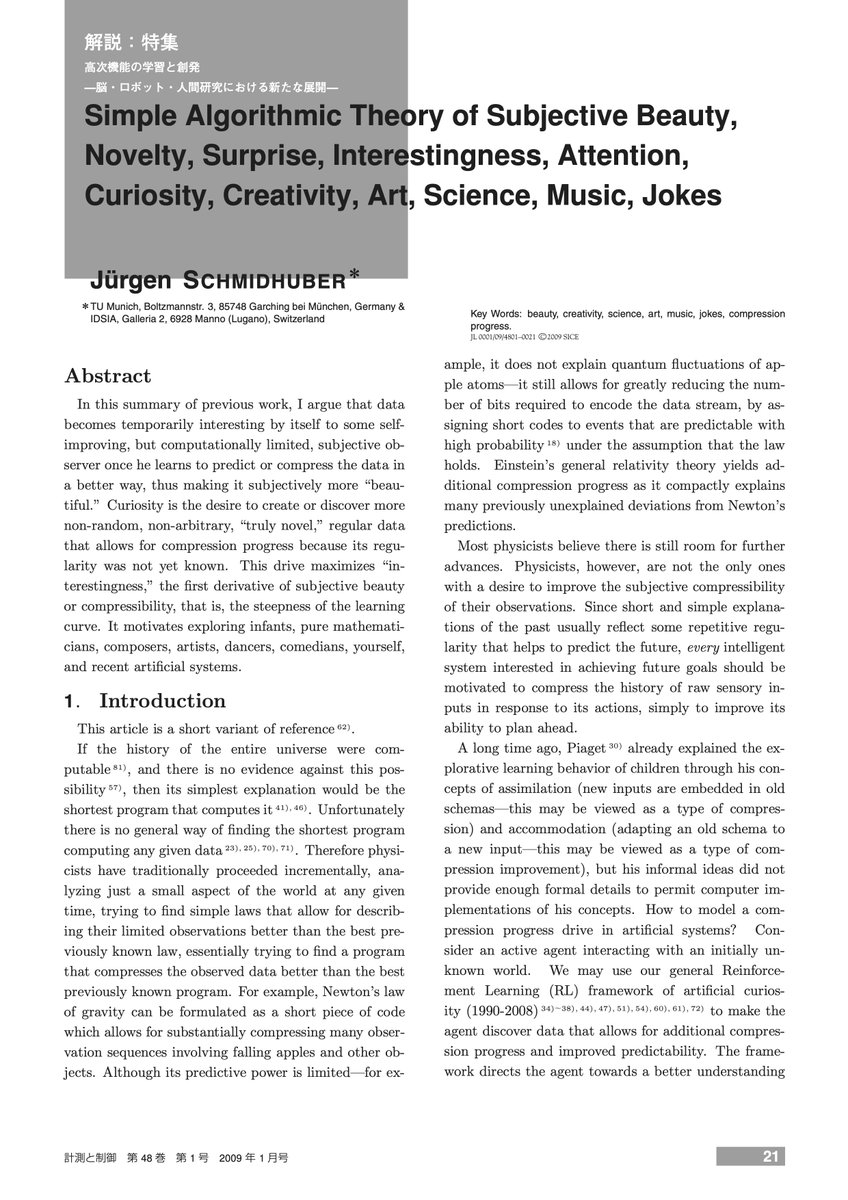
Renewed interest in Schmidhuber’s theory of creativity

Renewed interest in Schmidhuber’s theory of creativity

David Ha highlights Schmidhuber’s 2009 work on a formal theory of fun and creativity, connecting compression progress and intrinsic motivation with curiosity, art, science, and other activities. The post attracted more than a thousand likes and bookmarks, indicating renewed interest in an older research direction. This is a retrospective research pointer rather than a new paper. For agent researchers, the relevant idea is how progress in learning can itself supply motivation for exploration.

06

Chollet challenges claims about current AI sentience

François Chollet argues that treating current AI systems as sentient and mathematically trading off their supposed suffering against human welfare could have harmful consequences. His post drew more than two thousand likes and extensive discussion, making it a prominent contribution to the ongoing AI welfare debate. It is an explicitly normative argument, not experimental evidence resolving machine consciousness. The practical issue is how uncertain claims about model experience influence priorities, governance, and treatment of people.

07

Anandkumar contributes to UN brief on AI and climate modeling

Anima Anandkumar says she contributed to a United Nations scientific brief on AI and climate modeling, pointing to progress in AI weather models and FourCastNet as background. The announcement connects scientific machine learning with international discussion of climate tools. The available post is truncated and does not provide the brief’s recommendations or quantitative findings. Its news value is the contribution and policy-facing research connection, rather than proof of a particular improvement in long-term climate prediction.

GitHub

2 stories
01

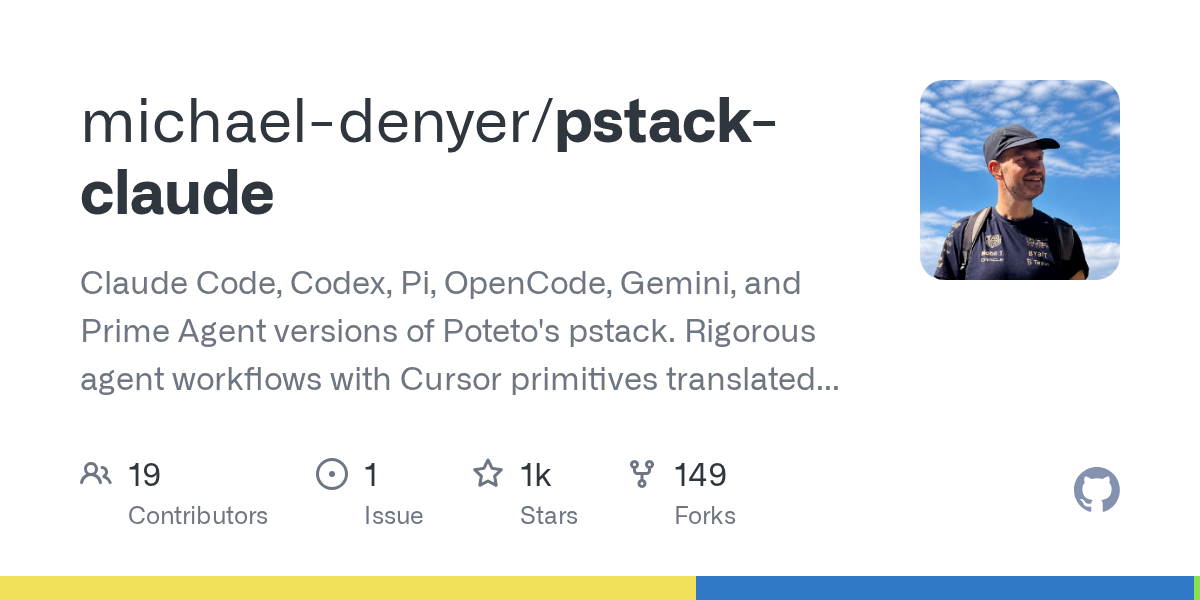
pstack-claude ports structured workflows across coding agents

pstack-claude ports structured workflows across coding agents

The pstack-claude repository adapts Poteto’s pstack workflows for Claude Code, Codex, Pi, OpenCode, Gemini, and Prime Agent. Its description emphasizes translating Cursor primitives into other agent harnesses, making workflow design the central contribution rather than a new base model. The project is relevant to teams trying to apply consistent development procedures across assistants. The collected repository metadata establishes its purpose and supported targets, but does not demonstrate comparative reliability or productivity gains.

02

claude-mem carries compressed context between agent sessions

claude-mem carries compressed context between agent sessions

claude-mem describes a persistent context layer that captures agent activity, compresses it with AI, and injects relevant material into later sessions. The repository lists support for multiple assistants, including Claude Code, Codex, Gemini, and OpenCode. It targets a recurring limitation of coding agents: useful project knowledge disappearing between interactions. The approach makes memory selection and compression part of the application architecture, while the repository description alone does not establish retrieval accuracy or measured task improvements.

HF HuggingFace

10 stories
01

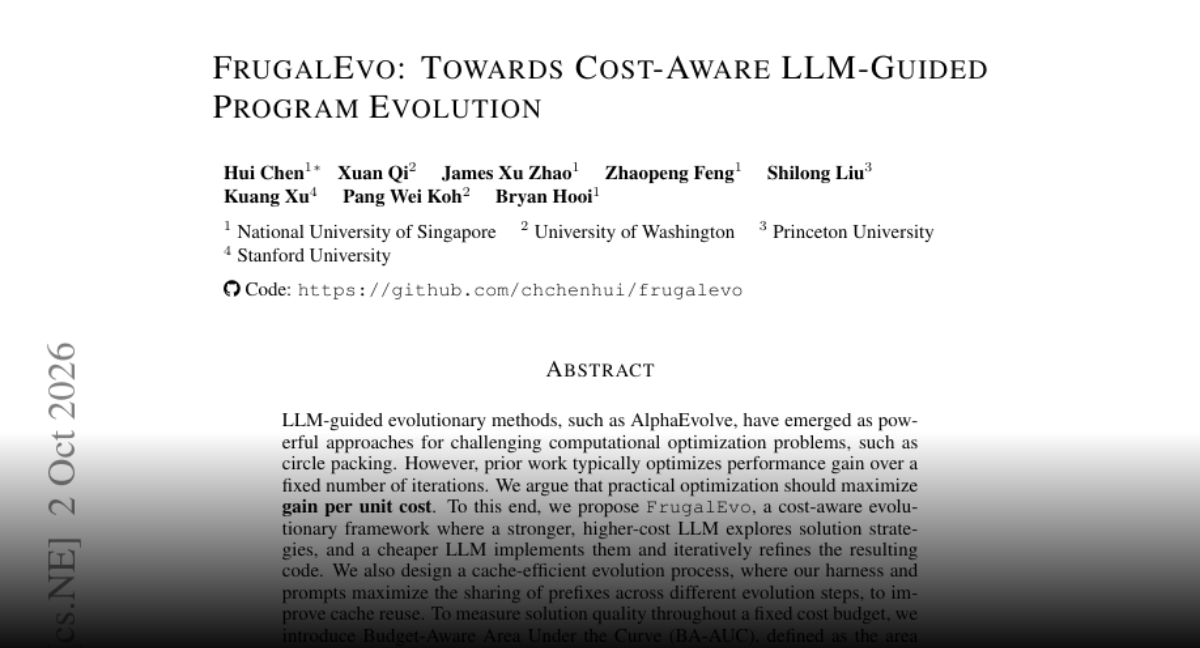
FrugalEvo optimizes program evolution for cost

FrugalEvo optimizes program evolution for cost

FrugalEvo splits program evolution between a stronger model that explores strategies and a cheaper model that implements and refines code. The researchers also design prompts and execution structure to improve prefix-cache reuse, evaluating progress against cumulative model cost rather than iteration count alone. They report better budget-aware performance on nine of ten mathematical and systems tasks. The work offers a concrete approach to making automated optimization useful under a fixed spending budget.

02

Skill2Real transfers executable robot skills from simulation

Skill2Real transfers executable robot skills from simulation

Skill2Real learns robot skills through a shared API and a proposer, verifier, and governor loop. Local manipulation skills are learned first, then composed into task-level behavior, with the resulting memories transferred to real robots without task-policy fine-tuning. The researchers report 78.75 percent mean completion across four real-world tasks for one transferred configuration. The central contribution is a hierarchy of executable skills whose interface survives differences between simulation and physical execution, rather than a claim of universal robot generalization.

03

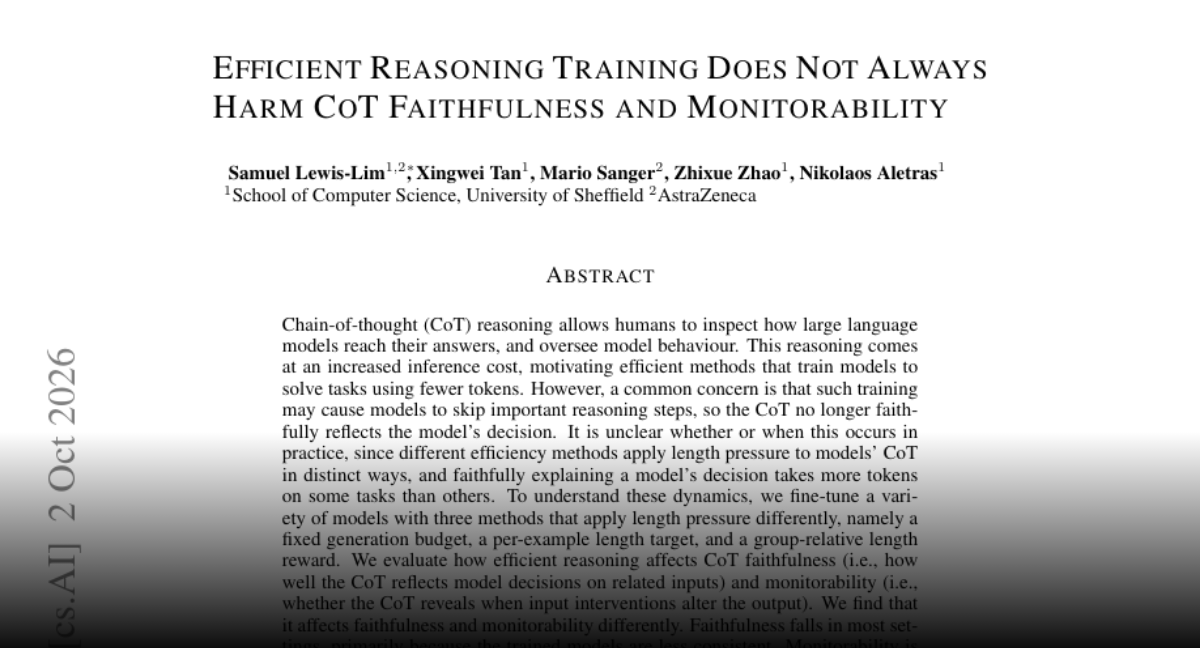
Shorter reasoning affects faithfulness and monitoring differently

Shorter reasoning affects faithfulness and monitoring differently

This study tests three training methods that pressure language models to reason with fewer tokens, then separately evaluates explanation faithfulness and monitorability. The researchers find that faithfulness declines in most settings, largely because model behavior becomes less consistent, while acknowledging interventions that change an answer remains more robust. The result cautions against treating shorter reasoning as a single safety outcome. Evaluation needs to distinguish whether explanations track decisions from whether they reveal outside influences.

04

Agents favor sources even when alternatives fit better

Agents favor sources even when alternatives fit better

A study of twelve agent models across three search domains finds systematic preferences for particular sources. In a controlled comparison, an item meeting one fewer requirement was selected about two-thirds of the time when it came from a preferred source, while the reverse pairing was rarely chosen. Hiding source identity or supplying missing information reduced the effect. The findings matter for shopping, travel, and research assistants whose recommendations can reflect source reputation shortcuts rather than users’ stated requirements.

05

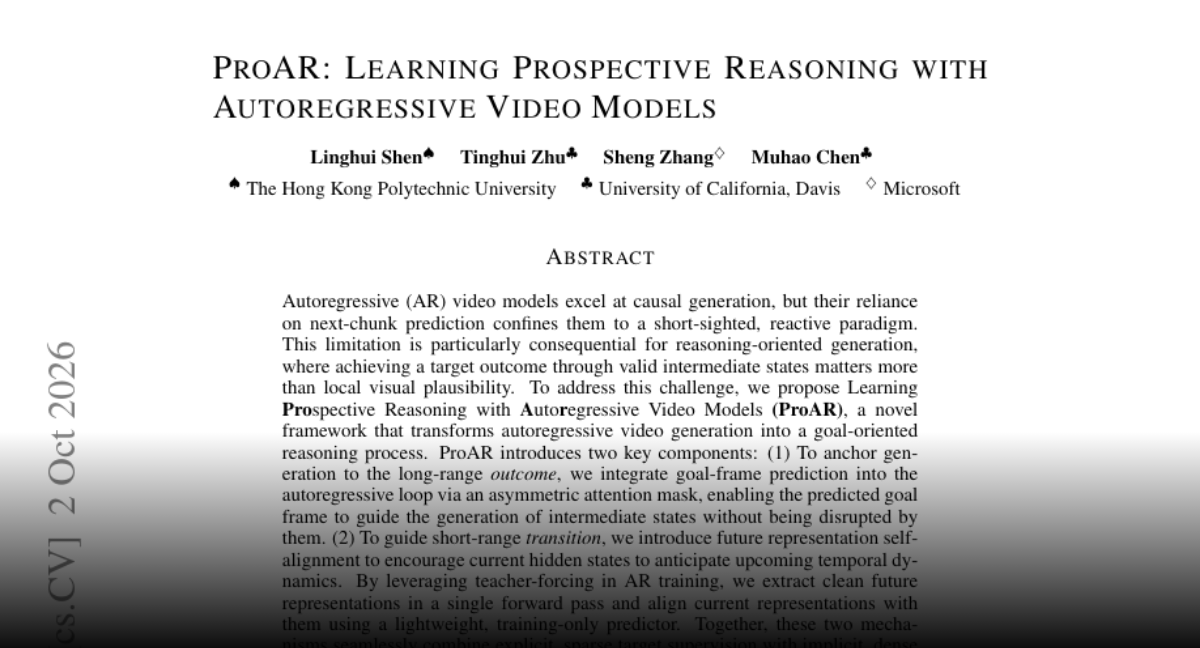
ProAR gives video generation an explicit future goal

ProAR gives video generation an explicit future goal

ProAR adds goal-frame prediction and future representation self-alignment to autoregressive video models, aiming to turn locally plausible generation into coherent progress toward an outcome. An asymmetric attention mask protects the predicted goal while intermediate states are generated. The researchers report improvements across visual reasoning benchmarks and results exceeding standard fully trained autoregressive baselines with only a quarter of the training steps. The contribution is a prospective training framework, with potential relevance to embodied reasoning as well as video synthesis.

06

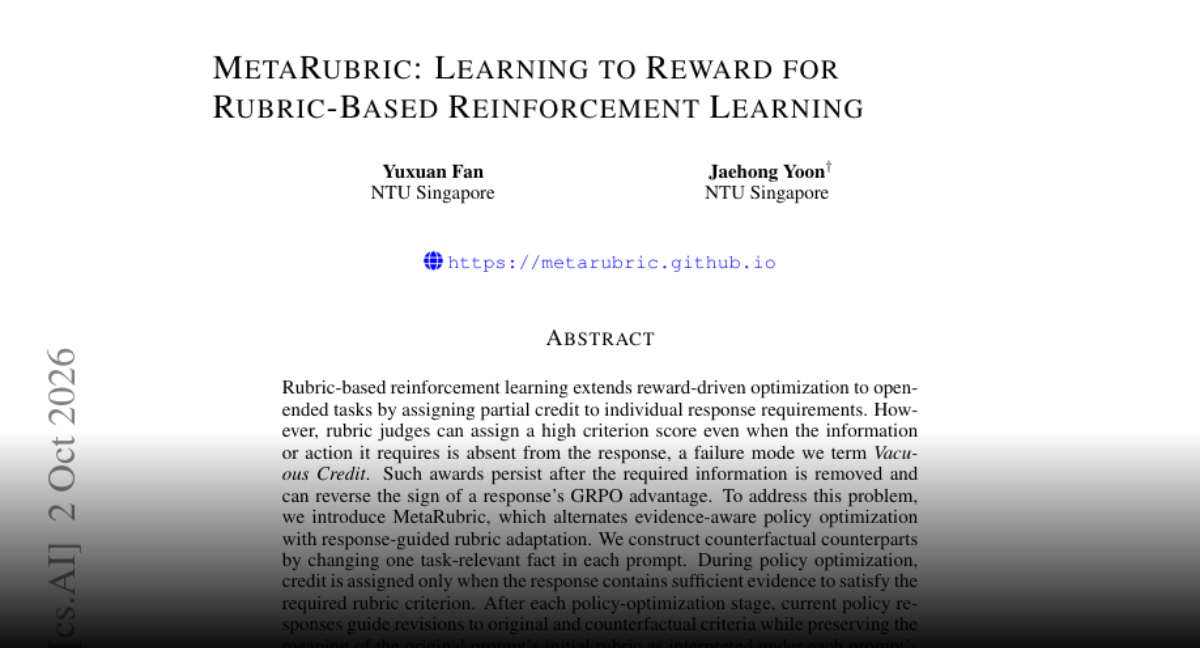
MetaRubric ties reinforcement rewards to actual evidence

MetaRubric ties reinforcement rewards to actual evidence

MetaRubric addresses a failure in rubric-based reinforcement learning where judges award credit even when required information is absent. It alternates evidence-aware policy optimization with revisions to evaluation criteria, using counterfactual prompts and adapting criterion weights as training progresses. The researchers report PubMedQA gains of six to twenty percentage points over static-judge GRPO, with additional medical benchmark improvements. The broader lesson is that reward quality depends on checking what a response actually demonstrates, not merely matching a rubric’s wording.

07

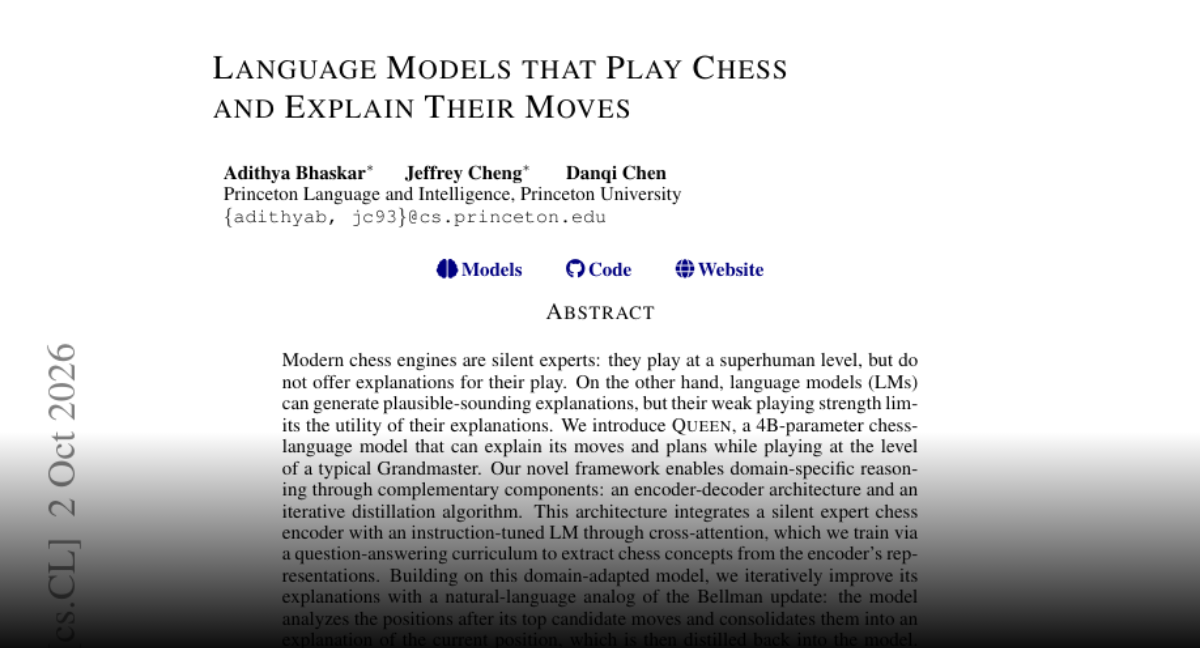
Queen combines strong chess play with move explanations

Queen combines strong chess play with move explanations

Queen is a four-billion-parameter chess language model that connects a specialist chess encoder to an instruction-tuned language model. Its iterative distillation procedure uses analyses of future positions to improve present-position explanations. Across seven iterations, the researchers report an Elo increase from 1782 to 2697, alongside stronger puzzle performance. The work suggests a route for giving specialist systems a language interface, though fluent explanations and playing strength remain distinct properties that need their own evaluation.

08

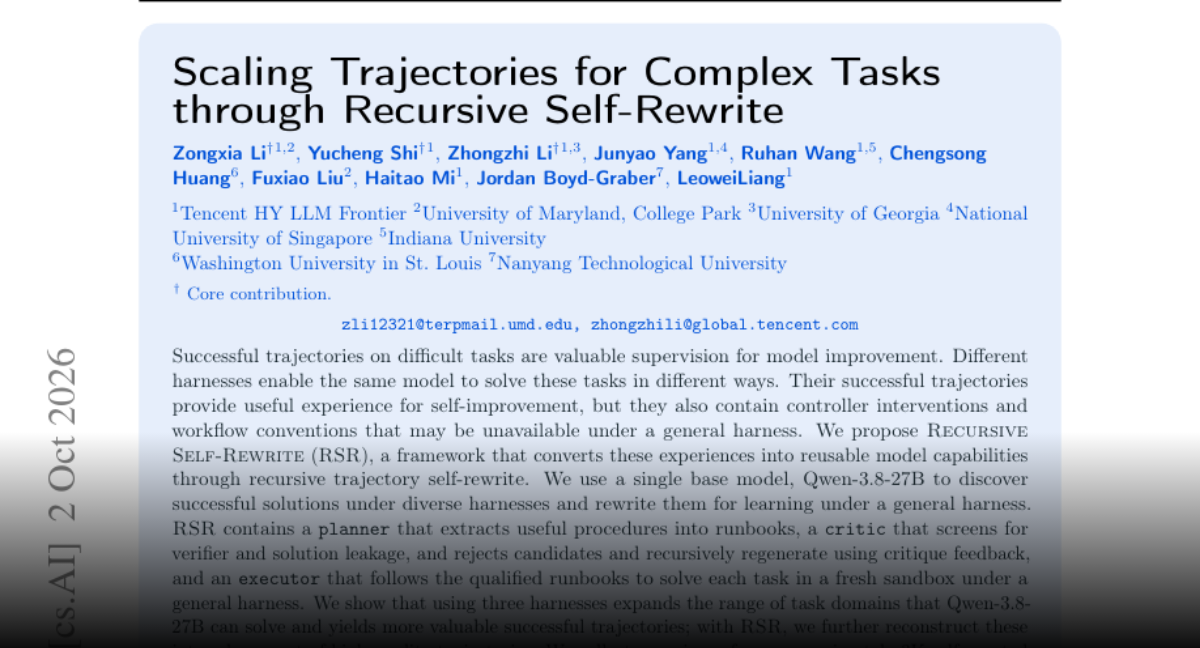
Recursive Self-Rewrite turns diverse agent runs into training data

Recursive Self-Rewrite turns diverse agent runs into training data

Recursive Self-Rewrite gathers successful experiences from multiple task harnesses and reconstructs them into trajectories usable by one general harness. A planner extracts procedures, a critic checks leakage and revisions, and an executor tests qualified runbooks in fresh environments. The researchers expand 2001 source trajectories into 11094 rewritten examples and report improved terminal-task performance after fine-tuning. The method targets a practical training problem: transferring lessons from specialized scaffolding without requiring that scaffolding during deployment.

09

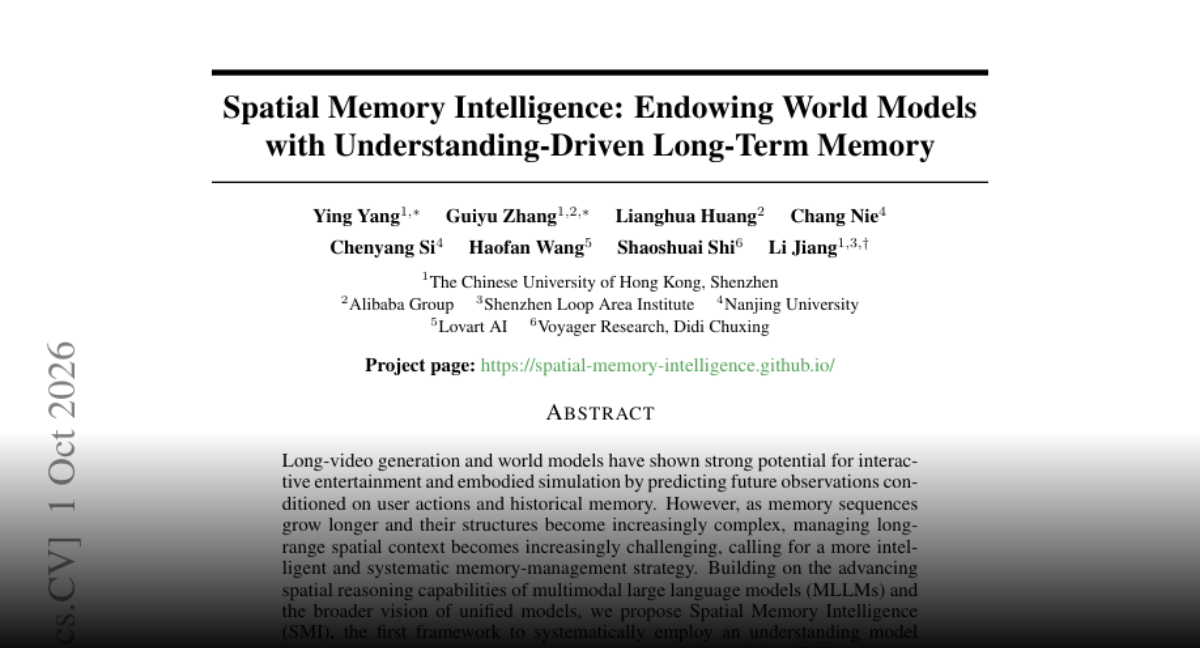
Spatial Memory Intelligence organizes world-model history

Spatial Memory Intelligence organizes world-model history

Spatial Memory Intelligence uses a multimodal understanding model to manage the growing history needed by long-video world models. It combines spatial clustering, sparsification within clusters, action-aware retrieval, and filtering based on reliability. The researchers report improvements in memory sparsity, generation stability, and spatial consistency across multiple backbones and benchmarks. The idea is to make memory management sensitive to what a scene means and what action comes next, rather than simply retaining more past frames.

10

VeriHarness challenges both disagreement and false consensus

VeriHarness challenges both disagreement and false consensus

VeriHarness equips a language model with a workspace, evidence tools, and reusable skills to verify long-horizon agent outputs. A disagreement resolver checks competing claims, while a consensus challenger searches for shared errors and omitted requirements. The researchers report gains over single rollouts of 6.2 and 6.4 points for two evaluated models after evidence-backed revision. The framework treats agreement as something to test, offering a practical counterweight to verification systems that simply count matching answers.