NO/FOMO

Independent AI signal, once a day

The AI briefing worth opening.

ISSUE DATE2026-10-17DEFAULT EDITION
This issue
—
All time
—

AI Blog

2 stories
01

Itaú combines conversational AI with a governance platform

OpenAI’s customer account describes Itaú’s use of a conversational interface called ia.i and a governance platform called IARA as part of an AI First strategy for customers and employees. The setting is Brazilian banking, a heavily regulated sector where deployment involves organizational controls as well as model capability. The post offers an enterprise adoption example, but the collected description does not quantify coverage, customer outcomes, error rates, or independently assessed compliance performance.

02

Stack Overflow for Agents describes ChatGPT plugin growth

An OpenAI customer story says two engineers built Stack Overflow for Agents in a few weeks using Codex. Its headline reports tripled signups, while the description says a ChatGPT plugin helped drive up to tenfold growth in agent creation. Those are distinct metrics and should not be conflated. The case illustrates how coding assistance and distribution inside a conversational product can interact, but the collected summary does not establish causality or long-term retention.

Hacker News

5 stories
01

DeepSeek releases V4.1 Flash 1017

DeepSeek releases V4.1 Flash 1017

DeepSeek’s V4.1 Flash 1017 model page is the highest-scoring AI story in today’s collected Hacker News set, with 408 points and 421 comments at collection time. The discussion links to the model on Hugging Face and an OpenRouter listing. The release is a significant open-model development to evaluate, although the collected model listing alone does not establish comparative quality, deployment costs, or reliability on a team’s own workloads.

02

Fortune reports four more OpenAI incidents

Fortune reports four more OpenAI incidents

Fortune reports that OpenAI disclosed four additional incidents involving financial, medical, and government data. The article entered today’s Hacker News collection, bringing a safety and security story into a day otherwise dominated by model and tooling updates. The available collection provides the headline and source link rather than incident-level evidence. Readers should consult the report for the affected systems, circumstances, and responses before drawing conclusions about scope or responsibility.

03

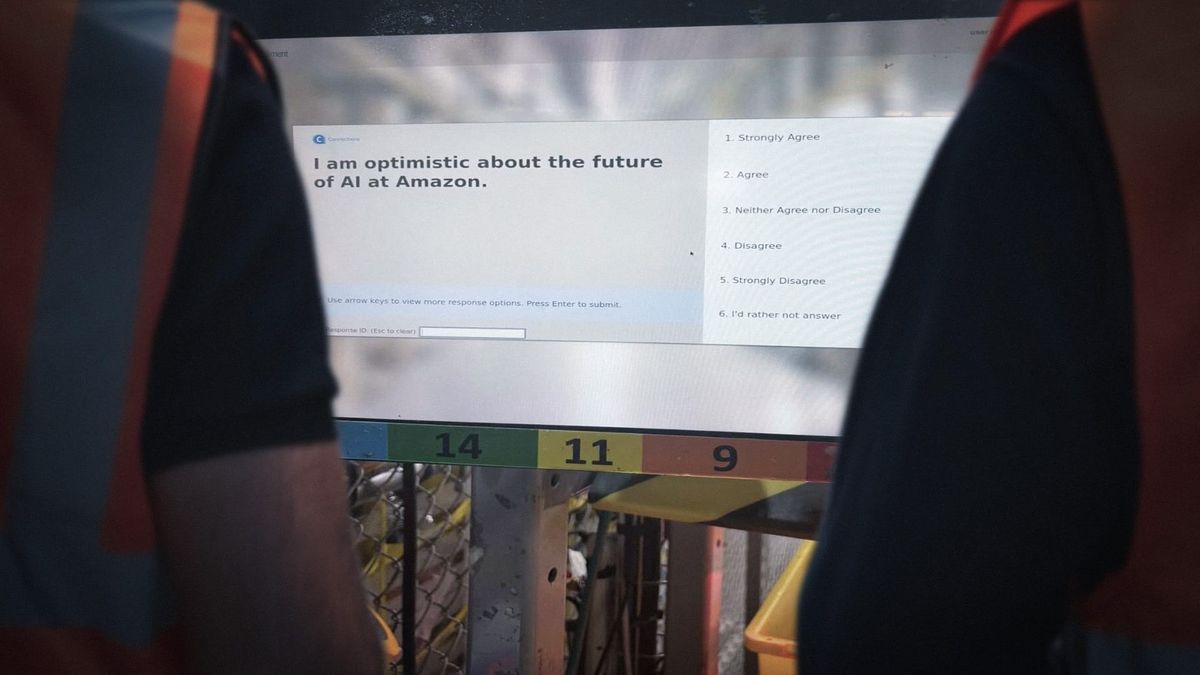
Report alleges Amazon uses AI to monitor UK union risk

Report alleges Amazon uses AI to monitor UK union risk

OpenDemocracy reports that Amazon uses AI surveillance to monitor union risk in its UK warehouses. The story appeared in today’s Hacker News collection with 34 points at collection time. This is a material labor and governance issue because workplace AI can influence how organizations observe and respond to employee organizing. The collected headline is an allegation from the linked reporting; it does not independently establish the system’s design, accuracy, or legal status.

04

AI lab trades free repairs for robotics training data

Tom’s Hardware reports that an AI lab is offering free plumbing and HVAC repairs across three cities to gather robot-training data. According to the linked headline, wearable sensors record repair work, and the services also include electrical work and cleaning. The approach illustrates the search for demonstrations of practical physical tasks beyond controlled laboratory settings. The collected material does not specify dataset size, participant terms, or demonstrated improvements in robot performance.

05

Llmspeed previews local LLM performance before hardware purchases

Llmspeed previews local LLM performance before hardware purchases

Llmspeed is a Show HN project intended to let users experience how fast a local language model would run before buying hardware. It drew 196 points and 65 comments in the collected Hacker News snapshot. The practical appeal is turning abstract performance expectations into something prospective buyers can explore. Its headline does not establish prediction accuracy or supported configurations, so any purchasing decision still needs comparison with measurements for the intended model and machine.

Twitter

11 stories
01

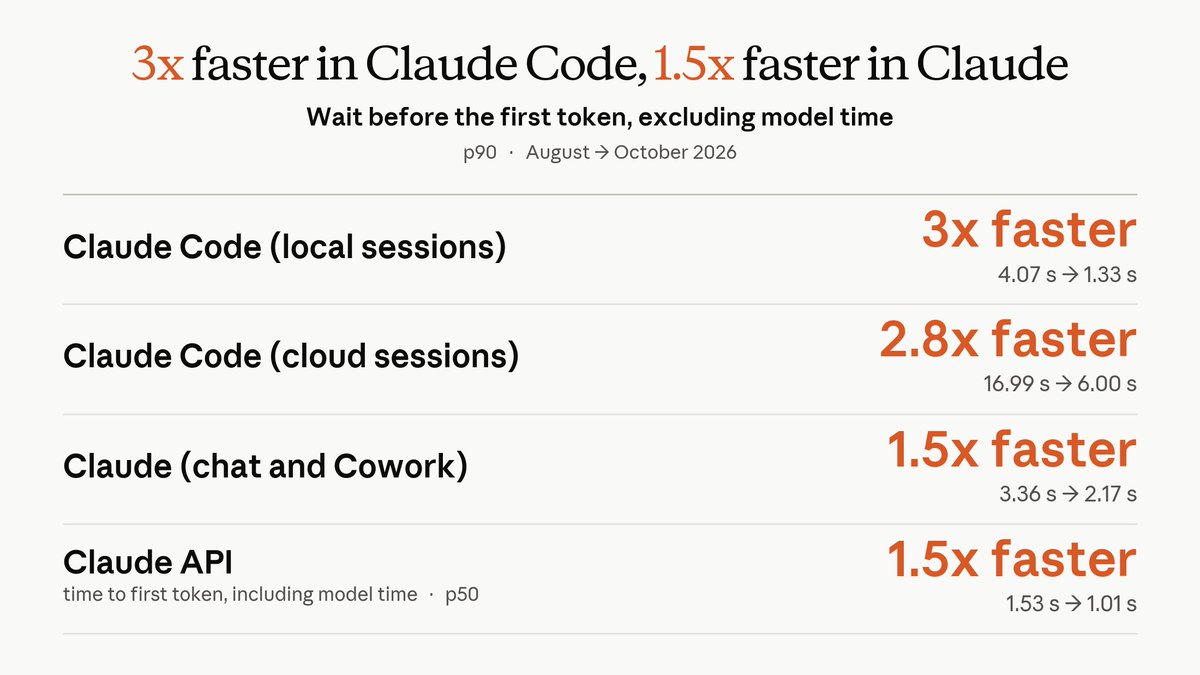
Claude Code compresses requests to reduce response delay

Claude Code compresses requests to reduce response delay

Anthropic’s Claude developer account says Claude Code now compresses the conversation sent on every turn with gzip so that it reaches the model faster. Cloud sessions also begin starting when a user starts typing. These changes target request transfer and session startup, two sources of delay outside model generation itself. The announcement says users may notice earlier responses, but it provides no quantified latency benchmark or guarantee for particular network conditions.

02

Anthropic describes code review for an AI-written codebase

Anthropic describes code review for an AI-written codebase

Anthropic’s developer account says Claude writes about 90 percent of Claude Code’s code. It reports that merged pull requests more than doubled from June to September while the share reverted fell by more than 40 percent, and links to an explanation of changes to code review. These are company-reported engineering metrics rather than independent evidence. The useful question for other teams is which review practices preserve correctness as generated code volume grows.

03

Runway adds Mirelo SFX 2.0 for video sound design

Runway adds Mirelo SFX 2.0 for video sound design

Runway announced that Mirelo SFX 2.0 is available on its platform to generate soundscapes synchronized with video frames while preserving dialogue. The update addresses a production step that often remains separate from visual generation: adding appropriate sound without replacing existing speech. It is a concrete workflow integration for creators already working with video. The announcement does not provide comparative audio-quality measurements or specify the limits of dialogue preservation across different inputs.

04

Pika brings creative tools into ChatGPT

Pika brings creative tools into ChatGPT

Pika announced a plugin extension developed with OpenAI that puts its creative tools inside ChatGPT’s chat and side panel. The company presents the integration as an interactive visual creation environment rather than a text-only interaction. For creators, the relevant development is access to creative operations within an existing conversational workflow. The collected announcement does not detail supported subscription tiers, pricing, rollout coverage, or how individual tools behave in the extension.

05

Anthropic reports Claude-designed quantum circuit improvements

Anthropic reports Claude-designed quantum circuit improvements

Anthropic says its STEM Fellows Program used Claude Mythos 5 to design more efficient quantum circuits from plain-language instructions. The company reports improvements over the best published circuits, sometimes by an order of magnitude or more. This is a notable claim about AI-assisted scientific design, where the object being optimized is a technical artifact. The collected announcement does not establish which circuits were tested or how broadly the reported improvements generalize.

06

Anthropic gives METR employee-like access for safety evaluation

Anthropic gives METR employee-like access for safety evaluation

Anthropic says it has given a team from METR employee-like access as part of its commitment to external assessment of safety practices. It also says discussions with multiple evaluation organizations are ongoing and links to a description of its approach. The significance is the depth of evaluator access, not a completed safety verdict. The announcement does not itself report findings, establish unrestricted access, or show that particular risks have been resolved.

07

Meta announces Muse Spark Open

A Meta announcement shared by Yann LeCun introduces Muse Spark Open as an open-weight model built for coding and agentic work. Meta describes it as the most capable US open-weight model to date. The release adds an important contender to competition over models that developers can deploy beyond a hosted assistant. That superlative remains a vendor claim, and the collected excerpt does not establish license permissions, hardware requirements, or independent task performance.

08

Gemini agents demonstrate long-horizon Minecraft collaboration

Zoubin Ghahramani highlighted Gemini 4 Argon agents collaborating in Minecraft and completing the game, describing the result as a demonstration of long-term planning and problem-solving. The post credits the research team and emphasizes coordinated progress over an extended task. Such demonstrations are useful probes of agent persistence and cooperation. The collected post does not provide an evaluation protocol, repeatability statistics, or evidence that the same behavior transfers to less structured real-world environments.

09

Naveen Rao argues verification is the AI bottleneck

Naveen Rao argues verification is the AI bottleneck

Naveen Rao argues that organizations can now generate large volumes of material but struggle to verify whether it is correct or useful. He says the problem appears even inside his own company and that using more agents to verify output can make it worse. This is an operator’s assessment rather than a controlled study, but it frames a practical engineering challenge: improving generation throughput does not automatically improve confidence in the resulting work.

10

Reasoning From Scratch concludes with distillation

Reasoning From Scratch concludes with distillation

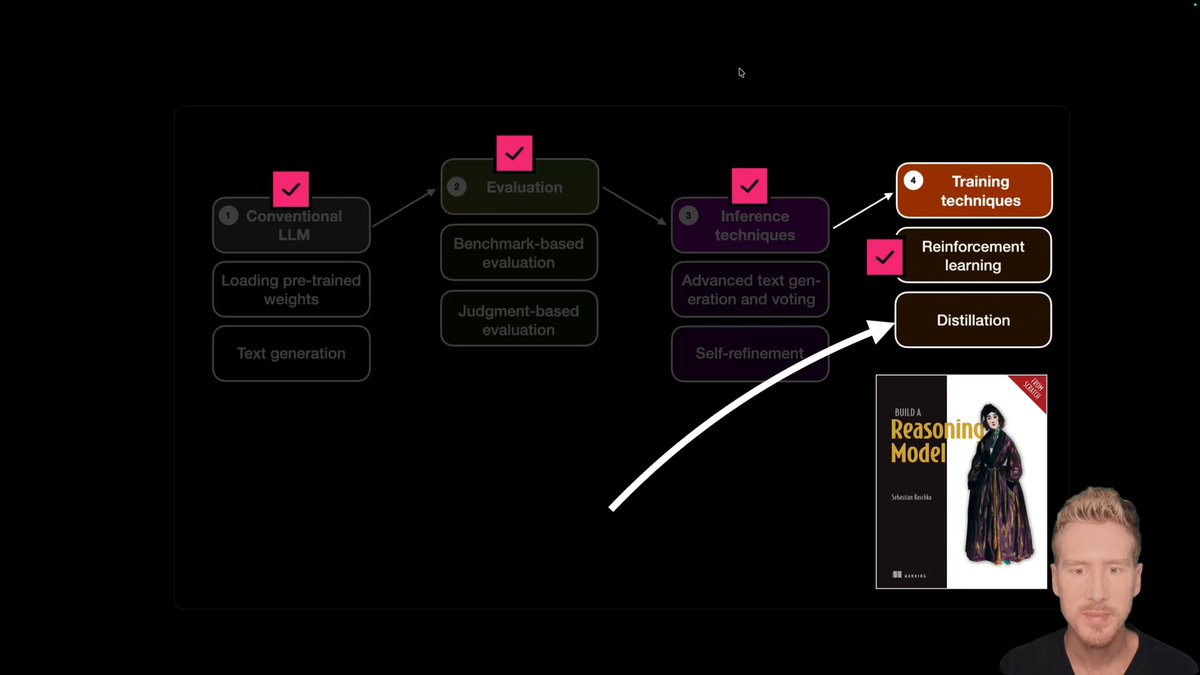
Sebastian Raschka released the eighth and final lecture in his Reasoning From Scratch series, focusing on distillation as an efficient alternative to the reinforcement-learning training runs covered earlier. The educational update is relevant to practitioners trying to understand different routes to reasoning behavior without assuming every improvement requires another RL run. The collected announcement outlines the lecture’s emphasis, but it does not provide experimental results or establish a universal cost advantage for distillation.

11

Ian Goodfellow highlights systems around small security models

Ian Goodfellow highlights systems around small security models

Ian Goodfellow highlighted Aisle’s first year as evidence that the system built around a language model can be highly important for security work. He argues that even small, inexpensive, fast models can be made useful with the right surrounding system. This is a useful architectural perspective for teams weighing model size against engineering effort. The collected post provides an endorsement, not vulnerability-level results, comparative benchmarks, or an independently verified account of security effectiveness.

GitHub

1 story
01

AI job-search framework runs on the user’s machine

AI job-search framework runs on the user’s machine

MadsLorentzen’s ai-job-search repository describes a locally run job-search framework built on Claude Code. It covers evaluating postings, tailoring CVs, writing cover letters, and preparing for interviews, with a forkable codebase users can own. The project appeared in the GitHub collection with roughly 49,800 stars. Its practical interest is packaging several related agent tasks into one workflow; popularity does not establish application quality, hiring outcomes, or how external model services handle submitted information.