NO/FOMO

Independent AI signal, once a day

The AI briefing worth opening.

ISSUE DATE2026-10-18ENGLISH EDITION
This issue
—
All time
—

Hacker News

6 stories
01

DeepSeek prices search and fetch at $0.75 per 1,000 successful requests
DeepSeek prices search and fetch at $0.75 per 1,000 successful requests

DeepSeek’s search documentation drew the strongest AI-related discussion among today’s collected Hacker News stories, with 421 points and 206 comments. The listed price is $0.75 per 1,000 successful search and fetch requests. For teams building agents that need fresh web information, request-level pricing is a concrete input to operating costs. The headline does not establish the service’s coverage or quality, which still need evaluation against the intended workload.

02

Anthropic safety-bill proposal draws scrutiny over intervention thresholds

A Tom’s Hardware report highlights controversy over Anthropic’s proposed AI safety legislation, describing thresholds involving 50 deaths or $1 billion in damages and a central role for the Commerce Department in stopping a model. The story attracted 122 Hacker News comments. This is a proposal under scrutiny, not evidence of an enacted law. Its significance lies in who could intervene and what evidence of harm would trigger that authority.

03

OpenCode reports breach affecting 1.4% of console users

OpenCode reports breach affecting 1.4% of console users

An OpenCode announcement linked from Hacker News reports a security breach affecting 1.4% of console users. The collected headline supplies the affected share but does not establish the exposed data, root cause, or remediation details. For coding-agent users, the incident brings account and service security into focus alongside model capability. Readers operating affected integrations should consult the original announcement for the precise scope and response before drawing broader conclusions.

04

Websites push back against AI-agent access

Websites push back against AI-agent access

The Verge reports that websites are closing their doors to AI agents, a story that generated 102 points and 82 comments in the collected Hacker News snapshot. The broad issue is access: an agent’s ability to navigate or act on the web depends on permission and availability as well as reasoning. The collected material does not identify a universal blocking policy, so teams should assess restrictions site by site.

05

Legal experts question Meta’s revised scraping terms

Legal experts question Meta’s revised scraping terms

Nieman Lab reports that legal experts still see broad scraping permissions in Meta’s revised terms despite changes in wording. The story received 164 points in the collected Hacker News snapshot. It puts contractual control over online material back into the AI data debate. The headline supports concern about the terms’ scope, rather than a finding that any particular use is unlawful; publishers and developers need to examine the actual language.

06

Sphinx quizzes developers on agent-written code before shipping

Sphinx is presented on Hacker News as a free and open-source hook for existing coding-agent workflows. Before a production push, it asks a questionnaire intended to check whether the developer understands the code being shipped. The project drew 210 points and 71 comments in the collected snapshot. Its appeal is a concrete human-review step for AI-assisted development; the submission does not demonstrate that passing the quiz guarantees software correctness.

Twitter

10 stories
01

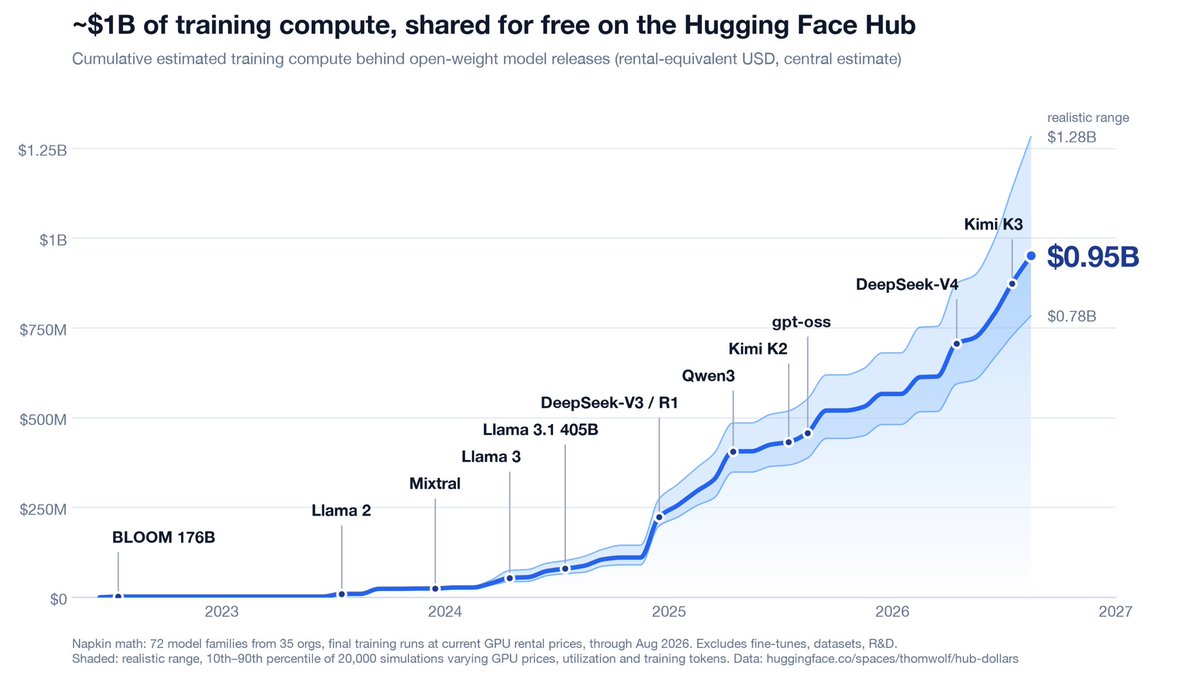
Thomas Wolf estimates nearly $1 billion in shared model-training compute

Thomas Wolf estimates nearly $1 billion in shared model-training compute

Hugging Face cofounder Thomas Wolf estimates that models shared on the Hub represent close to $1 billion in training compute, compared with under $40 million at the end of 2023. He names Meta, NVIDIA, Alibaba, DeepSeek, Moonshot and Mistral among the contributing labs. Wolf explicitly frames this as rough arithmetic. The estimate illustrates the growing resource base behind downloadable models, rather than an audited valuation or a uniform licensing guarantee.

02

François Chollet argues agent coding is reshaping engineering work

François Chollet argues that software-engineering demand and workload can grow even as agents take over code writing. His post describes more engineers than in 2025 and says engineers are working harder while agents write nearly all the code in the workflow he discusses. These are his observations, not a labor-market study. The useful question for teams is how review, direction and responsibility change as implementation becomes increasingly automated.

03

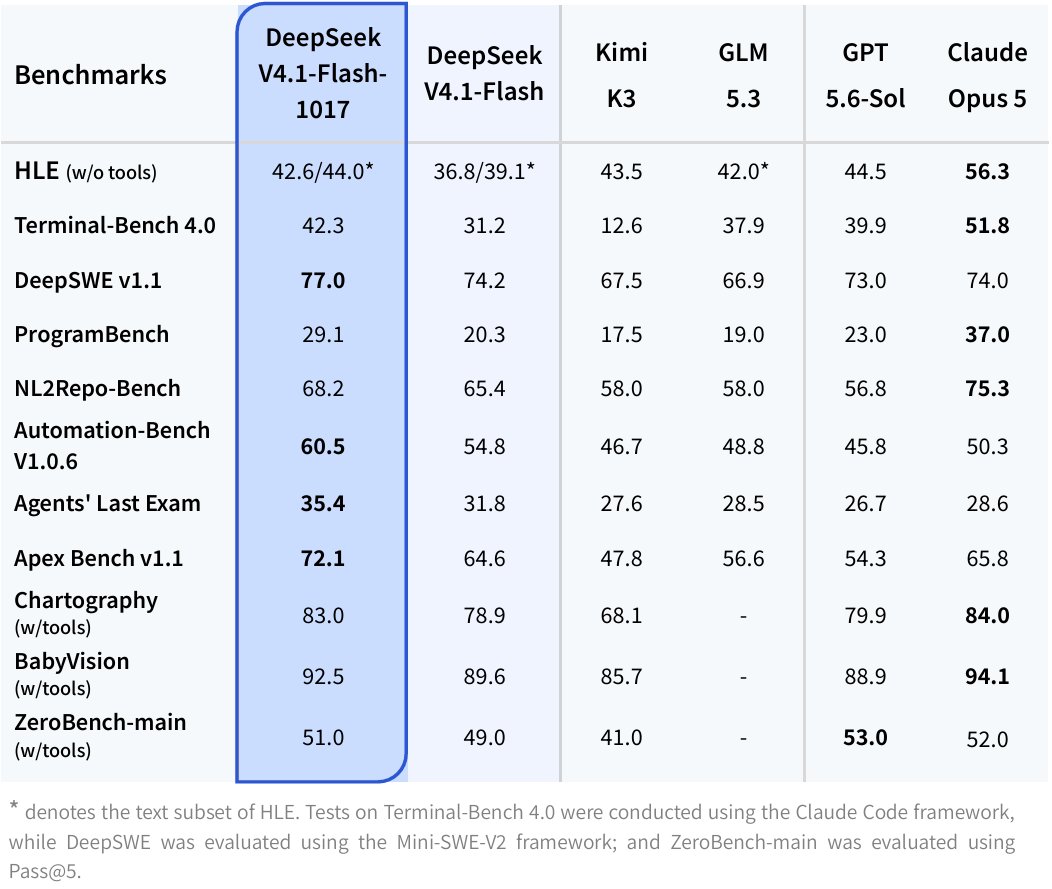
Wolf highlights DeepSeek’s reported coding-benchmark gains

Wolf highlights DeepSeek’s reported coding-benchmark gains

Thomas Wolf highlights a DeepSeek update that he says raises Terminal-Bench 4.0 from 31.2 to 42.3 and reports 77.0 on DeepSWE. His post compares that score with figures for Opus 5 and GPT-5.6 Sol and also points to faster task completion. These are reported benchmark figures relayed in commentary. They make the update worth testing on real coding tasks, without establishing that every workload will improve similarly.

04

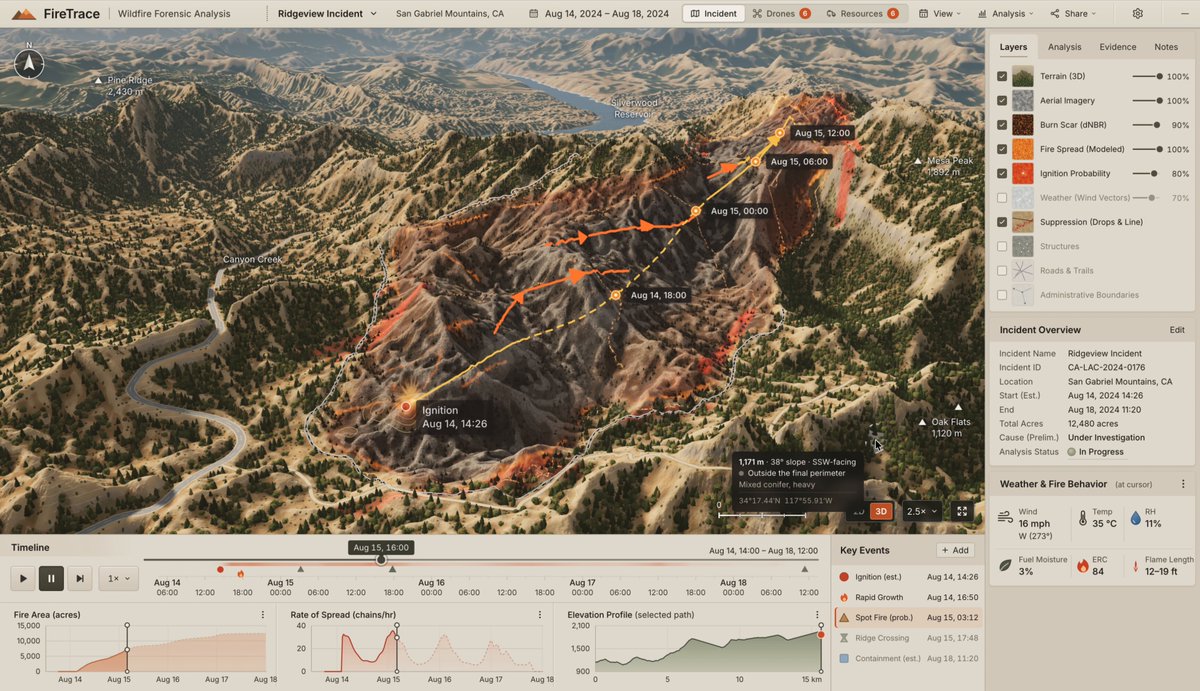
Claude showcases an Opus 5.5 wildfire-analysis prototype

Claude showcases an Opus 5.5 wildfire-analysis prototype

The official Claude account highlights a wildfire-analysis prototype built with Opus 5.5 as one of six recent projects that caught its attention. The described prototype maps fire spread over time and tracks hot spots. This is a concrete example of AI-assisted application building around spatial and temporal information. The post presents a showcase, not validation for emergency operations, so its demonstrated scope should be kept distinct from operational readiness.

05

Luma adds a continuation path from Claude Motion

Luma adds a continuation path from Claude Motion

Luma says animations made in Claude Motion can be sent to Luma to continue building, using a Send to Luma option inside Claude Motion. The short announcement describes a workflow connection rather than a new model or benchmark result. For creators, moving a project between tools can matter as much as generating its first output. The post does not specify supported formats, pricing, or limits on what transfers.

06

Google demonstrates Gemini 4 Argon across 80,000 NASA files

Google demonstrates Gemini 4 Argon across 80,000 NASA files

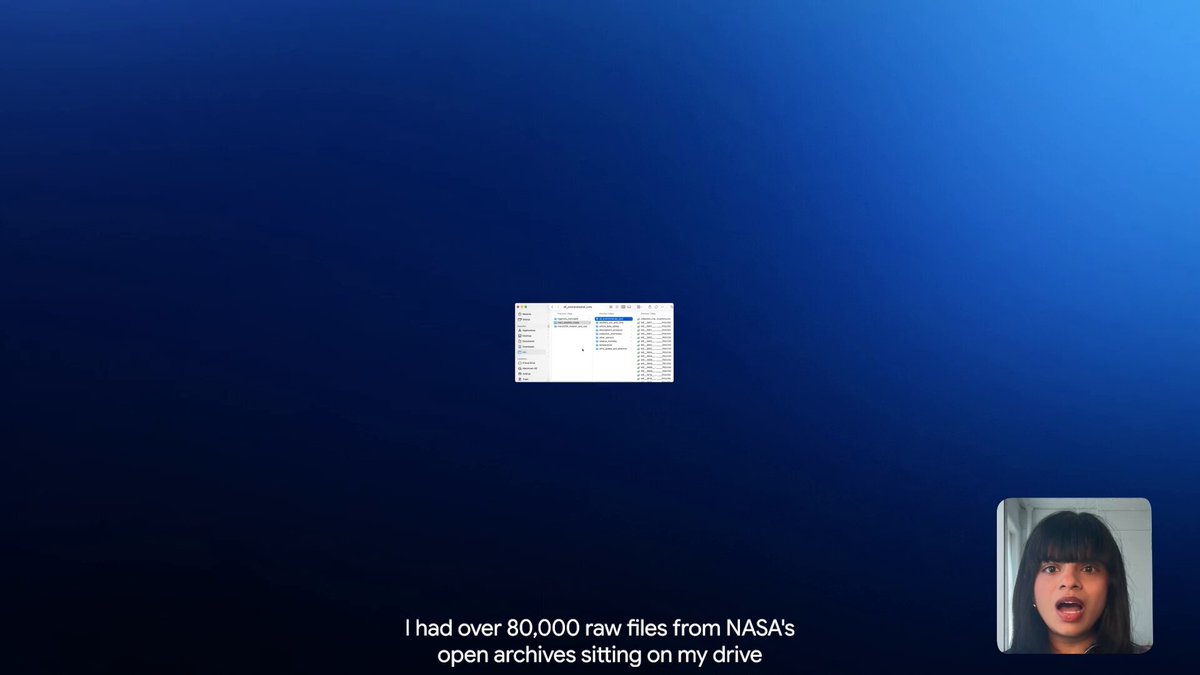
Google showcases Gemini 4 Argon processing 80,000 files from NASA’s open archives to build a Google Slides presentation under specified design guidelines. The listed inputs include CSVs, images, PDFs, web articles, XML logs and raw videos. The example emphasizes coordination across heterogeneous research material and presentation output. It is a vendor demonstration, not an independent assessment of factual accuracy, completeness, runtime, or the cost of reproducing the workflow.

07

Nathan Lambert sees US open-weight models narrowing the gap

Nathan Lambert sees US open-weight models narrowing the gap

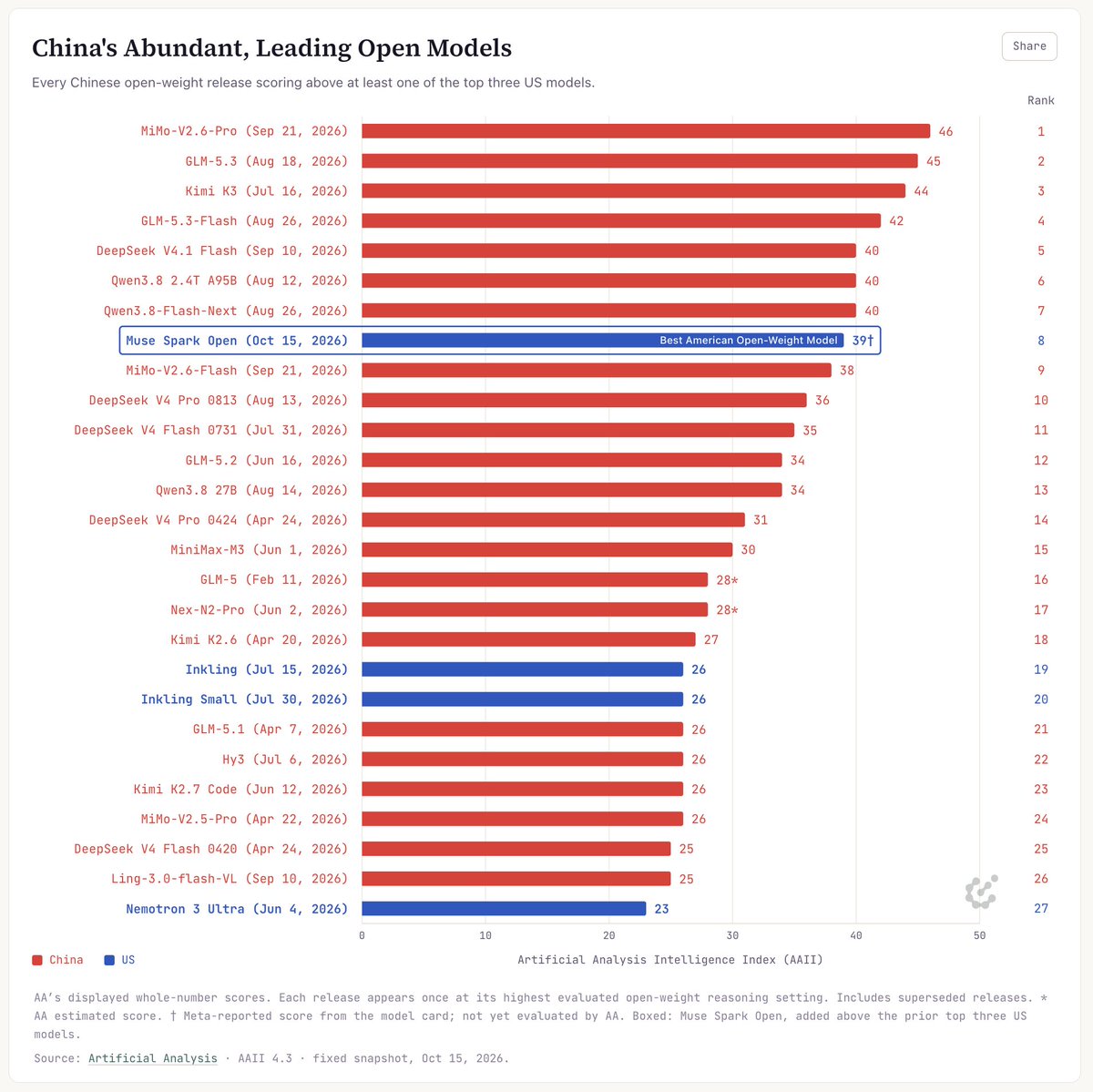
Nathan Lambert describes renewed progress for US open-weight models, saying the latest development has cut their lag behind Chinese models by at least half in time terms, to roughly three months. Related collected commentary identifies Meta as central to this discussion. This is an analyst’s assessment rather than a common benchmark result. It highlights increasing competitive pressure in open weights while leaving deployment suitability and licensing to separate evaluation.

08

Chollet compares Argon and Astra on ARC-AGI-3

Chollet compares Argon and Astra on ARC-AGI-3

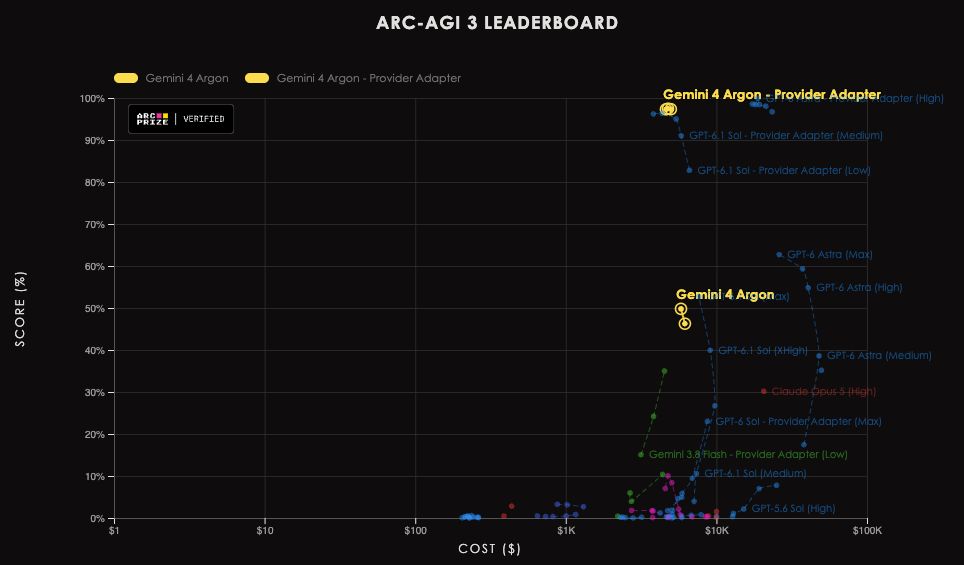
François Chollet says Argon has a similar performance profile to Astra on ARC-AGI-3 and characterizes Google as back at the frontier. The concise post supplies a qualitative comparison rather than detailed scores or a full evaluation methodology. It is a notable assessment from a prominent reasoning researcher, but readers should avoid treating one benchmark profile as a complete ranking of models across coding, multimodal work, or production reliability.

09

Chollet makes the case for active conversational tutoring

François Chollet argues that conversational AI could expand access to the benefits of one-to-one tutoring. His post emphasizes active conversational learning and contrasts the effectiveness of individual tutoring with its difficulty scaling. The collected text frames an educational opportunity rather than reporting a controlled learning-outcome study. For education products, the substantive design question is whether interaction makes learners reason and participate, instead of simply receiving answers from a model.

10

Lambert urges precision when discussing model distillation and key theft

Nathan Lambert questions the use of distillation as an umbrella term that also covers cyberattacks to steal API keys and model-transfer operations. He says the volume of activity and its connection to model training remain unclear. The point is about separating technical processes from security incidents and uncertain attribution. Clear terminology matters because defenses against stolen credentials differ from questions about training on another model’s outputs or enforcing service terms.

GitHub

2 stories
01

Cursor publishes its plugin specification and official plugins

Cursor publishes its plugin specification and official plugins

The cursor/plugins repository provides Cursor’s plugin specification and official plugins. It appears among the collected trending repositories with 12,639 stars and a report-date update. A shared specification gives developers a concrete reference when integrating extensions into an AI coding environment. The repository description alone does not establish compatibility across other agents, security properties, or plugin quality, so adopters should inspect the specification and each dependency before integration.

02

Ruflo combines agent coordination, memory and retrieval

Ruflo combines agent coordination, memory and retrieval

Ruflo describes itself as an agent harness for coordinating autonomous workflows and multi-agent systems. Its repository lists adaptive memory, federation, vector retrieval-augmented generation, and integrations with coding assistants including Claude Code and Codex. The collected snapshot shows 76,390 stars and a report-date update. These are project claims and adoption signals, not independent reliability measurements; the useful next step for teams is testing orchestration behavior on bounded tasks.