NO/FOMO

Independent AI signal, once a day

The AI briefing worth opening.

ISSUE DATE2026-10-22ENGLISH EDITION
This issue
—
All time
—

AI Blog

3 stories
01

SGLang shares GPU memory between KV and recurrent state
SGLang shares GPU memory between KV and recurrent state

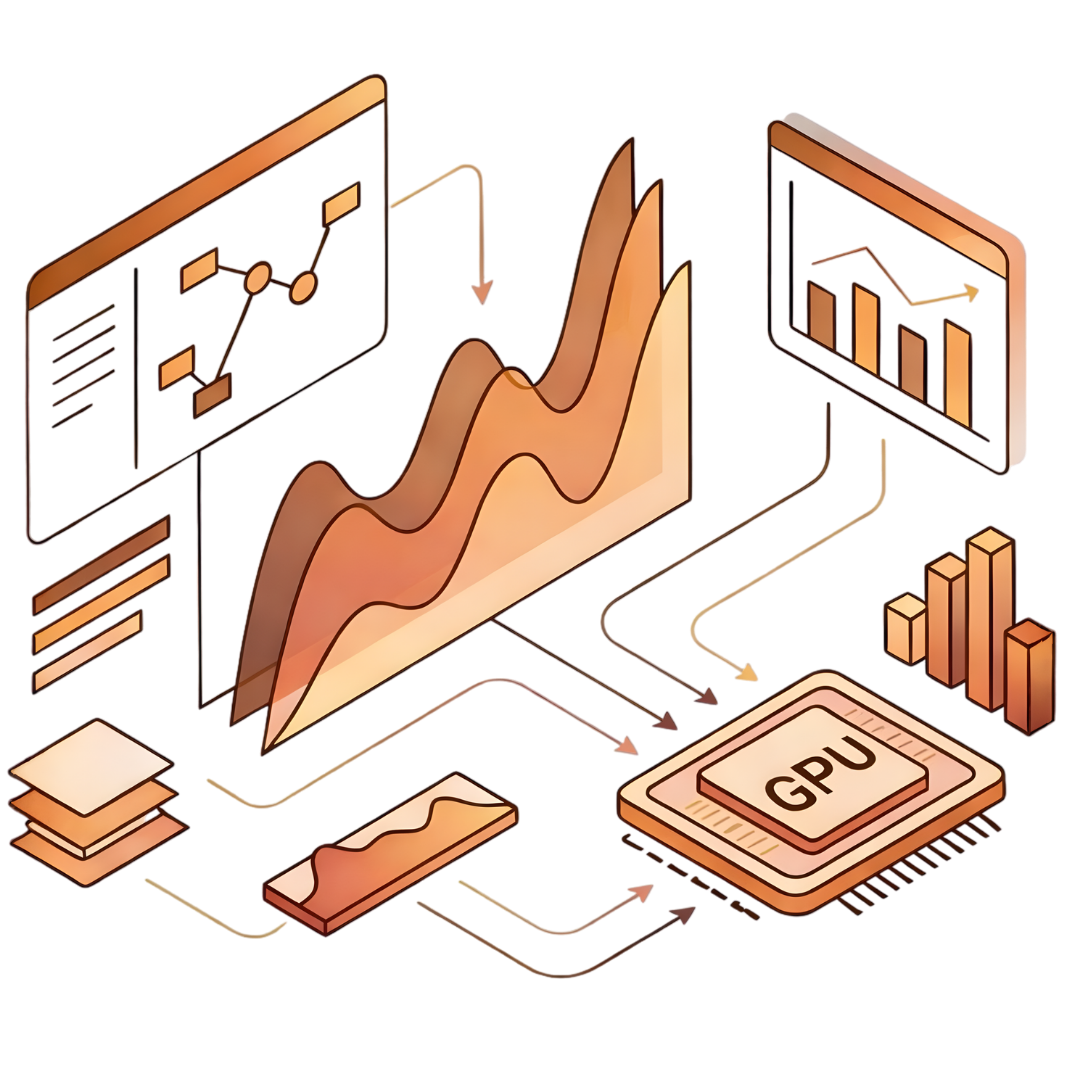
SGLang’s new unified-memory post describes shared GPU capacity for key-value caches and recurrent state. Its allocation-aware eviction policy reportedly retains 1.9 times as many prefixes and reduces returning-request time by 37.9 percent. The result targets repeated interactions where cached context has continuing value. These are the blog’s reported measurements, so their relevance to another deployment depends on its model mix, request patterns, memory pressure, and cache reuse behavior.
02

OpenAI describes consistent safeguards for distribution partners

OpenAI published an explanation of how it works with distribution partners to maintain consistent safeguards, support responsible access, and clarify expectations through its Usage Policies. The post addresses the governance of model distribution rather than announcing a specific new model. As AI services reach users through more intermediaries, consistent standards become relevant to both developers and customers. The collected description does not enumerate new prohibitions or effective dates.

03

AT&T explores AI-supported in-house legal work

OpenAI described AT&T’s work to make legal knowledge easier to access through its LegalEdge team. The account focuses on rethinking intake and scaling legal judgment inside a large organization. It is a concrete enterprise workflow example rather than a benchmark of legal reasoning. The collected description establishes the collaboration and goals, but does not quantify productivity gains or show that legal responsibility has moved away from human professionals.

Hacker News

4 stories
01

OpenAI CLI draws developer attention

OpenAI CLI draws developer attention

The OpenAI CLI repository reached the Hacker News front page with 198 points and 93 comments at collection time. The linked project places an official OpenAI command-line interface in view of developers working from terminals and automation systems. The collected candidate provides the repository link and discussion metrics, rather than detailed documentation, so this item does not infer supported commands, authentication behavior, or compatibility guarantees from the title alone.

02

WorldTUI explores a small model that imitates a terminal

WorldTUI explores a small model that imitates a terminal

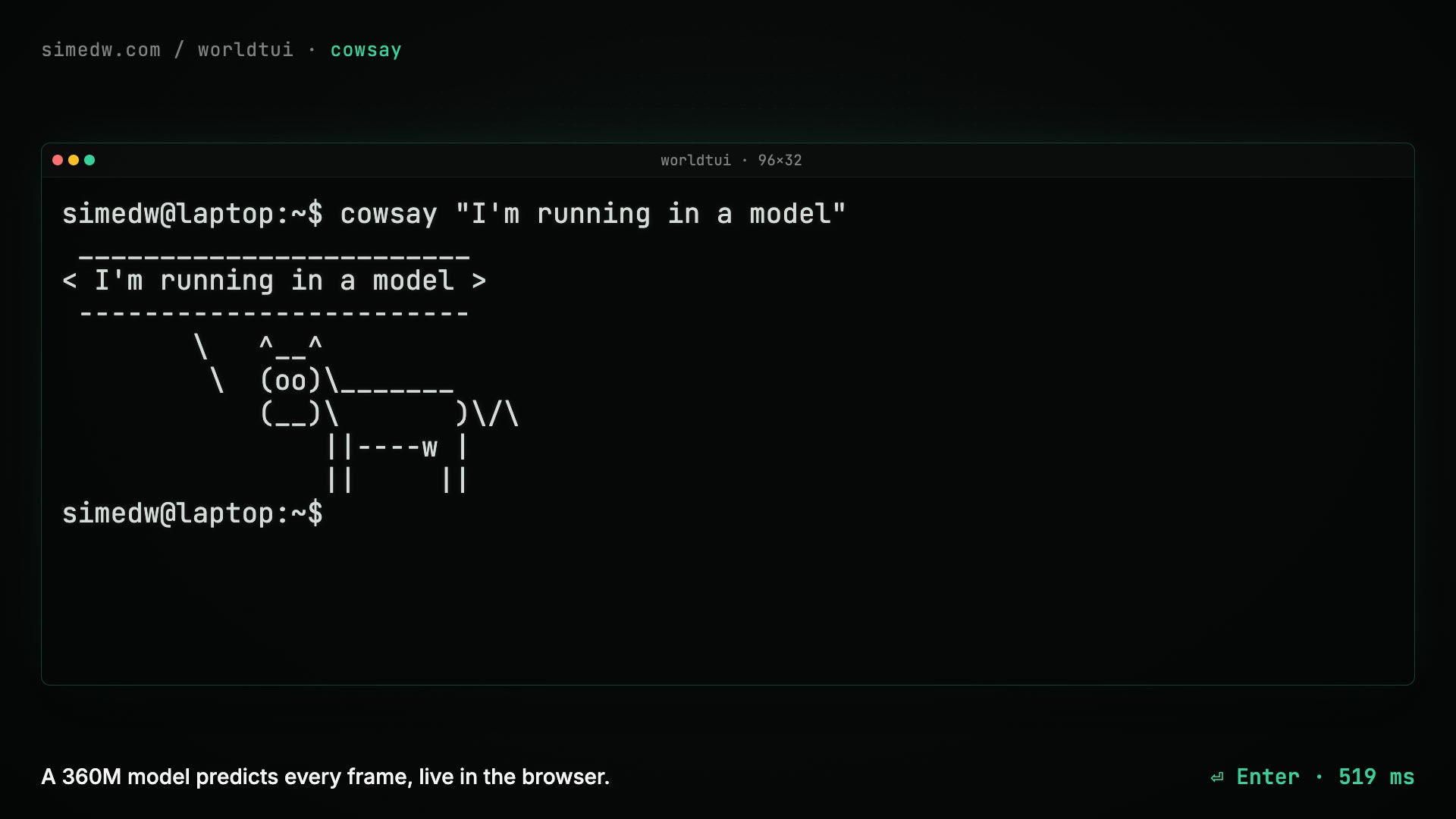
WorldTUI’s author describes training a 360-million-parameter model to pretend to be a terminal. The project attracted 391 Hacker News points and 117 comments at collection time, making it one of the strongest AI-related discussion items in the feed. Its framing is a learned terminal simulation. That distinction matters for agent experimentation: plausible terminal output is not evidence that an actual operating system executed a command or changed persistent state.

03

Claude expands into Google Docs, Sheets, and Slides

Claude expands into Google Docs, Sheets, and Slides

An official Claude article announces that Claude now works with Google Docs, Sheets, and Slides. The item attracted 65 points on Hacker News at collection time. The integration places AI assistance closer to documents, spreadsheets, and presentations that knowledge workers already use. The collected candidate establishes the applications named in the announcement, while leaving detailed permissions, subscription requirements, and the exact editing capabilities to the linked product documentation.

04

The Last Museum offers semantic search across 5.8 million artworks

The Last Museum offers semantic search across 5.8 million artworks

The Last Museum appeared on Hacker News as a semantic search service spanning 5.8 million artworks from major museums. The candidate had 28 points and seven comments when collected. It offers a concrete example of natural-language retrieval applied to cultural collections rather than generic enterprise documents. The listing provides the stated collection size and search premise, but does not establish coverage completeness, retrieval accuracy, or the licensing of individual images.

Twitter

10 stories
01

Claude introduces its first API version since 2023

Anthropic announced Claude API version 2026-10-21, its first official version release since 2023. The company plans more frequent versions so developers can accommodate breaking changes before a new model requires them. The existing 2023-06-01 version is not deprecated. For teams maintaining integrations, the important distinction is between adopting a new API contract and being forced to migrate immediately; the announcement explicitly preserves the older version.

02

Christopher Stubbs joins Anthropic’s Long-Term Benefit Trust

Christopher Stubbs joins Anthropic’s Long-Term Benefit Trust

Anthropic announced that experimental physicist Christopher Stubbs is joining its Long-Term Benefit Trust. Stubbs is a former Harvard dean of science and has advised the US government on national security and arms control. The appointment adds scientific and security policy experience to the organization’s governance structure. The announcement identifies a personnel change, rather than a new model capability or a change to product access.

03

OpenAI describes a coalition to mitigate PHP2Shell

Greg Brockman said OpenAI has spent two months leading a coalition to mitigate PHP2Shell, describing it as one of the most severe open source software bugs found in recent memory. He linked the effort to the company’s Patch the Planet initiative. The statement highlights coordinated defensive work around a shared software dependency; it does not by itself establish which deployments are patched or the full scope of exploitation.

04

Google reports Gemini 4 Argon vulnerability-finding results

Google reports Gemini 4 Argon vulnerability-finding results

Google says Wiz researchers tested Gemini 4 Argon against complex cybersecurity threats and found more than twice as many vulnerabilities as baseline models. The announcement also says the testing caught a critical risk missed by previous frontier models. These are vendor-reported results from real-world testing, without the full methodology in the collected post. They support attention to defensive applications while leaving deployment-specific effectiveness to further evaluation.

05

Gemini Personal Intelligence reaches Android Auto

Gemini Personal Intelligence reaches Android Auto

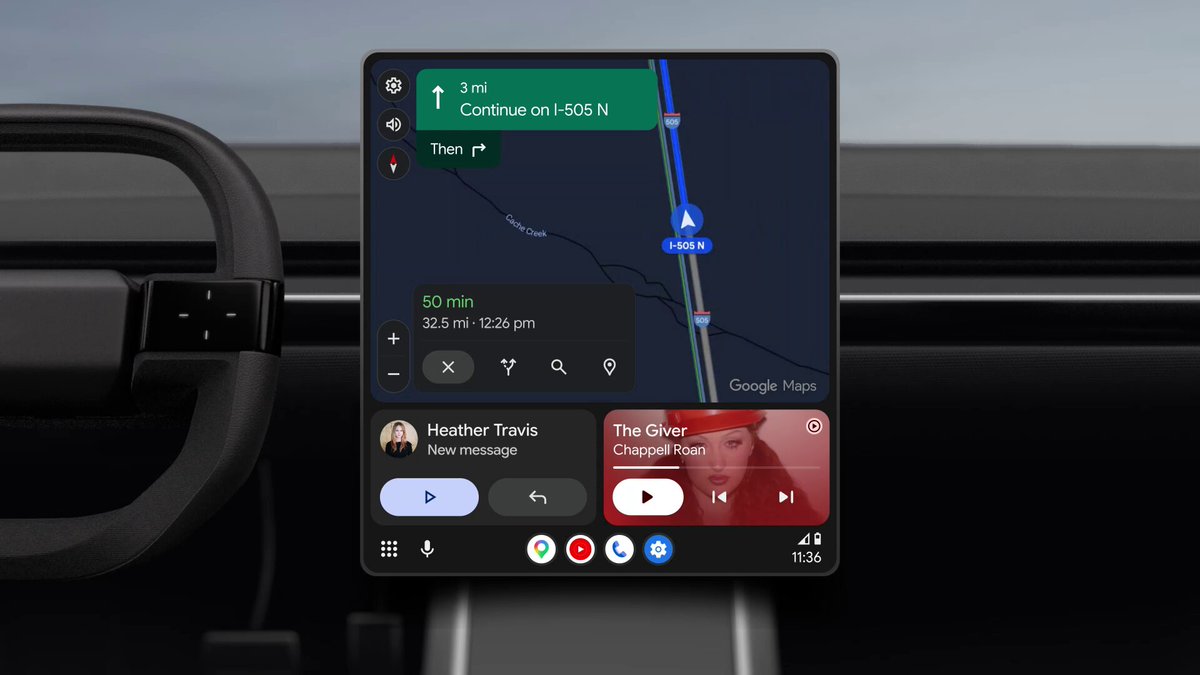
Google announced that Personal Intelligence is rolling out for Gemini on Android Auto, with cars using Google built-in expected to follow in coming months. The feature connects information from Google applications with the user’s permission to improve hands-free assistance. This extends personalized AI into driving contexts. The collected announcement establishes the rollout direction and consent requirement, but does not enumerate supported applications, countries, or all vehicle compatibility details.

06

DeepMind introduces a 10-meter forest typology map

DeepMind introduces a 10-meter forest typology map

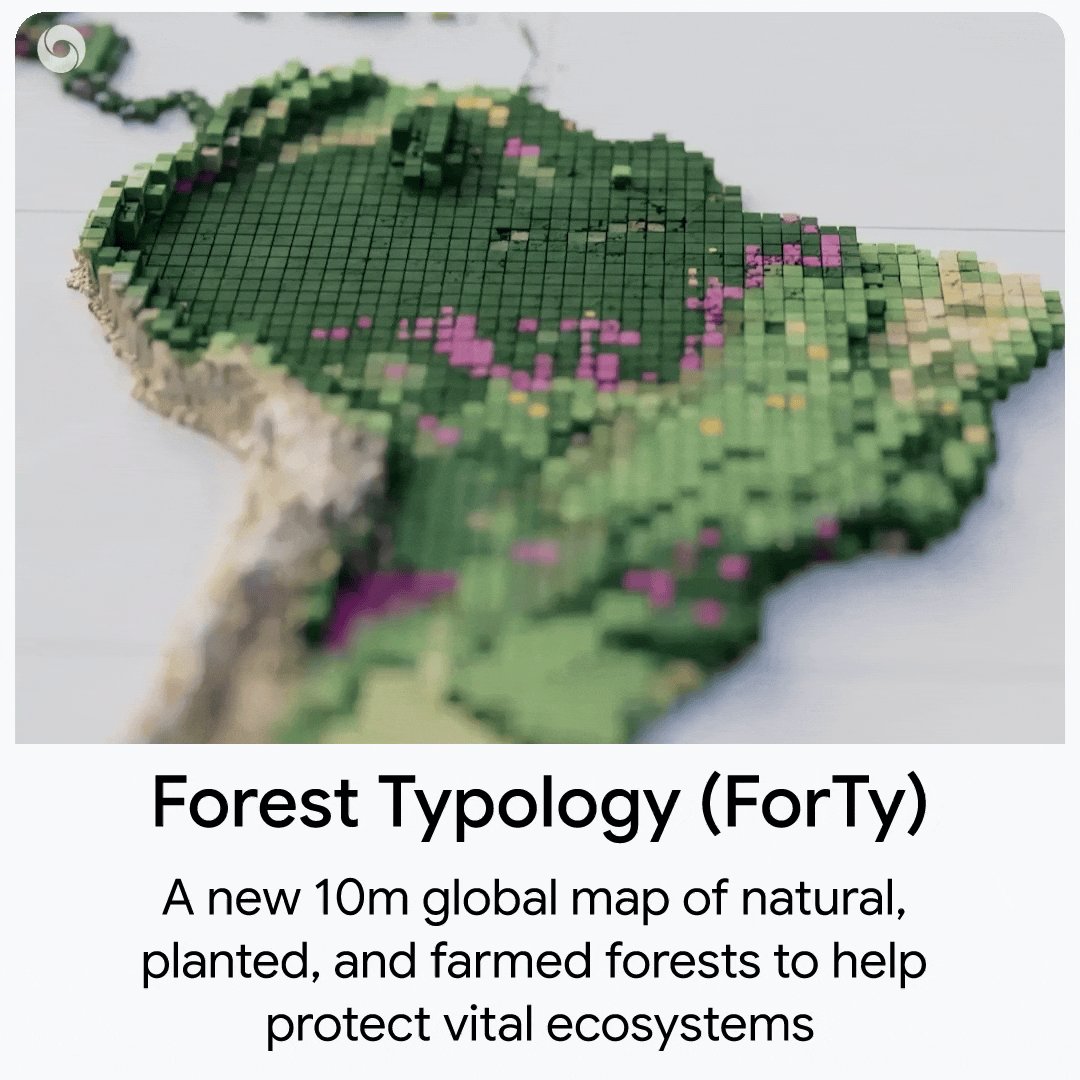
Google DeepMind introduced Forest Typology, or ForTy, a map distinguishing natural, planted, and farmed forests at 10-meter resolution. The stated aim is to help identify deforestation and protect important forests by separating categories that aggregate tree-cover measurements can blur. This is a concrete environmental mapping application rather than a general chatbot update. The collected announcement describes the map and purpose, without providing a complete accuracy assessment.

07

Google demonstrates archaeology reconstruction with Blender MCP

Google demonstrates archaeology reconstruction with Blender MCP

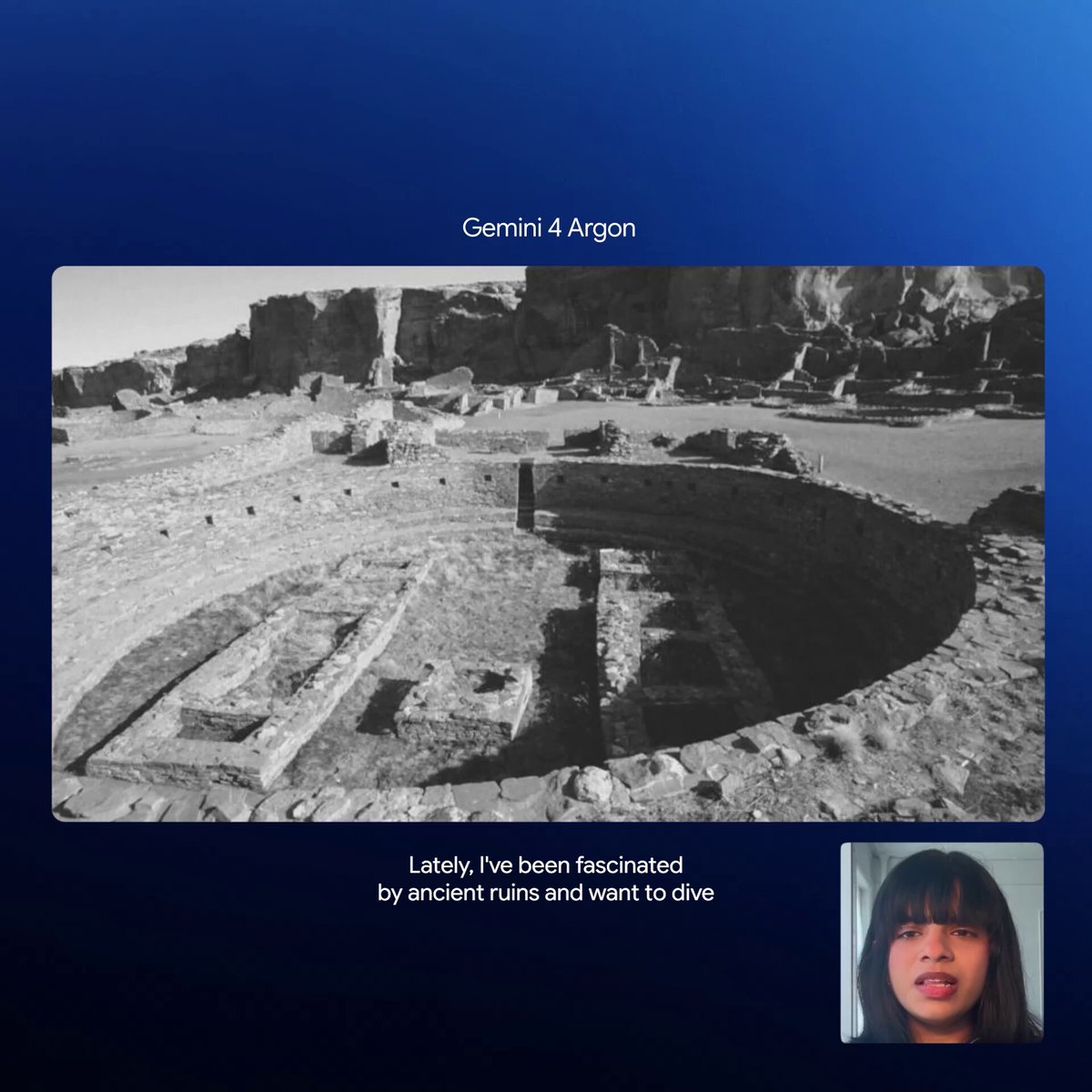
Google demonstrated an explorable 3D reconstruction of Chaco Canyon using Gemini 4 Argon in Antigravity with Blender MCP. The input combined raw LiDAR scans and archaeological archives, illustrating a workflow that connects heterogeneous source material to a 3D creation tool. The example is relevant to tool-using agents and digital heritage. It remains a demonstration, and the collected post does not establish independent archaeological validation of the reconstructed scene.

08

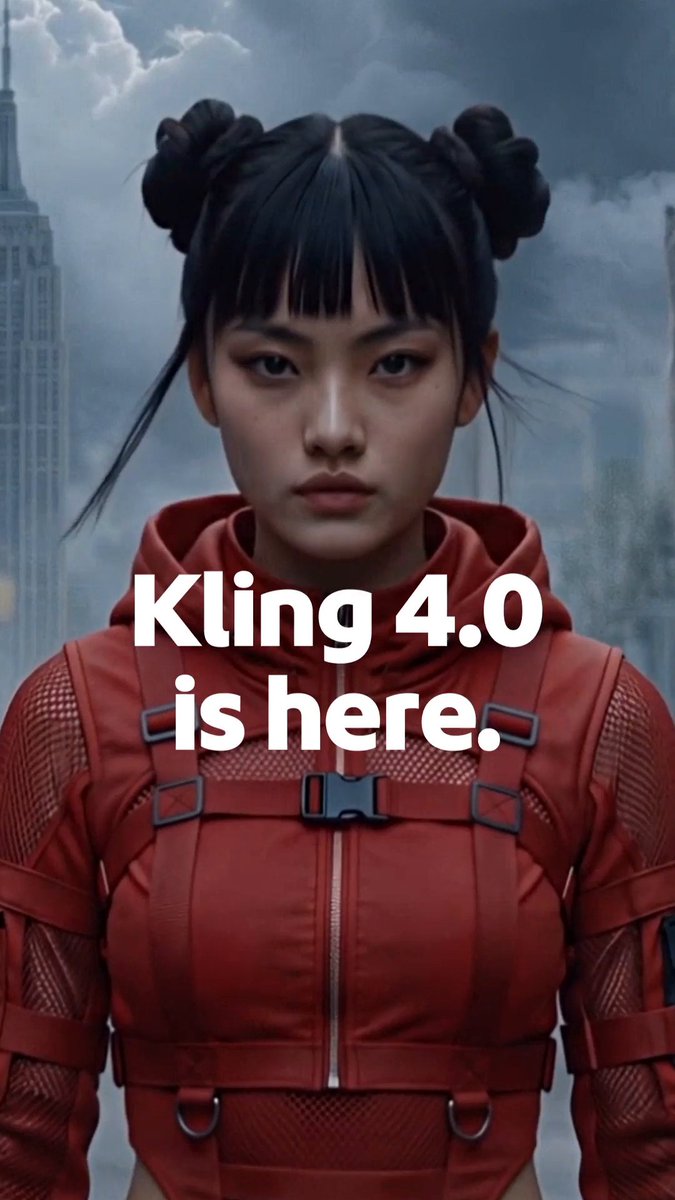
Kling 4.0 becomes available in Firefly

Kling 4.0 becomes available in Firefly

Kling announced that Kling 4.0 is now available in Firefly. The brief official post confirms another distribution channel for its video generation model, rather than detailing a new model release or benchmark. For creative teams, availability inside an existing creation environment can matter as much as standalone model access. The collected announcement does not specify pricing, regional availability, usage limits, or which Firefly workflows expose the integration.

09

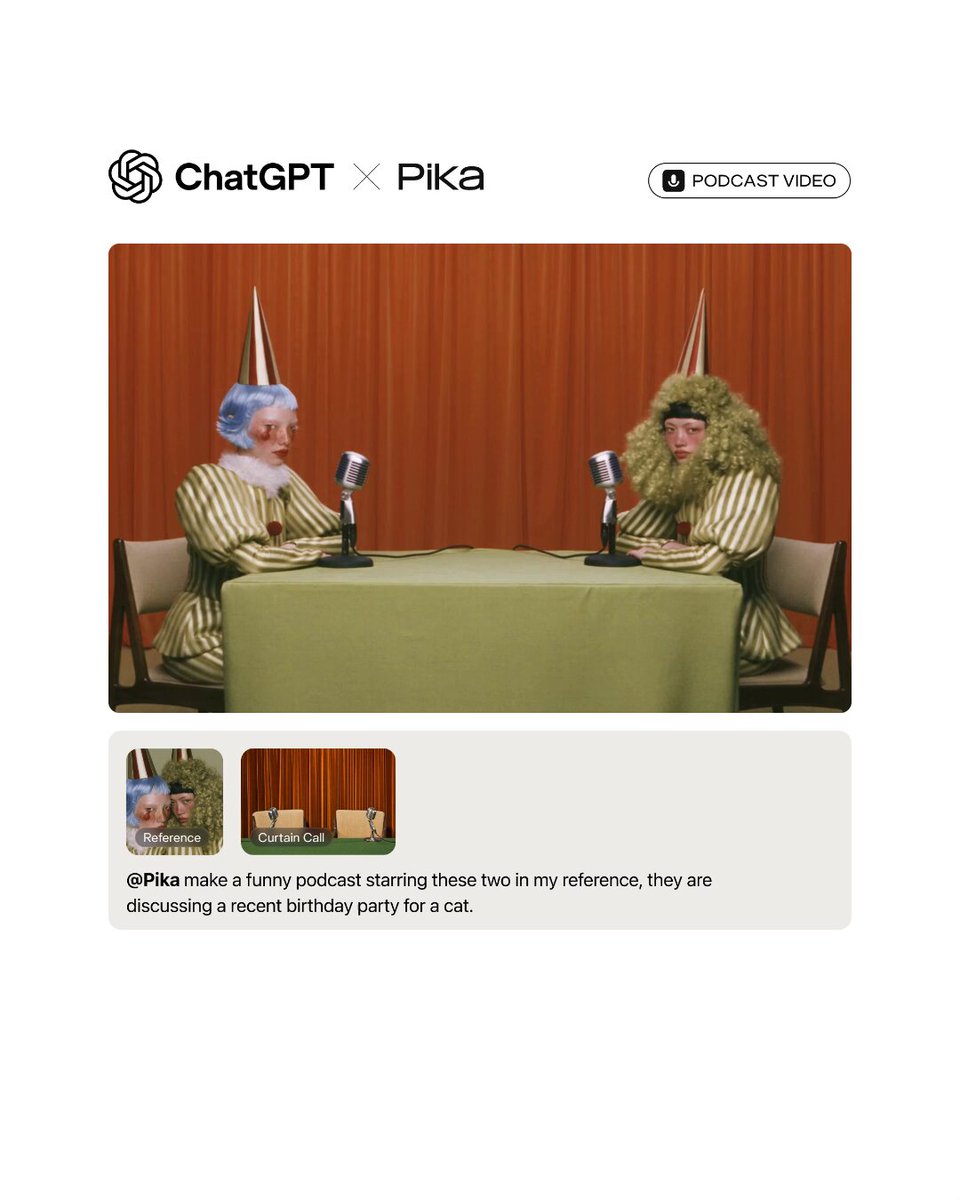
Pika brings a two-host podcast video workflow into ChatGPT

Pika brings a two-host podcast video workflow into ChatGPT

Pika described a workflow in which users brainstorm an episode with ChatGPT and then use Podcast Video to turn it into a two-host show inside the same application. The announcement illustrates generative media tools moving into conversational interfaces where ideas originate. It identifies the intended workflow, but the collected post does not provide quality measurements, supported episode lengths, pricing, or guarantees about the fidelity of generated presenters.

10

Open-model analysis tracks new releases and regulatory controls

Open-model analysis tracks new releases and regulatory controls

Nathan Lambert highlighted an analysis of recent open models alongside regulatory action involving China’s MOFCOM and US DHS controls on DeepSeek. He pointed to models from Reflection, Meta, and Nvidia as signs of stronger US open-weight participation. The post is useful as an industry discussion signal, not a substitute for the underlying legal texts. Readers evaluating access or deployment should distinguish model availability from the precise scope of government restrictions.

GitHub

2 stories
01

Anthropic publishes knowledge-work plugins for Claude Cowork

Anthropic publishes knowledge-work plugins for Claude Cowork

Anthropic’s knowledge-work-plugins repository contains open source plugins primarily intended for knowledge workers using Claude Cowork. The collected GitHub snapshot shows 31,380 stars and Python as the listed language. The repository is a practical place to inspect how repeatable professional workflows are packaged for an assistant. Popularity provides a discovery signal, while suitability still depends on the particular plugin’s instructions, required integrations, and the user’s task.

02

Graphify turns codebases and documents into queryable graphs

Graphify turns codebases and documents into queryable graphs

Graphify describes a skill that converts codebases, documentation, SQL schemas, configuration files, and PDFs into a queryable knowledge graph. It supports environments including Claude Code, Cursor, Codex, and Gemini CLI, using local deterministic AST parsing and explained edges without a vector store. The collected repository snapshot shows 132,513 stars. Its architectural distinction is explicit structural relationships, which can complement workflows that otherwise rely on text search or embedding-based retrieval.

HF HuggingFace

5 stories
01

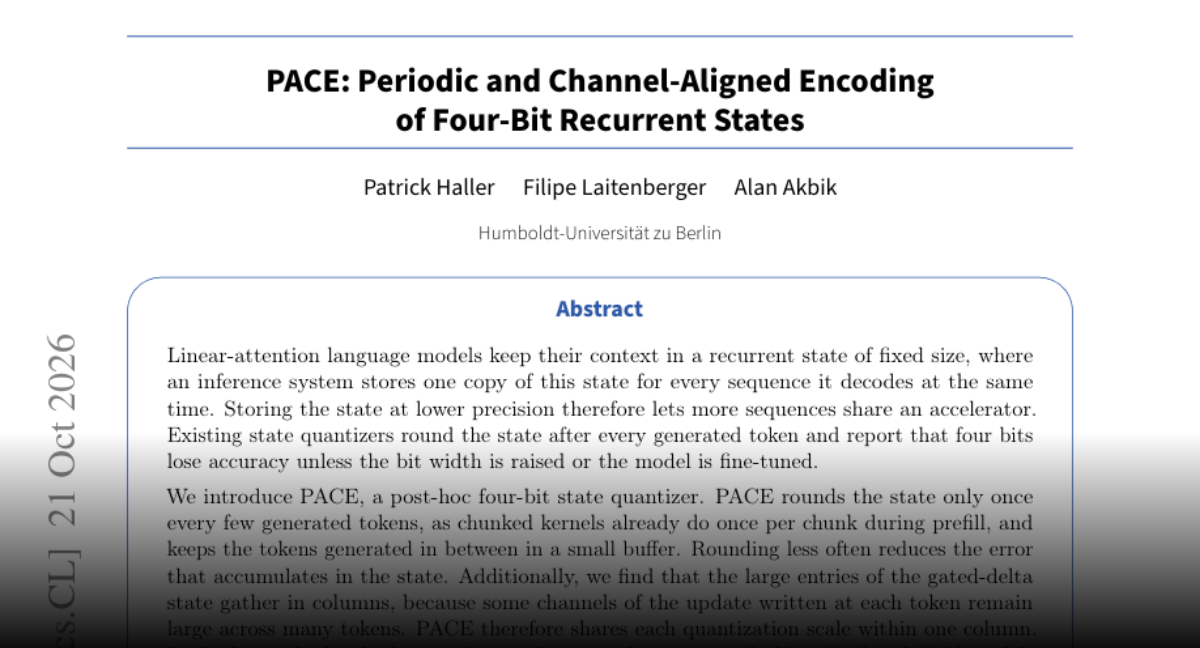
PACE compresses recurrent model state with less frequent rounding

PACE compresses recurrent model state with less frequent rounding

PACE proposes post-hoc four-bit quantization for recurrent states in linear-attention models. It rounds states periodically rather than after every token, buffers intervening tokens, aligns scales with columns, and keeps selected error-sensitive heads at eight bits. Across four hybrid models, the authors report competitive accuracy with an eight-bit baseline on the three larger models at roughly two thirds of its memory. The approach targets concurrent decoding capacity without requiring model fine-tuning.

02

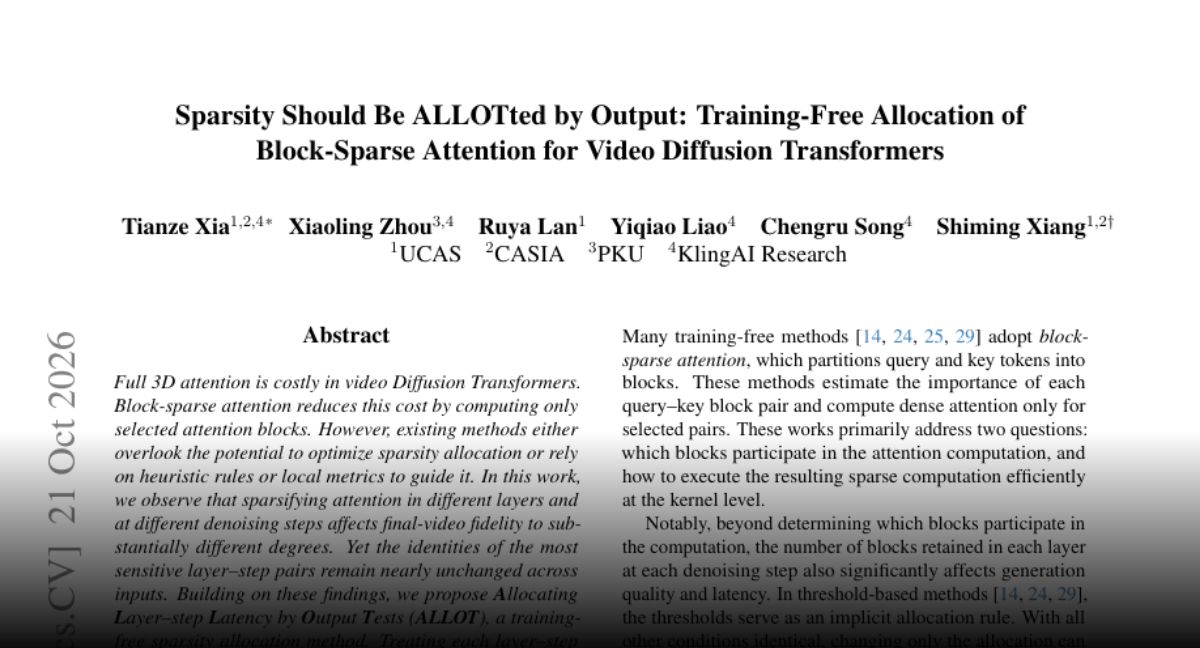
ALLOT allocates video attention sparsity by output impact

ALLOT allocates video attention sparsity by output impact

ALLOT is a training-free method for allocating block-sparse attention across video diffusion layers and denoising steps. It probes each layer-step pair’s contribution to final-video error, then optimizes density under a measured latency budget while preserving existing kernels. The authors report an 11.8 dB PSNR gain on HunyuanVideo with XAttention and favorable results across nine settings. The contribution concerns where sparsity is applied, rather than inventing a replacement attention kernel.

03

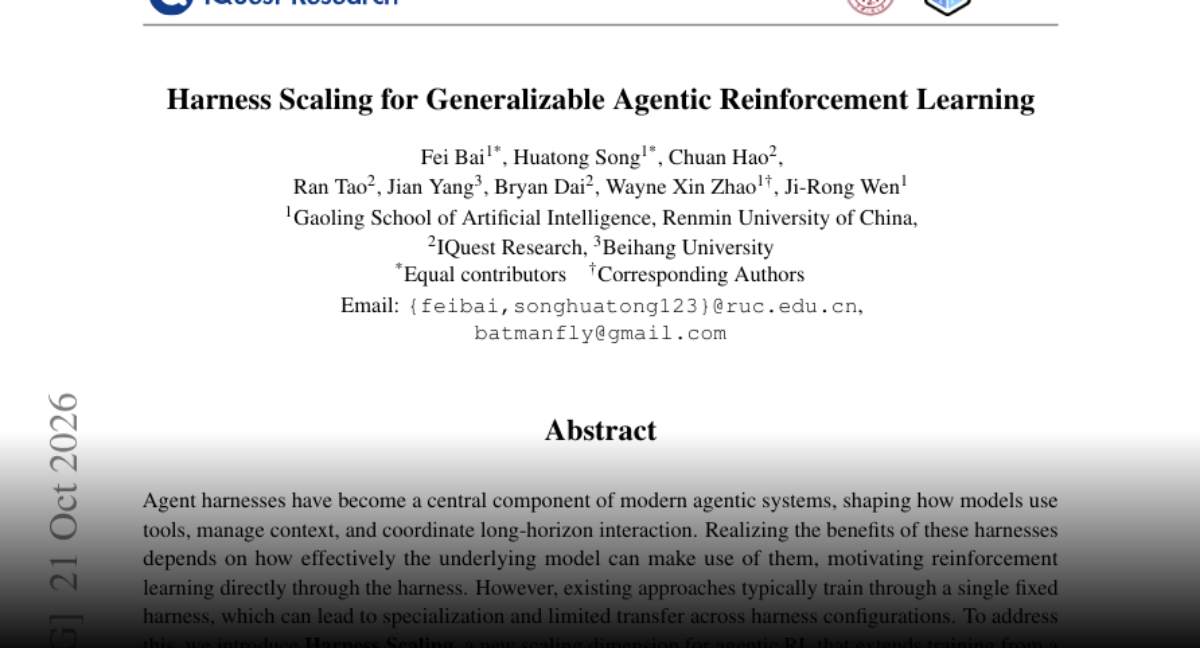
Harness Scaling trains agents across execution configurations

Harness Scaling trains agents across execution configurations

Harness Scaling treats diversity in agent execution environments as a dimension of reinforcement learning. Instead of training through one fixed harness, it samples a structured space of configurations with balanced coverage and controlled variation. The authors report improved generalization to unseen configurations and transfer to external black-box harnesses across multiple benchmarks and model scales. The practical implication is that tool and context-management arrangements can be part of training diversity, not merely deployment plumbing.

04

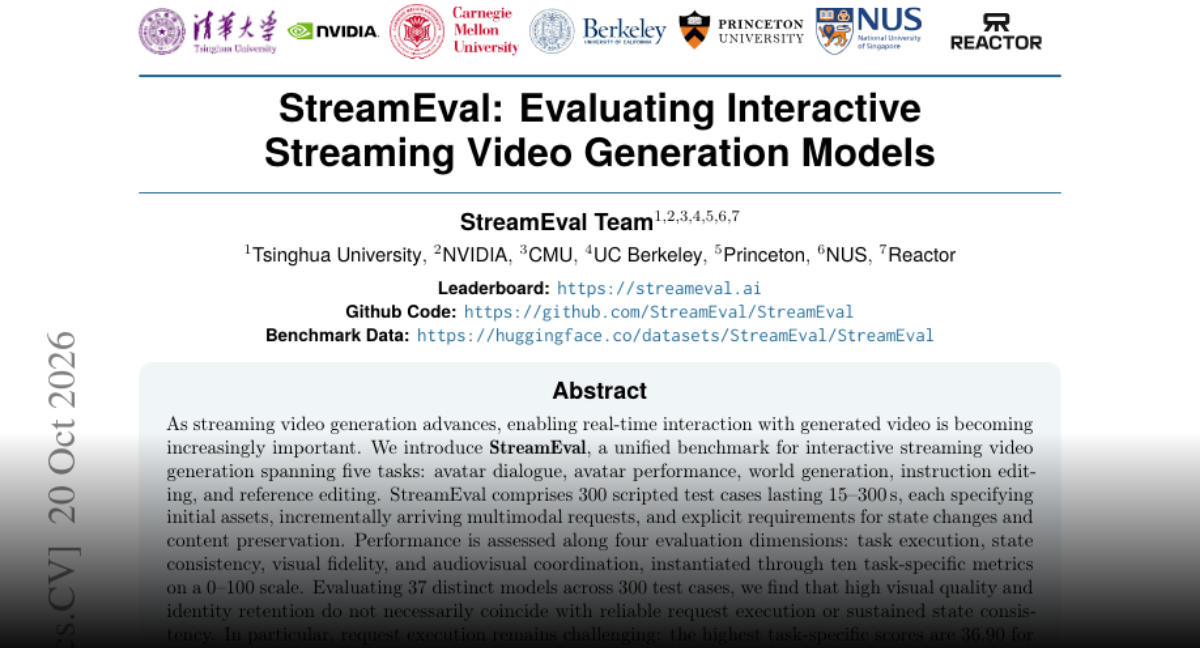
StreamEval tests whether interactive video follows instructions

StreamEval tests whether interactive video follows instructions

StreamEval evaluates interactive streaming video across avatar dialogue, performance, world generation, instruction editing, and reference editing. Its 300 scripted tests span 15 to 300 seconds, measuring execution, state consistency, visual fidelity, and audiovisual coordination across 37 models. The authors find that attractive output and identity retention do not guarantee reliable instruction following. Low leading scores on several execution metrics point to timing and preservation constraints as unresolved obstacles for interactive generative systems.

05

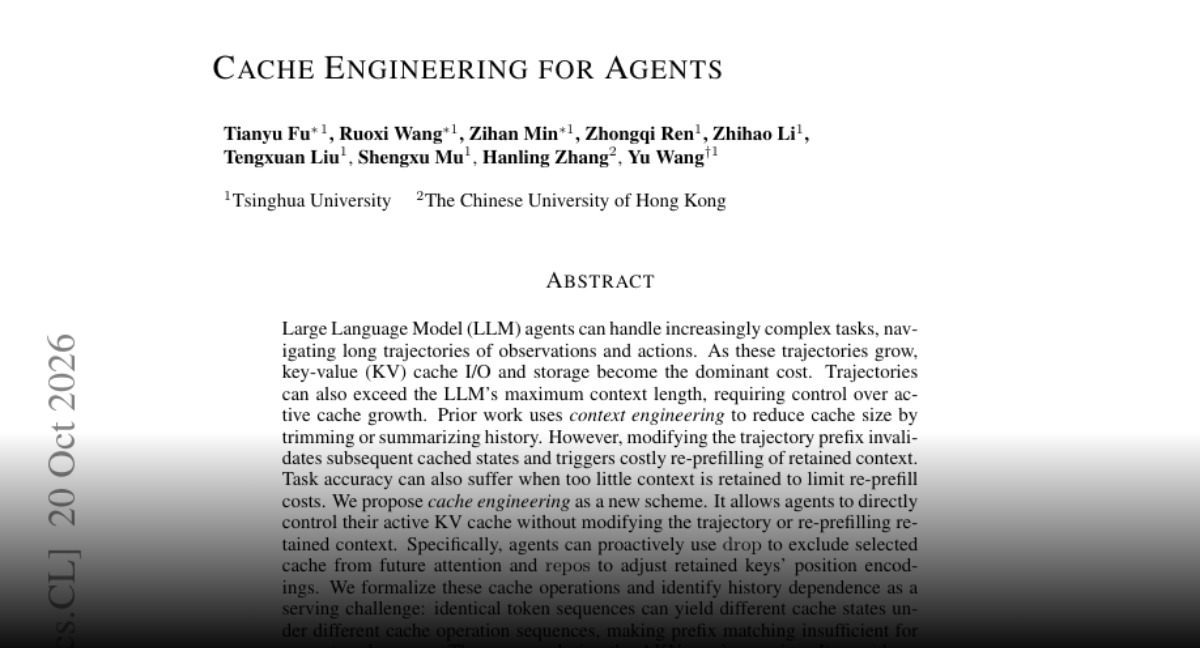
Cache Engineering gives agents direct control of KV state

Cache Engineering gives agents direct control of KV state

Cache Engineering proposes letting agents drop cache entries and reposition retained keys without rewriting their trajectory or re-prefilling remaining context. Its AKV serving engine handles the resulting history-dependent reuse, eviction, and restoration. The authors report a 1.7-point average score improvement and 27.7 percent lower cost than threshold-triggered summarization, with additional serving gains. The work makes cache policy an explicit agent decision and shows why token-prefix matching alone can become insufficient.