NO/FOMO

Independent AI signal, once a day

The AI briefing worth opening.

ISSUE DATE2026-10-25DEFAULT EDITION
This issue
—
All time
—

AI Blog

3 stories
01

OpenAI explains forward deployed engineering

OpenAI published an explanation of what forward deployed engineering means within the company. The article addresses the organizational side of bringing AI into real workflows, complementing model releases and benchmark discussions. Its relevance is the gap between access to a capable model and a useful implementation in a specific operating environment. Readers evaluating enterprise AI can use this first-party framing to ask how deployment work, customer requirements, and ongoing product development fit together.


02

SGLang details Step 5 Preview inference and RL support

SGLang details Step 5 Preview inference and RL support

SGLang’s Step 5 Preview post describes day-zero inference and reinforcement learning support with SGLang and Miles, emphasizing efficient serving for long-context agents. The announcement connects model availability with the infrastructure needed to run and improve it. This is an earlier technical release surfaced in the current collection, not a launch dated today. Its engineering relevance is the combination of agent-serving requirements and training support in the same deployment discussion.

03

SGLang Omni separates multi-stage models from deployment

SGLang Omni separates multi-stage models from deployment

SGLang Omni describes a serving approach that decouples multi-stage models from deployment through SPG topology and heterogeneous stage scheduling. The post reports H200 benchmarks across eighteen models, giving infrastructure readers a specific evaluation setting to inspect. Published earlier in October, it remains relevant to teams working with complex multimodal pipelines. The core idea is to make stage structure and scheduling explicit rather than treating every model as a single uniform serving workload.

Hacker News

4 stories
01

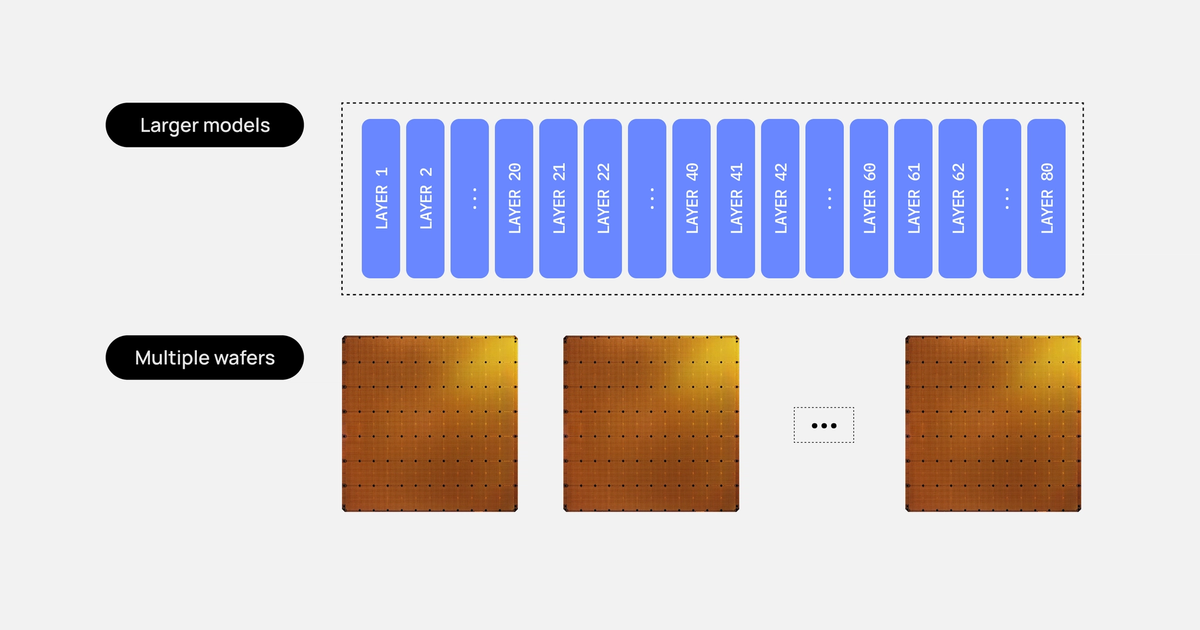
Cerebras explains deployment of trillion-parameter models

Cerebras explains deployment of trillion-parameter models

Cerebras published an explanation of how it deploys trillion-parameter frontier models, drawing substantial discussion on Hacker News. The post puts large-model serving infrastructure at the center of the day’s technical agenda. Model scale alone does not establish cost, latency, or workload suitability, so readers should distinguish the deployment claim from a comparative performance result. For infrastructure teams, the article is a primary-source starting point for evaluating an alternative approach to serving very large models.

02

Samsung TensorFlow Lite tracking claim sparks privacy debate

Samsung TensorFlow Lite tracking claim sparks privacy debate

A widely discussed Hacker News submission points to a claim that Samsung runs a TensorFlow Lite model on a 960-by-540 image to track users. The underlying source is a social post, so the claim should not be treated as an independently verified description of every Samsung device. Its relevance is the privacy boundary around embedded machine learning: users need clear explanations of what devices analyze and what happens to the resulting information.

03

Nikon contest controversy puts image authenticity in focus

Nikon contest controversy puts image authenticity in focus

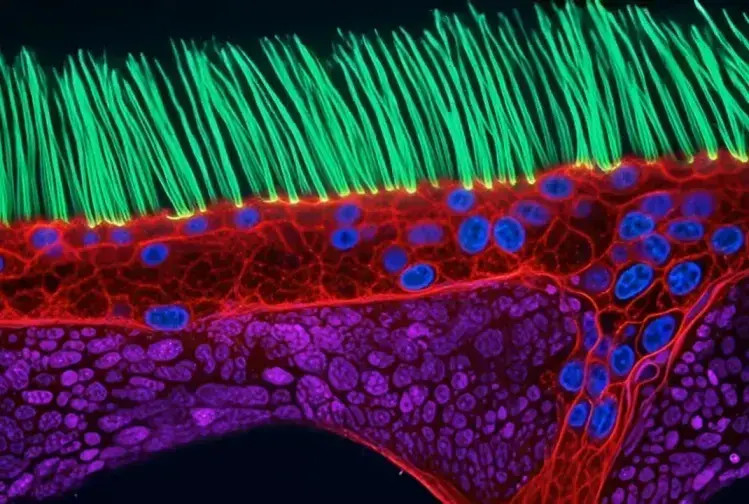
TechSpot reports that a Nikon photography contest winner lost the title after scientists identified signs of AI in the image. The story brings generative-image authenticity into a setting where provenance affects recognition and trust. The headline establishes the reported outcome, but does not itself provide a general-purpose detection method. For organizers and creators, the broader issue is how to define acceptable image processing and document authorship before judging and awarding work.

04

Open-source subreddit restrictions fuel debate over LLM projects

A Hacker News submission describes new restrictions in the open-source subreddit affecting solo projects and projects using language models. The linked moderation post has prompted debate about what communities should accept as worthwhile contributions. This is a community-governance issue rather than a change to open-source licensing. For developers publishing AI-assisted work, it highlights the need to understand venue-specific contribution expectations and to show the substance and maintenance commitment behind a project.

Twitter

7 stories
01

Greg Brockman reports compression-library remote-code-execution discovery

Greg Brockman reports compression-library remote-code-execution discovery

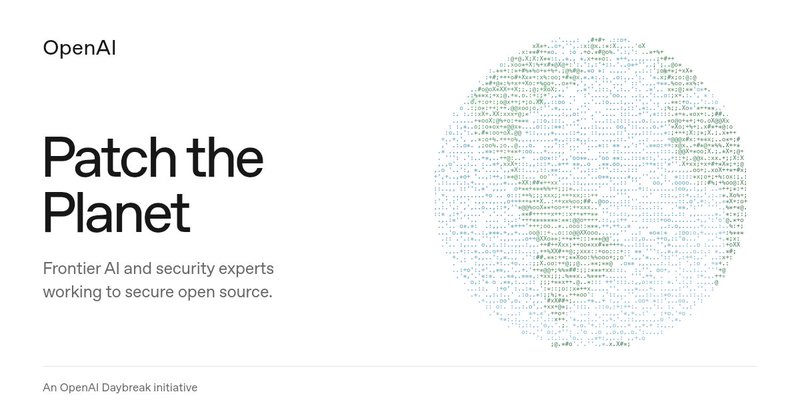
Greg Brockman says his team found a remote code execution vulnerability in a widely deployed compression library and has been coordinating disclosure. His post emphasizes the difficulty of patching software that is embedded in many downstream products. The announcement makes dependency management a concrete part of the AI security discussion: finding a flaw is only one step, while coordinated remediation determines how quickly users receive protection.

02

OpenAI describes frontier-model-assisted infrastructure defense

OpenAI describes frontier-model-assisted infrastructure defense

Greg Brockman shared an account of work to secure OpenAI’s frontier model training environment using tools built around its frontier cyber models. He says those tools have improved defenses beyond what the team could achieve without assistance. This is a first-party account of defensive use, rather than an independent effectiveness measurement. Its practical significance is the move from discussing model security capabilities to applying them inside sensitive training infrastructure.

03

Kimi K3.1 Pro prompts debate over benchmarks and adoption

Kimi K3.1 Pro prompts debate over benchmarks and adoption

Nathan Lambert’s latest Interconnects podcast asks why Kimi K3.1 Pro received a mixed reaction despite strong benchmark results, and whether those results will translate into adoption. The discussion captures an important distinction for model buyers: benchmark performance can establish potential without settling everyday usefulness. This is commentary on reception, not a new benchmark evaluation, and offers a useful frame for comparing impressive scores with sustained developer and user demand.

04

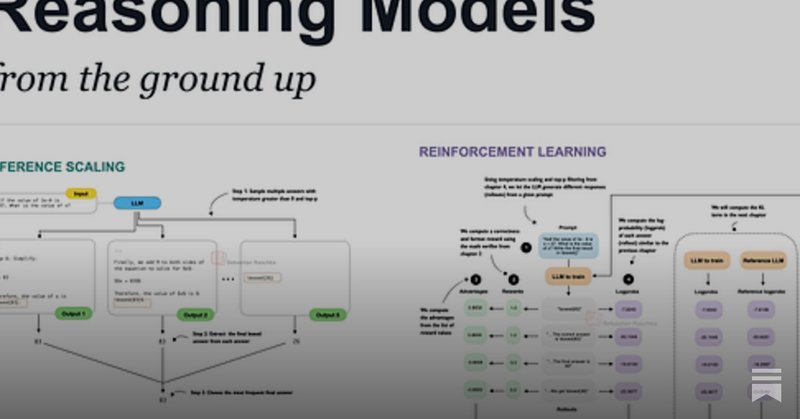
Sebastian Raschka completes reasoning-from-scratch video series

Sebastian Raschka completes reasoning-from-scratch video series

Sebastian Raschka announced that his complete reasoning-from-scratch video series is now available. The release gives learners a consolidated route into a topic often encountered through scattered model announcements and research updates. His post points readers to the series and says regular model and research coverage will resume in November. For practitioners, the immediate value is an educational resource for understanding reasoning systems; the announcement does not claim a new model or benchmark result.

05

Thomas Wolf highlights biosafety-filter friction for researchers

Thomas Wolf highlights biosafety-filter friction for researchers

Thomas Wolf says an AI assistant interrupted a summary of his own team’s model notes with a biosafety filter. He uses the experience to highlight friction between expanding AI work in biology and access for the scientists and clinicians who could use it. The post describes one incident, not a measured failure rate. It raises a practical product question: how can systems preserve meaningful safeguards while supporting legitimate technical discussion and research workflows?

06

Pika showcases video creation inside ChatGPT

Pika showcases video creation inside ChatGPT

Pika shared a creator demonstration of its integration inside ChatGPT, describing a wrestling-match video made from one prompt. The example illustrates how video generation is moving into conversational interfaces that users already work with. It remains a vendor showcase rather than a systematic quality assessment. For creative teams, the relevant development is the shorter path from a conversational request to generated video, with output quality and controllability still requiring direct evaluation.

07

OlmoEarth v1.3 availability points to planetary-scale embeddings

A post shared by Kyle Wiggers reports that OlmoEarth v1.3 is available on Hugging Face and can create embeddings for the whole planet at ten-meter resolution. The update highlights an application of representation models beyond text and chat. The collected announcement does not provide an accuracy benchmark or deployment cost, so the useful takeaway is the stated availability and spatial scope, with downstream suitability depending on the intended geospatial task.

GitHub

2 stories
01

Cindy offers an open-source agent starting point

Cindy offers an open-source agent starting point

The Cindy repository describes an open-source AI agent intended to work out of the box. The TypeScript project appears among the day’s GitHub candidates with more than four thousand stars, indicating developer interest rather than proof of reliability. It is relevant to teams exploring packaged agent experiences instead of assembling every component themselves. Before adopting it, practitioners should examine the implementation and operational assumptions against their own tasks, permissions, and maintenance requirements.

02

Microduck brings a small biped robot to open-source builders

Microduck brings a small biped robot to open-source builders

Pollen Robotics’ Microduck repository presents a tiny biped duck robot and has attracted more than eleven thousand GitHub stars. The project gives builders a concrete robotics artifact to explore alongside the broader enthusiasm for embodied AI. Its short repository description does not establish autonomous capabilities or learning performance. The useful distinction is between an accessible hardware project and a demonstrated intelligent behavior stack; prospective users should investigate both before choosing it for experiments.