NO/FOMO

Independent AI signal, once a day

The AI briefing worth opening.

ISSUE DATE2026-10-28DEFAULT EDITION
This issue
—
All time
—

AI Blog

4 stories
01

Anthropic offers government customers a 40% Claude discount

Anthropic offers government customers a 40% Claude discount

Anthropic expanded its GSA partnership with a 40% discount on Claude Enterprise, Claude for Government, and the Claude API. The agreement extends to state, local, tribal, and territorial governments, with direct purchases available now and cloud-provider purchasing planned in the coming months. Anthropic says there is no minimum spending commitment. The company also plans implementation support, making procurement terms and adoption assistance central parts of its public-sector expansion.

02

OpenAI expands Oracle partnership around ChatGPT applications

OpenAI announced an expansion of its Oracle partnership to bring business applications and AI agents into ChatGPT and support new Oracle offerings. The announcement points toward a closer connection between conversational interfaces and enterprise software. For organizations, the relevant development is access to business workflows through an AI interface. The collected summary does not provide deployment dates, pricing, or a complete list of supported applications, so those details remain outside this report.

03

Legora describes agent-based legal workflows

An OpenAI customer story describes how Legora uses OpenAI models, ChatGPT, and Codex in legal workflows, including expanded contract analysis. The stated aim is to reduce routine work and give lawyers more time for higher-value activities. This is a concrete vertical application of agents in professional services, although the collected account is a vendor case study. It does not supply independent measurements of legal accuracy, time savings, or business outcomes.

04

Check Point uses Daybreak for vulnerability research

OpenAI describes Check Point using Daybreak to accelerate the research behind new security protections. The case study focuses on helping analysts move from vulnerability intelligence to customer defenses more quickly. It illustrates a defensive application of AI within security research workflows, where investigation and operational response are connected. The collected summary does not quantify the improvement or describe a particular vulnerability, so it supports a workflow example rather than a broad performance claim.

Hacker News

3 stories
01

Cursor Agent SDK resurfaces in developer discussion

Cursor Agent SDK resurfaces in developer discussion

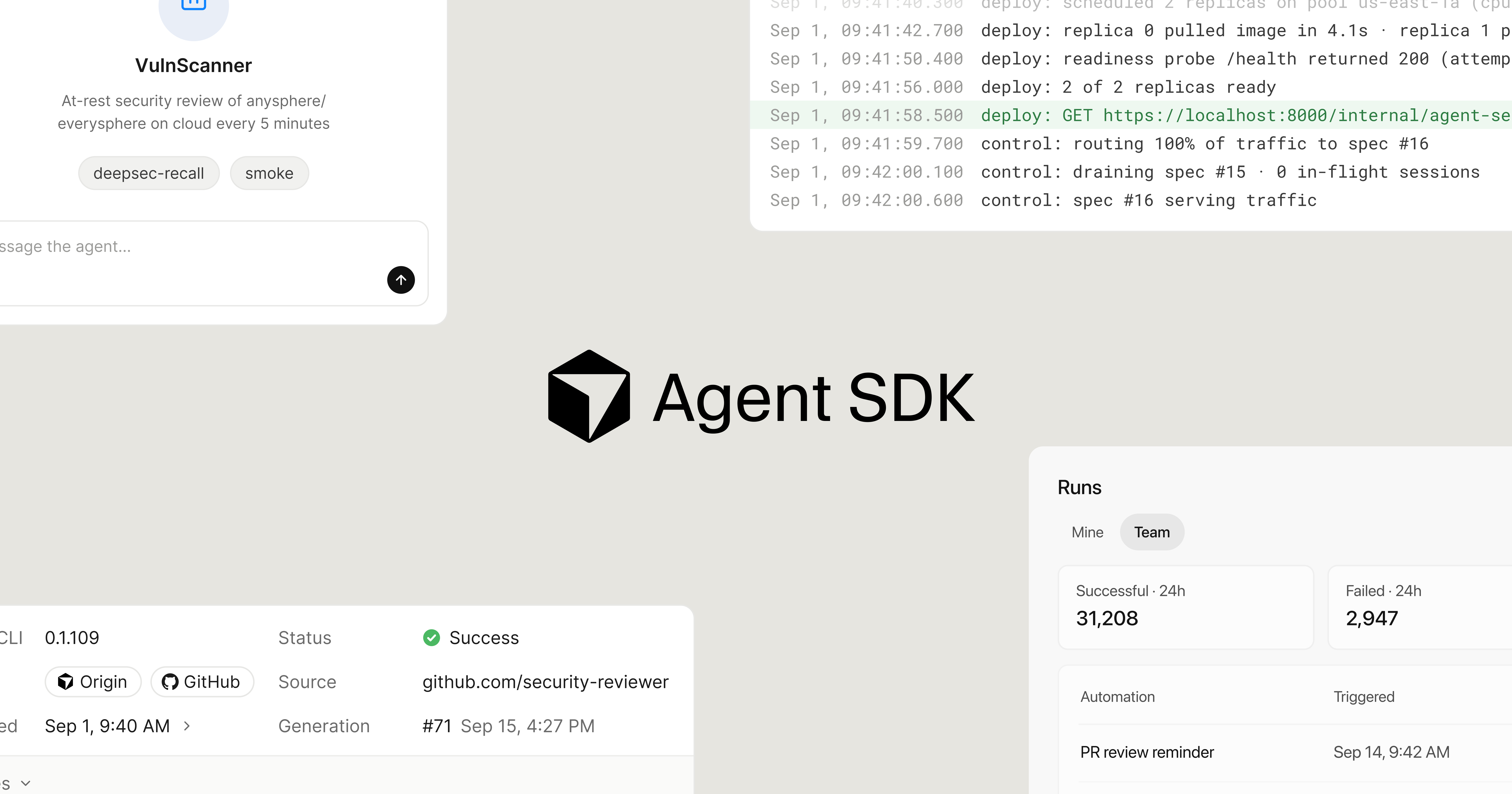
Cursor's Agent SDK article, published October 20 and circulating on Hacker News today, describes agents defined through Markdown prompts and TypeScript tools. The framework supports event-driven workflows, evaluations, event replay, and delegation, with deployment either to Cursor infrastructure or as a Node process on a team's own infrastructure. The practical shift is treating recurring agents as version-controlled software projects whose behavior can be reviewed and tested alongside application code.

02

Valve addresses AI clones and low-quality game discovery

Valve addresses AI clones and low-quality game discovery

At Steam Indie Connect, Valve representatives advised developers concerned about AI clones to build player communities and keep improving their games. Reporting from the event says Valve acknowledged complaints about low-quality entries and explained Next Fest's initial randomized exposure before personalized recommendations. Representatives also discussed threats to clone games for extortion, encouraging reports while describing law enforcement's role. The response highlights platform governance pressures created by cheaper automated game production.

03

AI game copies intensify copyright disputes

AI game copies intensify copyright disputes

Kotaku reports that Microsoft and Epic Games have issued takedown notices targeting AI-assisted game ports and recreations, while also using AI in their own businesses. The article includes Tim Sweeney's response distinguishing unauthorized Fortnite use from the legal questions around model training. It also reports that Epic is working to remove restrictions on training from Unreal Engine and MetaHuman outputs. The dispute exposes different claims about training data, generated outputs, and protected game assets.

Twitter

8 stories
01

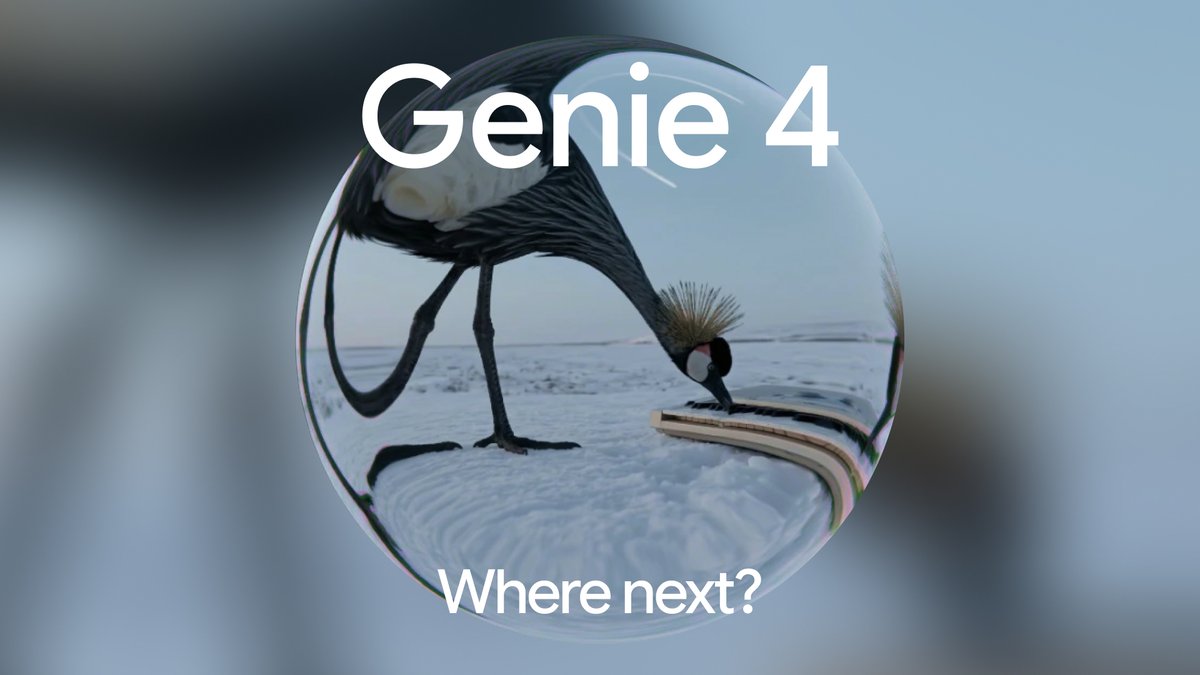
Google DeepMind introduces Genie 4 interactive worlds

Google DeepMind introduces Genie 4 interactive worlds

Google DeepMind introduced Genie 4, describing it as its most realistic and interactive world model so far. The announcement emphasizes environments that respond in real time, including sound and people who move, react, and speak. This makes interactive simulation a central part of the release, beyond generating a fixed video clip. The post demonstrates the direction of the product but does not establish independent performance measurements or deployment costs.

02

Anthropic expands into drug discovery research

Anthropic expands into drug discovery research

Anthropic says its scientists have formed deep research partnerships with six organizations developing new medicines over the past few months. The company also says it has begun drug discovery efforts of its own, using those collaborations to understand how Claude can support different stages of research. The announcement marks a concrete expansion into scientific work. It does not, in the collected post, establish clinical success or name an approved treatment.

03

OpenAI leadership announces AI-assisted scientific discoveries

OpenAI leadership announces AI-assisted scientific discoveries

Greg Brockman announced three scientific discoveries spanning harmonic analysis, computational complexity, and quantum field theory. He presented them as evidence that AI is beginning to contribute to scientific understanding across mathematics, computer science, and physics. These are significant research claims from company leadership, rather than an independent assessment of the underlying papers. Readers should distinguish the announcement from verification of novelty, proofs, and downstream practical significance in each field.

04

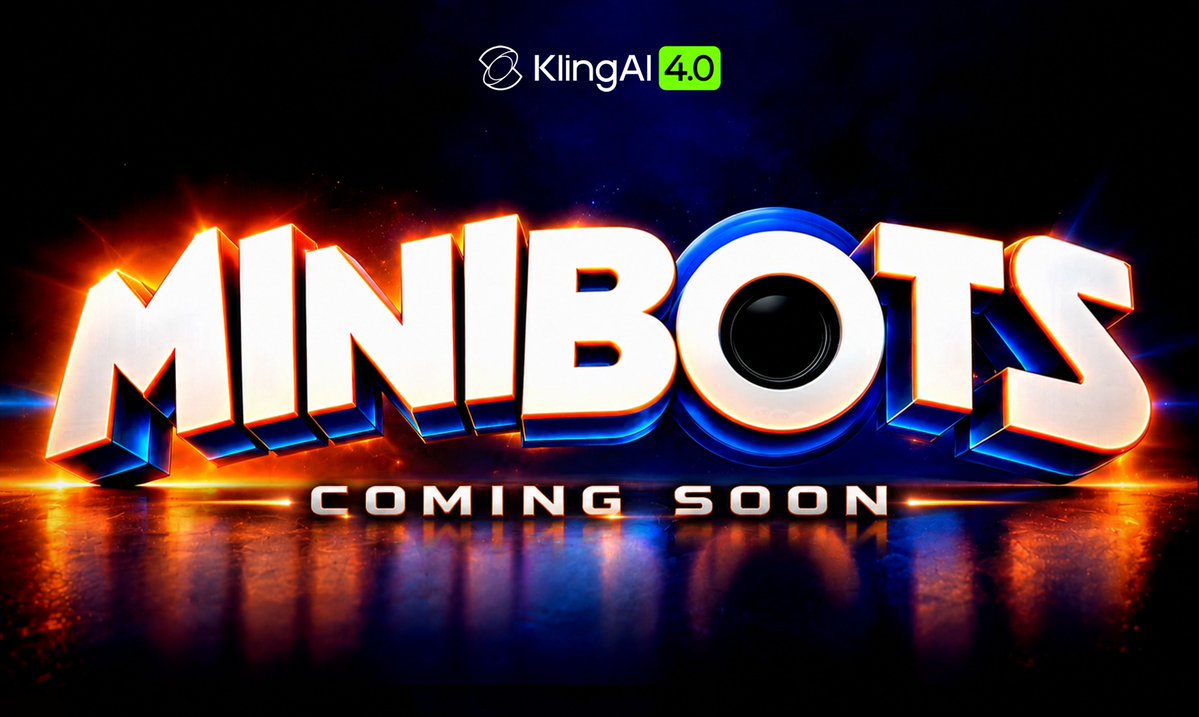
Kling becomes technology partner for animated feature Minibots

Kling becomes technology partner for animated feature Minibots

Kling AI announced an exclusive technology partnership with Evolutionary Films for the upcoming animated feature Minibots. The post names John Adams as director, Diane Shorthouse as producer, and Tony Bancroft, a co-director of Mulan, for character design. The agreement is a concrete example of generative video technology entering a feature production pipeline. The announcement does not quantify how much of the film will be generated or provide production efficiency measurements.

05

Nathan Lambert calls for more task-specific model benchmarks

Nathan Lambert calls for more task-specific model benchmarks

Nathan Lambert argues that claims about the demise of open models are exaggerated, while acknowledging that the previous Artificial Analysis index made them look stronger. His proposed response is more specific intelligence indices that reflect the different tasks people actually assign to language models. This is an evaluation argument rather than a new model release. It highlights why a single aggregate ranking can obscure the strengths and weaknesses relevant to a particular deployment.

06

Runway launches App Studio for custom creative applications

Runway launches App Studio for custom creative applications

Runway introduced App Studio as a way to build creative applications by describing the desired workflow in natural language. The company says the applications can generate images, video, and audio using Runway models and Brand Kits, and can be used by an individual or a team without writing code. The release extends generative tools toward reusable creative workflows. Its announcement describes intended capabilities rather than independently measured quality or productivity gains.

07

Hugging Face dataset updates illustrate large transfer savings

Hugging Face dataset updates illustrate large transfer savings

Thomas Wolf highlighted a robotics data example from MicroAGI in which updating a 239 GB dataset on Hugging Face transferred only 2.6 MB and finished in about a minute. The observation concerns an update with small changes, not a first upload of the entire dataset. It illustrates why efficient incremental data movement matters as robotics teams accumulate large recordings and repeatedly revise their training datasets during development and experimentation.

08

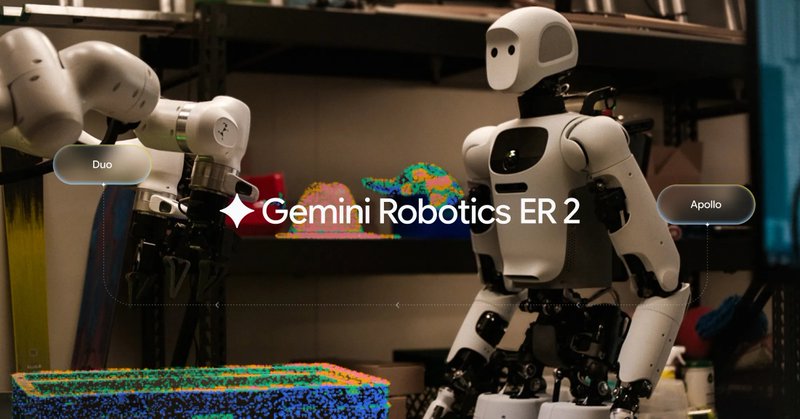
Gemini Robotics Embodied Reasoning 2 reaches Google Cloud

Gemini Robotics Embodied Reasoning 2 reaches Google Cloud

A Google Cloud announcement shared by Zoubin Ghahramani says Gemini Robotics Embodied Reasoning 2 is now available on Google Cloud. That availability gives developers another route to access embodied reasoning capabilities through cloud infrastructure. The collected post is brief and does not specify pricing, supported hardware, or detailed integration requirements. Its significance is the distribution step: robotics-oriented models are moving toward services developers can incorporate into their own systems.

GitHub

2 stories
01

Macro combines team applications with shared AI memory

Macro combines team applications with shared AI memory

Macro is a trending open-source workspace that describes a unified environment for email, chat, documents, tasks, agents, calls, and CRM. Its repository emphasizes links between these components and shared AI memory. The project is relevant to teams exploring how agents can work across existing collaboration boundaries. The collected repository description outlines the product's scope, but does not demonstrate memory reliability, enterprise access controls, or measured improvements in team productivity.

02

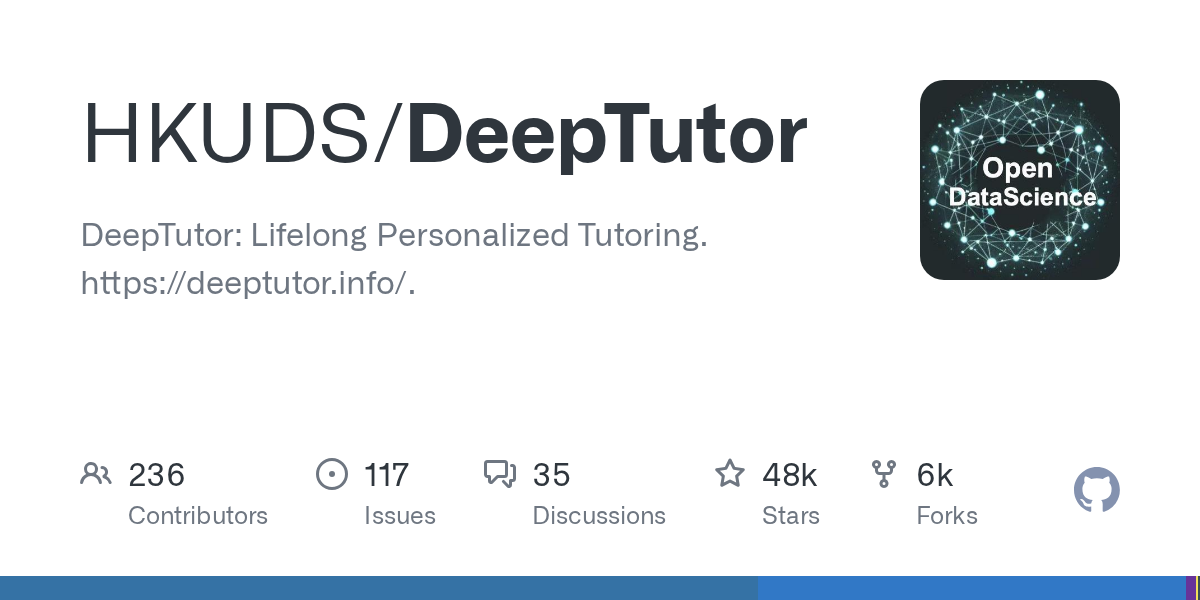
DeepTutor attracts attention for personalized tutoring

DeepTutor attracts attention for personalized tutoring

HKUDS's DeepTutor repository appeared among the collected GitHub trending projects and describes its focus as lifelong personalized tutoring. The project points to sustained educational assistance as an application area for AI systems, rather than a single isolated answer. The available repository description is brief, so it does not establish learning gains, supported curricula, or the quality of personalization. Readers interested in educational agents can use the repository as a starting point for evaluation.

HF HuggingFace

8 stories
01

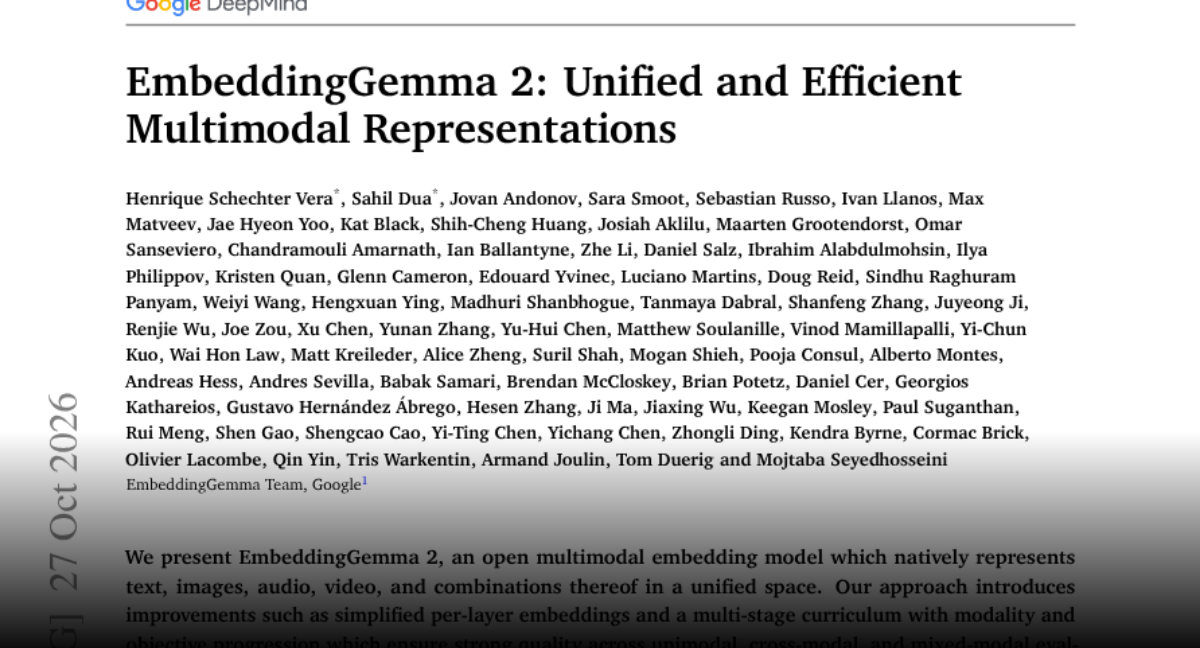
EmbeddingGemma 2 unifies multimodal representations

EmbeddingGemma 2 unifies multimodal representations

EmbeddingGemma 2 is an open embedding model designed to represent text, images, audio, video, and their combinations in one shared space. Its authors report competitive performance against specialist models and substantially larger alternatives. The design supports selective encoder loading, adjustable vision token budgets, smaller embedding dimensions, and quantized weights. Those options make the paper relevant to multimodal retrieval systems that must balance quality against memory and inference budgets in constrained deployments.

02

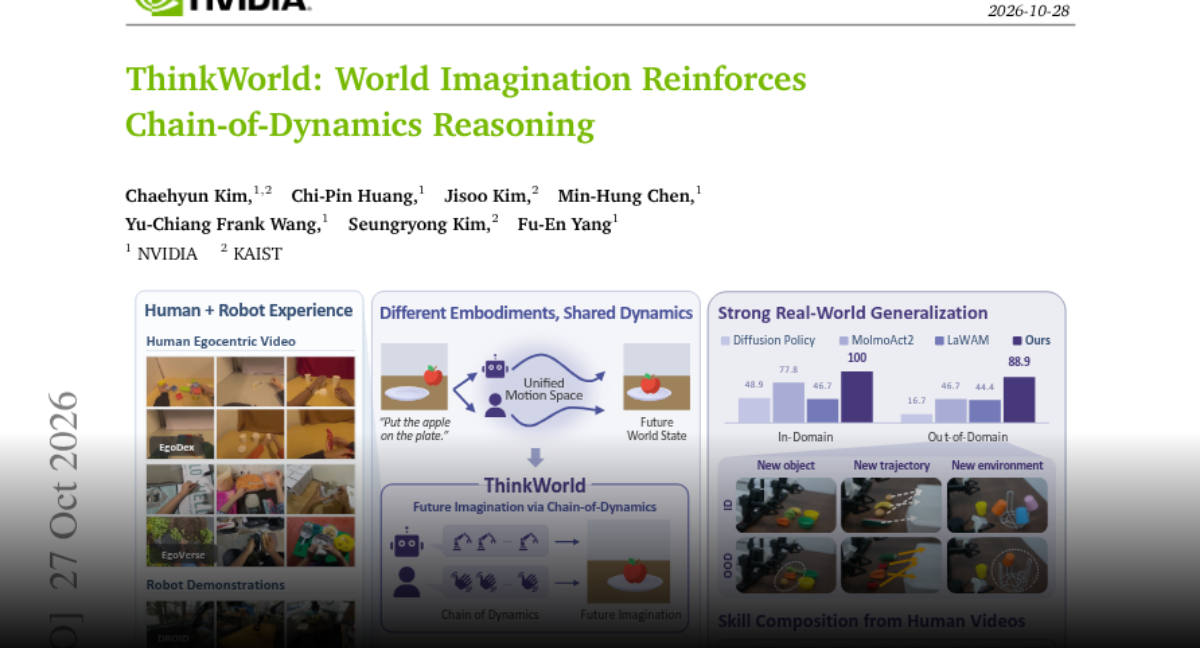
ThinkWorld learns robot reasoning from imagined dynamics

ThinkWorld learns robot reasoning from imagined dynamics

ThinkWorld proposes a vision-language-action learning framework that represents actions as chains of discrete motion tokens. It uses imagined future states and reinforcement learning to favor action reasoning that matches observed outcomes. This lets videos without action labels contribute supervision alongside robot demonstrations. The authors report transfer from human video to robot behavior and generalization to unseen tasks and environments, positioning world dynamics as a bridge between abundant video data and grounded control.

03

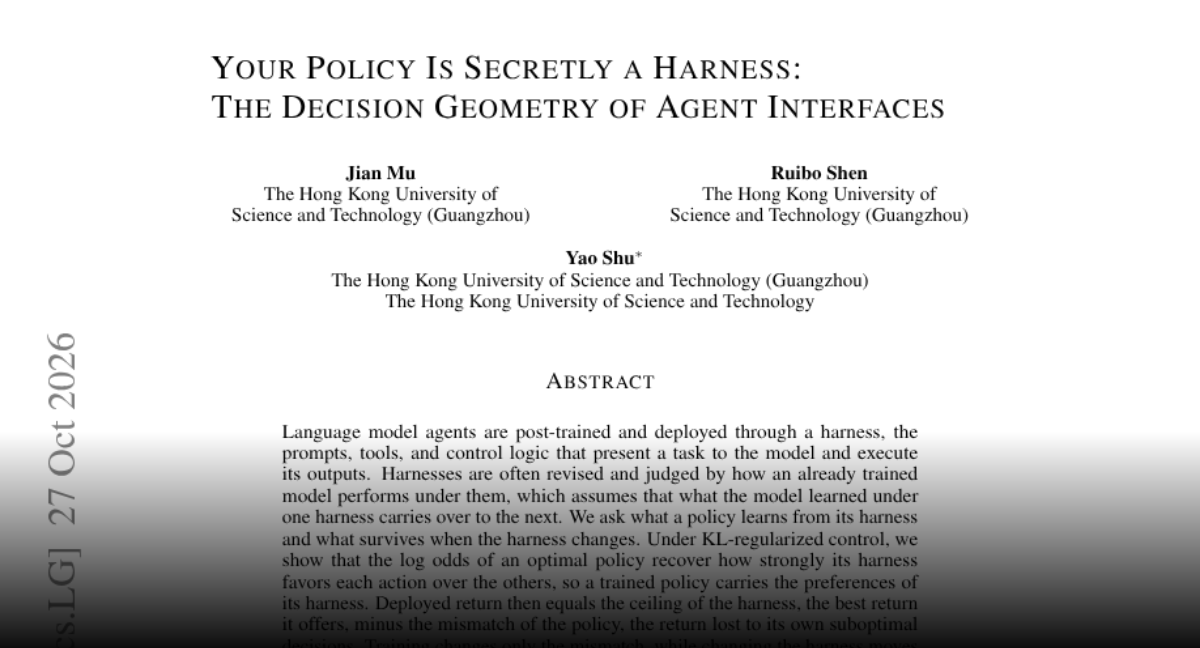
Agent interface changes can erase trained performance

Agent interface changes can erase trained performance

This paper argues that trained agent policies absorb preferences from the prompts, tools, and control logic used during training. In a MiniWoB++ experiment, reversing observation-field order reduced success from 85.0% to 19.2%, despite leaving optimal decisions unchanged. The authors separate the opportunities offered by a harness from a policy's ability to use them. Their results caution that comparing interfaces with a fixed model can misjudge designs that would benefit from further training.

04

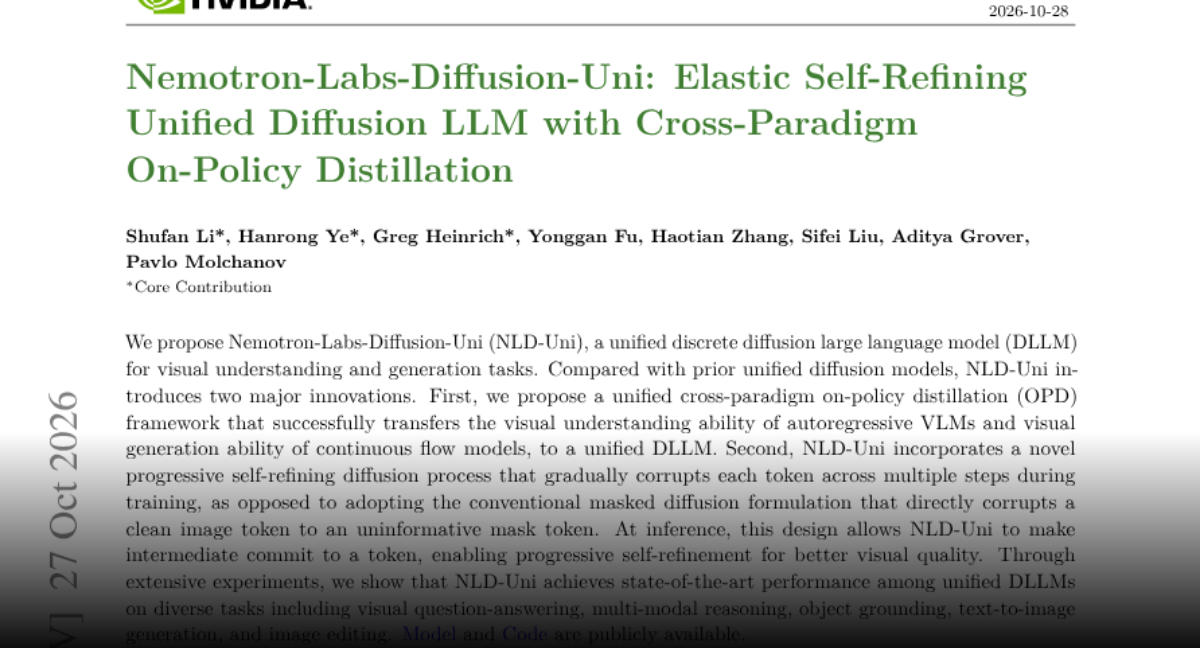
Nemotron diffusion research combines visual understanding and generation

Nemotron diffusion research combines visual understanding and generation

Nemotron-Labs-Diffusion-Uni proposes a unified discrete diffusion language model for visual understanding and generation. It distills capabilities from autoregressive vision-language models and continuous flow models into one system, then uses progressive token refinement instead of conventional masking alone. The authors report strong results among unified diffusion language models across reasoning, grounding, image generation, and editing. The research explores a shared architecture for tasks that are often served by separate model families.

05

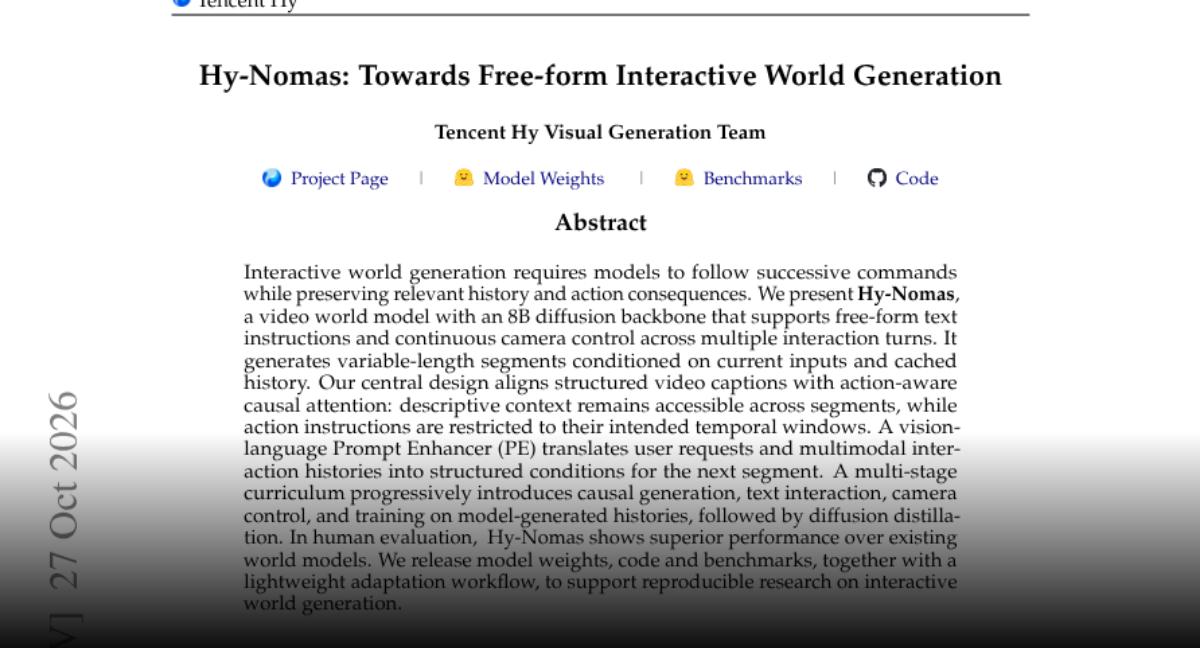
Hy-Nomas releases an interactive video world model

Hy-Nomas releases an interactive video world model

Hy-Nomas is an interactive video world model built around an 8B diffusion backbone. It accepts free-form text instructions and continuous camera control across multiple turns while using cached history to preserve context. The authors align descriptive captions with action-aware causal attention so instructions affect their intended time windows. They report favorable human evaluations and release weights, code, and benchmarks, offering a research platform for studying controllable world generation and persistent interaction.

06

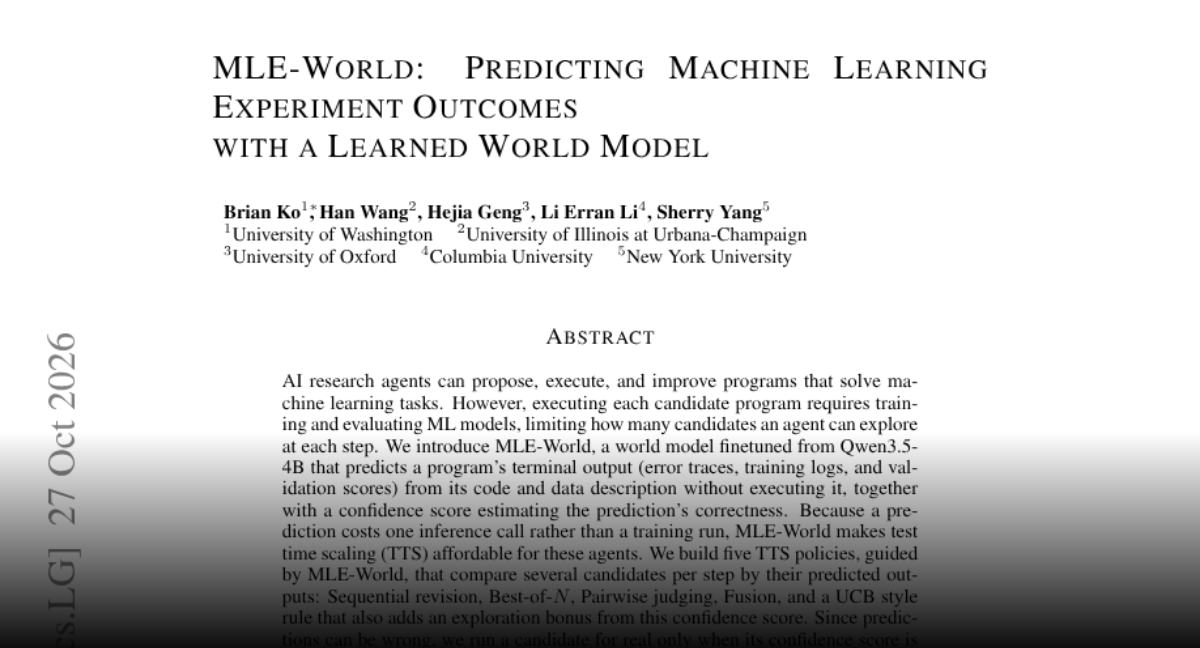
MLE-World predicts experiment outcomes before execution

MLE-World predicts experiment outcomes before execution

MLE-World fine-tunes a Qwen3.5-4B model to predict training logs, errors, and validation scores from code and a data description. A confidence estimate helps decide when a research agent should execute a candidate for real. On 17 MLE-bench Lite tasks, the authors report 77.9% agreement with held-out terminal outputs and up to 22.1% higher observed mean performance from guided search. The approach aims to reduce expensive experiment execution while retaining checks for uncertain predictions.

07

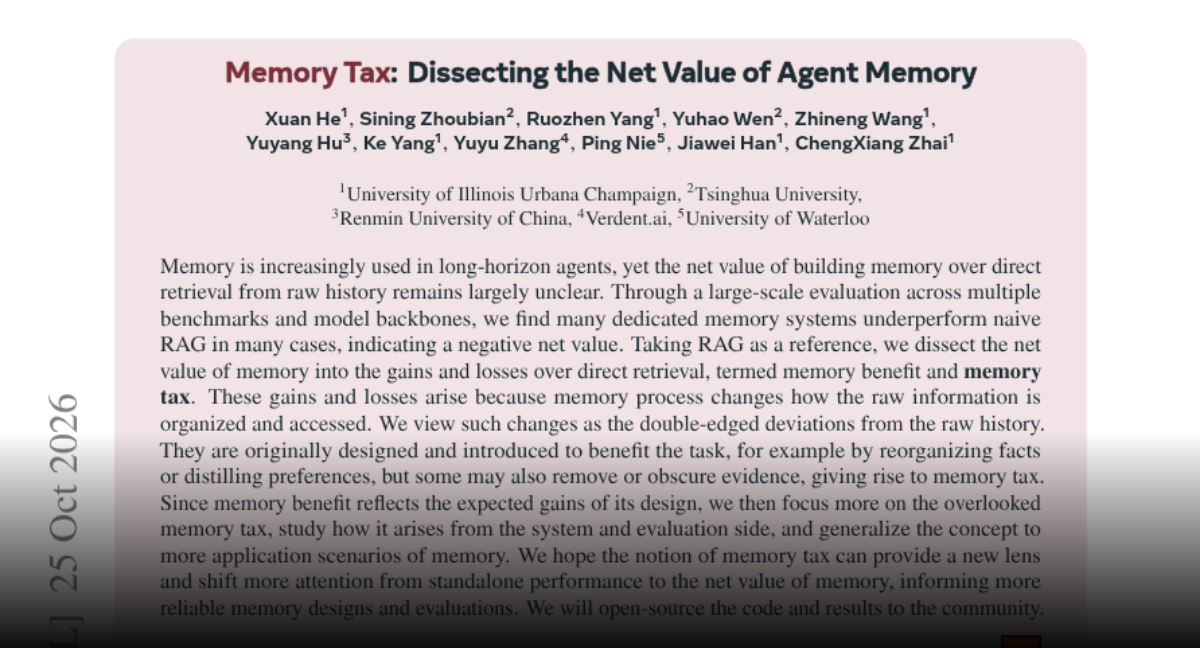
Memory Tax questions the net value of agent memory

Memory Tax questions the net value of agent memory

Memory Tax evaluates whether dedicated memory systems actually improve on retrieving directly from raw conversation history. Across multiple benchmarks and model backbones, the authors find that many memory approaches underperform simple retrieval in many settings. They distinguish the benefits of reorganizing information from losses caused by removing or obscuring evidence. The study recommends assessing the net contribution of memory rather than treating any structured memory layer as an automatic improvement for long-running agents.

08

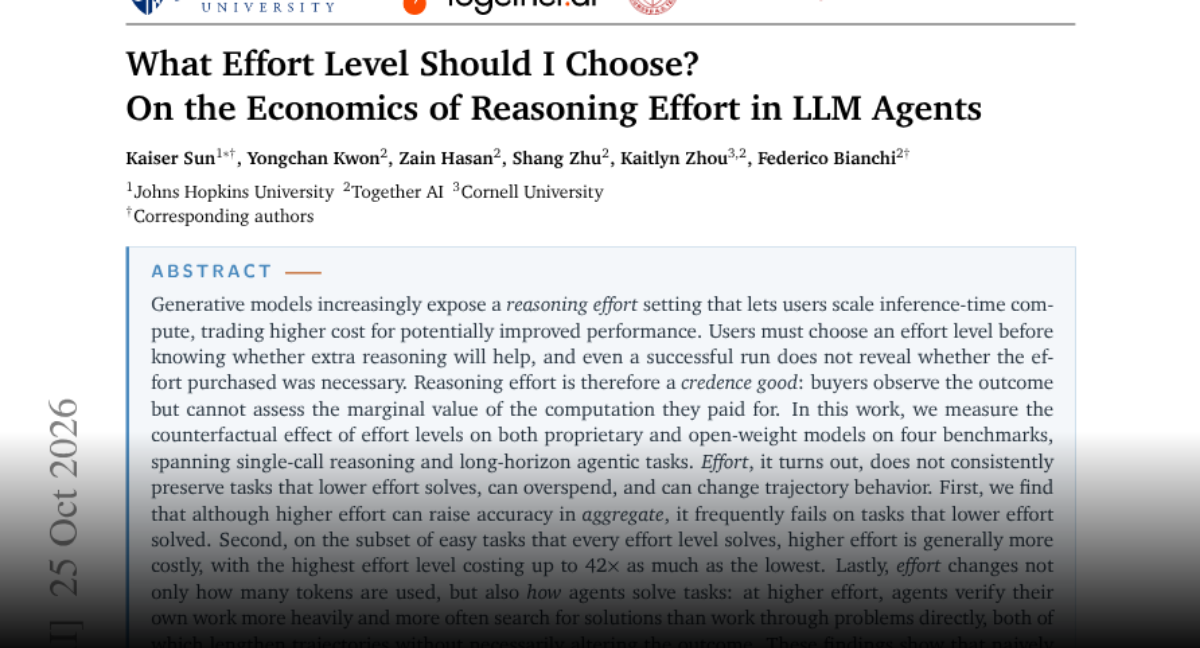
Higher reasoning effort does not guarantee better agent outcomes

Higher reasoning effort does not guarantee better agent outcomes

A study across four benchmarks examines the cost and reliability of different reasoning-effort settings in proprietary and open-weight models. Higher effort can improve aggregate accuracy while still failing individual tasks solved at lower settings. For easy tasks solved at every level, the highest setting can cost up to 42 times more. The authors find that starting low and escalating after verified failure can match or improve fixed maximum effort, often at lower cost.