NO/FOMO

Independent AI signal, once a day

The AI briefing worth opening.

ISSUE DATE2026-11-06ENGLISH EDITION
This issue
—
All time
—

AI Blog

2 stories
01

OpenAI introduces GPT-6 Cyber for vulnerability research and fixes

OpenAI introduced GPT-6 Cyber as a cybersecurity model for finding exploitable vulnerabilities and developing fixes. The company says it was trained to remain within authorized scope, making permission boundaries part of the product’s stated design. The release is relevant to security teams evaluating agent-assisted defensive work across discovery and remediation. The announcement describes intended capability and alignment behavior; it should not be treated as independent proof of reliability in every target environment or authorization scenario.


02

SemiAnalysis examines Google TPU competition in inference

SemiAnalysis examines Google TPU competition in inference

SemiAnalysis examines Google’s TPU position in AI inference and its potential to challenge NVIDIA’s software advantage. The article’s description names the surrounding software stack, including TorchTPU, vLLM, SGLang, llm-d, and Ray, alongside major model families. Its framing makes the competitive question broader than accelerator specifications alone. For infrastructure buyers, software compatibility and serving workflows matter alongside hardware economics; the collected description does not provide verified comparative cost or performance figures.

Hacker News

4 stories
01

Thinking Machines releases Inkling 2 Small

Thinking Machines releases Inkling 2 Small

Thinking Machines published Inkling 2 Small, drawing substantial discussion on Hacker News. John Schulman’s accompanying announcement says the release post includes training-process detail and lessons about alignment. The launch therefore matters both as another model option and as a disclosure of development experience. The collected evidence supports the release and its stated focus, but does not supply enough verified technical detail to rank the model against competitors or infer its deployment requirements.

02

Agentic Identity Broker separates agent tools from OAuth delegation

Agentic Identity Broker separates agent tools from OAuth delegation

Zalando’s Agentic Identity Broker presents OAuth delegation for AI agents and MCP servers. The project describes token exchange that keeps user tokens away from agents while allowing MCP servers to focus on tools instead of OAuth plumbing. Its authors say version 0.1 runs in production with hundreds of agents and dozens of servers. Current functionality centers on human delegation; machine-invoked agents and intent-based authorization are described as future work, rather than completed capabilities.

03

AI scraping puts university library access under pressure

CBC reports that university libraries are being swarmed by AI data-scraping bots, putting public access at risk. The story attracted discussion on Hacker News and highlights a cost of collecting training and retrieval material from shared online resources. Libraries must balance accessibility with infrastructure protection when automated demand rises. The collected item establishes the reported concern, but does not quantify the affected institutions, request volumes, or any access restrictions already imposed.

04

Anthropic examines how researchers use Claude for scientific discovery

Anthropic examines how researchers use Claude for scientific discovery

Anthropic published research on how scientists use Claude for discovery, with the article appearing in the day’s Hacker News discussions. The topic shifts attention from isolated benchmark scores to the role assistants play in research workflows. That distinction matters because useful scientific support depends on how systems interact with human expertise and verification. The collected headline identifies the study’s focus; it does not provide enough detail to claim particular scientific breakthroughs or measured research acceleration.

Twitter

10 stories
01

Claude launches read-only Personal Finance beta in the US

Claude launches read-only Personal Finance beta in the US

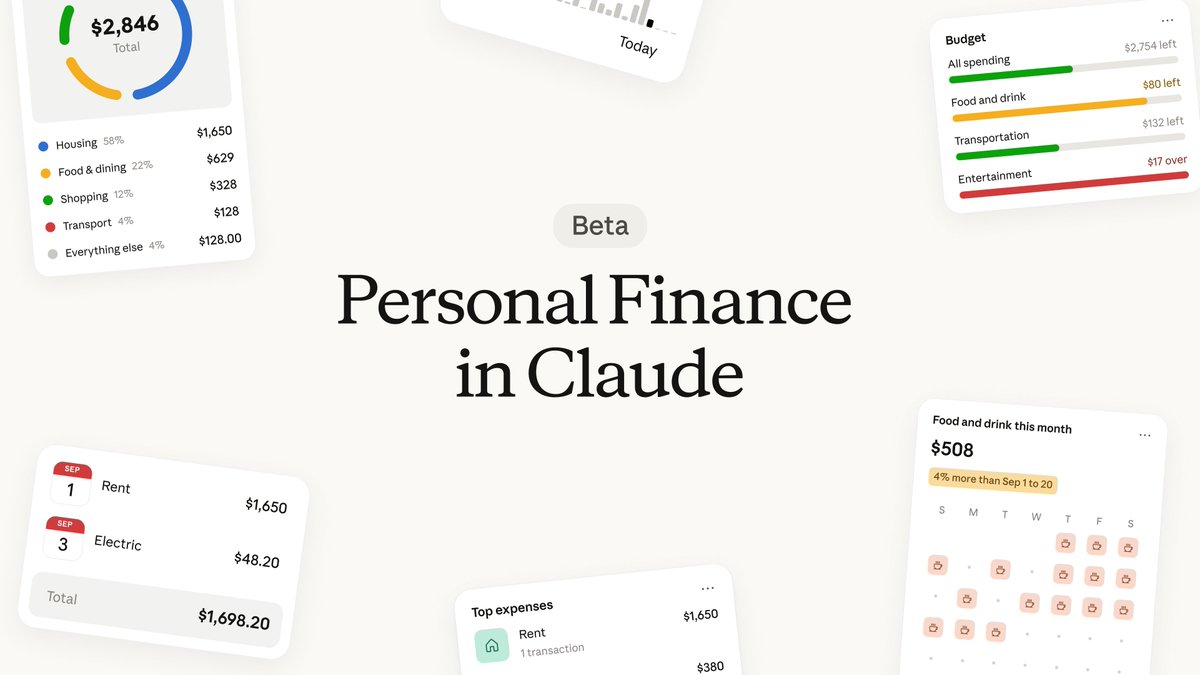
Anthropic announced Personal Finance in Claude, a US beta that lets users connect selected financial accounts and ask questions grounded in their balances and transactions. The company says access is read-only: Claude cannot move, manage, or invest the money. This brings a general assistant into a sensitive consumer workflow where useful explanations depend on personal context. The announcement describes an information service, with account access explicitly separated from authority to transact.

02

Google introduces Gemini Omni 1.2 Flash with lower video-generation pricing

Google introduces Gemini Omni 1.2 Flash with lower video-generation pricing

Google announced Gemini Omni 1.2 Flash as an updated video generation model, emphasizing stronger consistency, creative control, and faster production. Its announcement lists a 30% cost reduction, drafting at 360p or 720p for $0.07 per second, and upscaling to 1080p or 4K. These are vendor-reported capabilities and pricing. For video teams, the practical development is a cheaper iteration path paired with higher-resolution delivery, rather than a requirement to generate every draft at final quality.

03

Runway adds GPT Image 2.6, including GIF and SVG workflows

Runway adds GPT Image 2.6, including GIF and SVG workflows

Runway says GPT Image 2.6 is now available on its platform, with image generation described as 50% faster. The announcement also highlights GIF creation, SVG vector export, and precise edits that preserve characters, products, and brand details. The integration gives creative teams another access point for the model inside an existing production tool. Its most concrete workflow promise is easier revision and asset reuse, although the speed and consistency claims come from the provider.

04

Hugging Face shares MoE training lessons from 800,000 GPU hours

Hugging Face shares MoE training lessons from 800,000 GPU hours

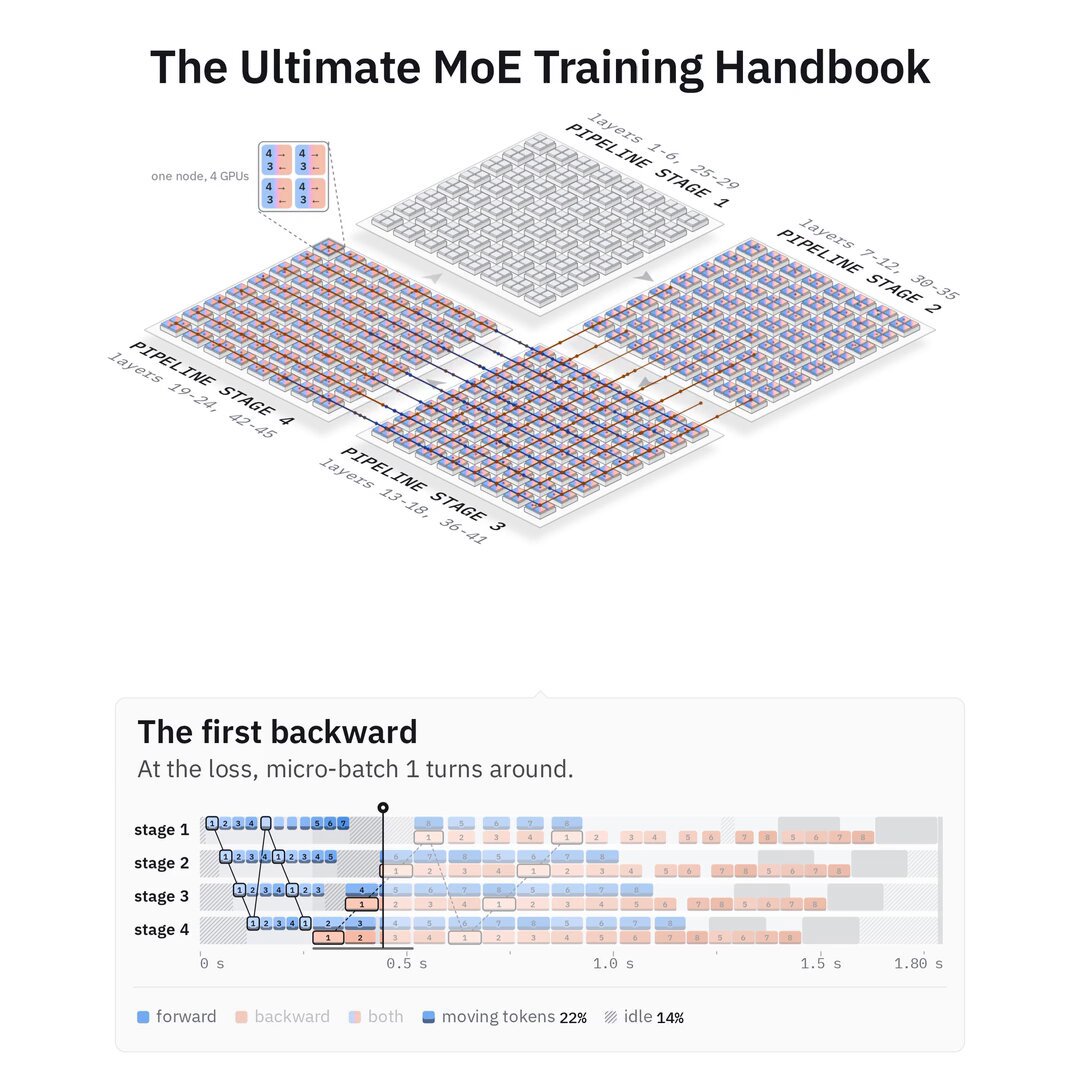
Thomas Wolf says Hugging Face spent 800,000 GPU hours running mixture-of-experts experiments and documenting the results. He frames the effort against the prevalence of MoE architectures among leading open models and the concentration of training expertise in a small number of teams. The contribution is practical knowledge transfer: making design and training experience easier to inspect. His claim about the top-model mix is contextual commentary, rather than a universal comparison of every available architecture.

05

OpenAI announces strategic partnership with JPMorganChase

OpenAI announces strategic partnership with JPMorganChase

Greg Brockman announced a strategic partnership between OpenAI and JPMorganChase to explore advanced AI across the bank. The stated areas include helping engineers build software, supporting security teams, and benefiting employees and customers. The announcement signals enterprise interest extending across several functions, but it does not establish deployment scale, financial terms, or measured productivity gains. Those distinctions matter when assessing how a broad partnership translates into specific production systems and operating changes.

06

OpenAI reports nearly 1,000 patched Linux privilege-escalation findings

OpenAI reports nearly 1,000 patched Linux privilege-escalation findings

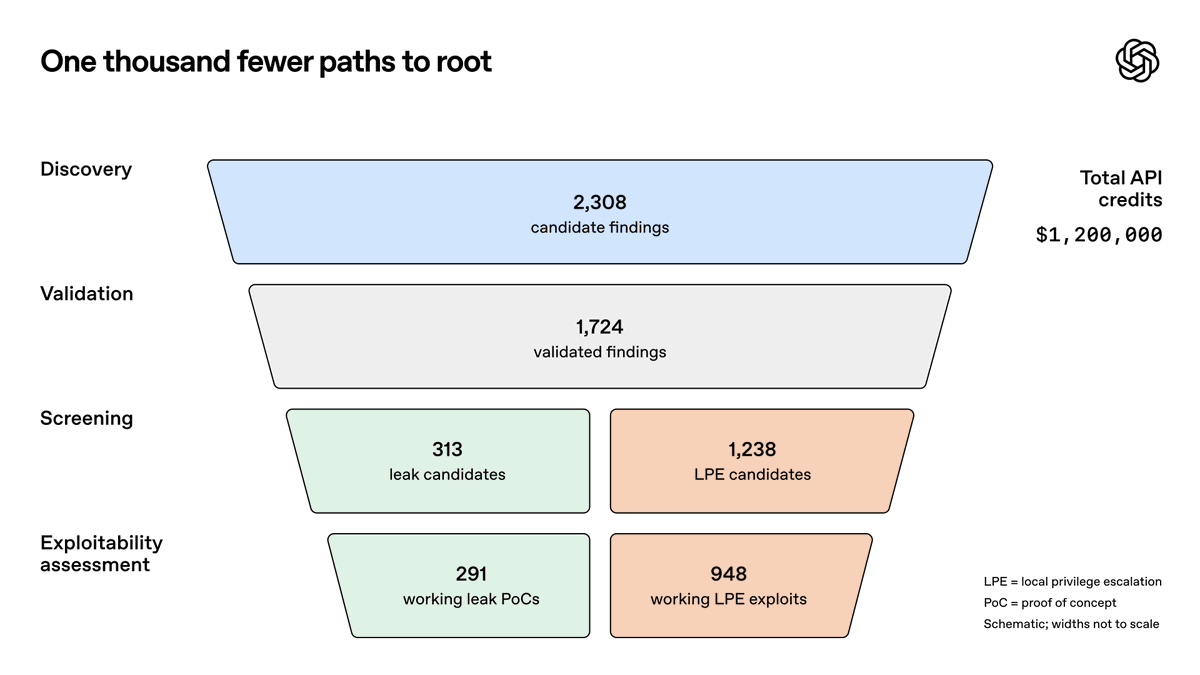
Greg Brockman says OpenAI has found, validated, and prepared patches for almost 1,000 Linux local privilege-escalation vulnerabilities using its cybersecurity pipeline, at roughly $1,000 per vulnerability. The claim is notable for coupling discovery with validation and patch preparation, rather than counting raw alerts alone. It points toward a potentially scalable defensive workflow for critical software. These figures are OpenAI’s report, and patch preparation should not be read as confirmation that every fix has shipped.

07

Pika brings H3 Flex to its creation platform

Pika brings H3 Flex to its creation platform

Pika announced that H3 Flex is available on its creation platform and describes it as faster than real time, with an emphasis on creative iteration. Creator and Fancy plan subscribers are offered 15 free generations per day through November 15. The launch combines a speed claim with a time-limited usage allowance that could encourage more experimentation. Teams evaluating the offer should distinguish the provider’s performance description from independently measured production latency and quality.

08

OpenAI welcomes Pierre developer-tools team

OpenAI welcomes Pierre developer-tools team

Greg Brockman welcomed Pierre to OpenAI, saying its open-source developer tools already power parts of Codex. He described the work ahead as building the future of collaborative software creation with AI. The announcement links an existing tooling dependency to a closer organizational relationship, making it relevant to the development environment around coding agents. The post does not disclose transaction terms, an integration schedule, or specific new product features that users can access today.

09

Kimi-K3.1-Pro highlights the scale of sparse open models

Kimi-K3.1-Pro highlights the scale of sparse open models

Thomas Wolf highlighted Moonshot AI’s Kimi-K3.1-Pro as a large sparse model, reporting 2.8 trillion total parameters with 104 billion active per token. He places it among the largest model releases on Hugging Face. The distinction between stored and active parameters is central to understanding mixture-of-experts deployments: storage requirements and per-token computation do not grow in the same way. These architectural figures alone do not establish inference cost, throughput, or superiority on downstream tasks.

10

Claude Code recaps mods and parallel-session improvements

Claude Code recaps mods and parallel-session improvements

Anthropic’s developer account summarized October changes to Claude Code, including mods, improvements to running multiple desktop sessions side by side, and more visibility into usage. The recap describes continued investment in the surrounding development workflow as well as the assistant itself. For teams coordinating several coding tasks, session management and usage information can affect day-to-day adoption. This is a retrospective product summary, not evidence that every listed capability first launched on the report date.

HF HuggingFace

6 stories
01

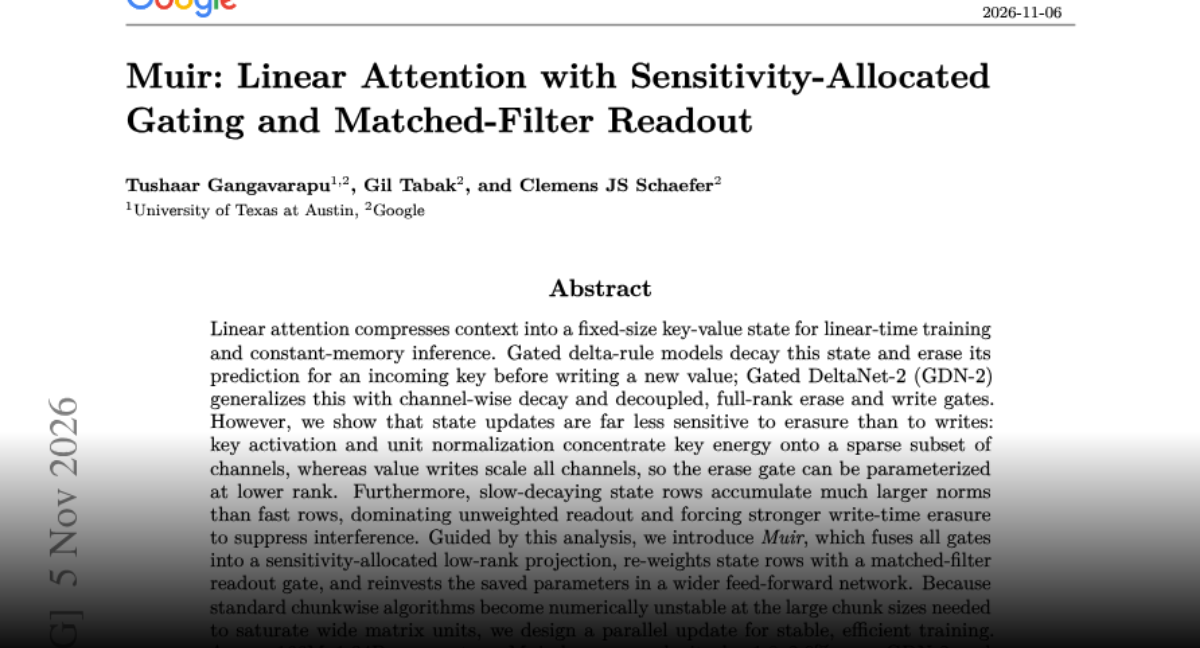
Muir improves linear attention through more selective state updates

Muir improves linear attention through more selective state updates

Muir revisits how linear-attention models erase, write, and read their compressed context state. The authors allocate gate capacity according to sensitivity and use a matched-filter readout, reinvesting saved parameters in a wider feed-forward network. Across models from 166 million to 1.34 billion parameters, they report lower perplexity than their baselines and improved recall. At 1.34 billion parameters, reported long-stream extrapolation and throughput results make this a concrete efficiency study, with findings bounded by the tested scales.

02

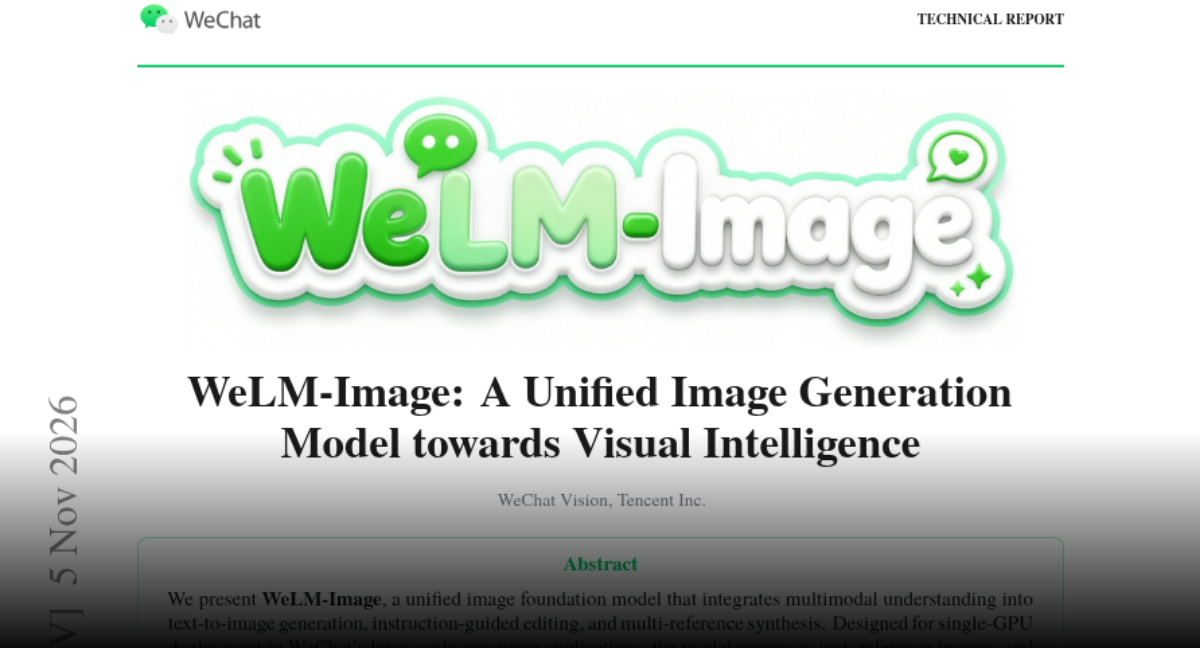
WeLM-Image combines image understanding, generation, and editing

WeLM-Image combines image understanding, generation, and editing

WeLM-Image integrates text-to-image generation, instruction-based editing, and multiple reference images in one model. Its architecture combines shared attention with separate understanding and generation parameters, using sparse experts for capacity. The authors target single-GPU consumer deployment and report an eight-step Turbo variant generating a 1024-by-1024 image in 4.98 seconds on an NVIDIA H20. The paper connects model design, data curation, reward optimization, and distillation; its benchmark rankings remain claims within the reported comparisons.

03

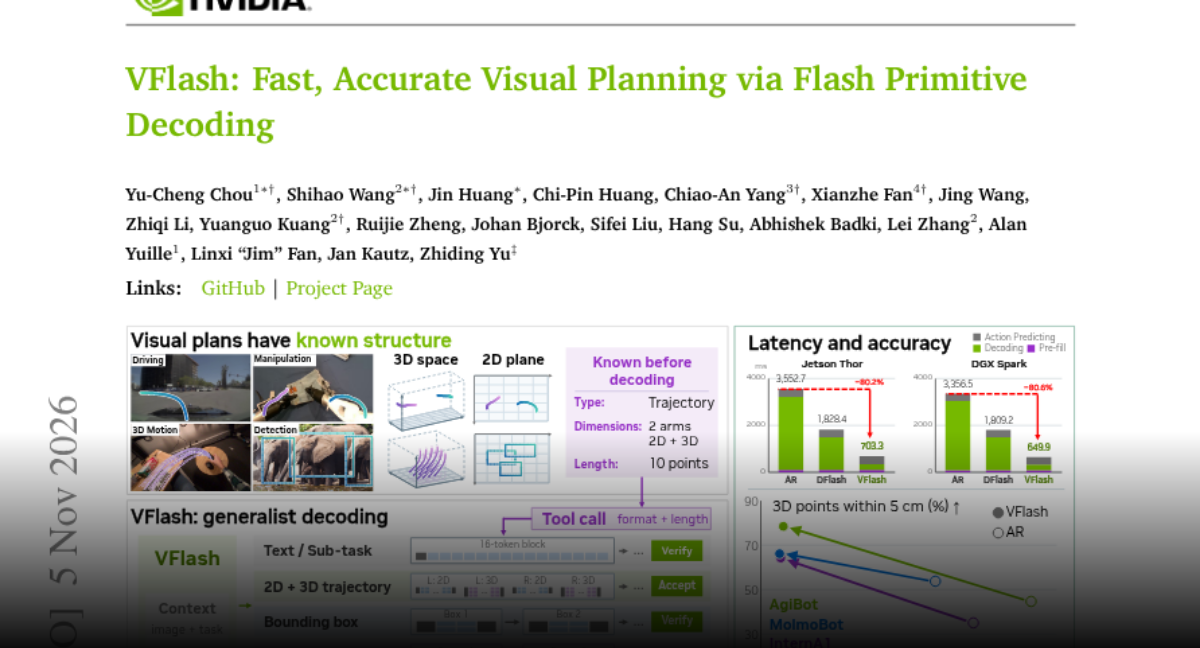
VFlash generates visual plans in parallel for physical AI

VFlash generates visual plans in parallel for physical AI

VFlash predicts structured visual primitives, such as points, boxes, and trajectories, jointly instead of decoding each coordinate autoregressively. Its lightweight drafter uses the known structure of each primitive and accepts valid predictions without exact token agreement. The authors report lower trajectory errors, preliminary generation speedups of about 25 times for 3D motion forecasting, and 70.2% success across four MolmoSpaces suites versus 62.6% for a baseline. The approach targets a specific planning bottleneck rather than general language generation.

04

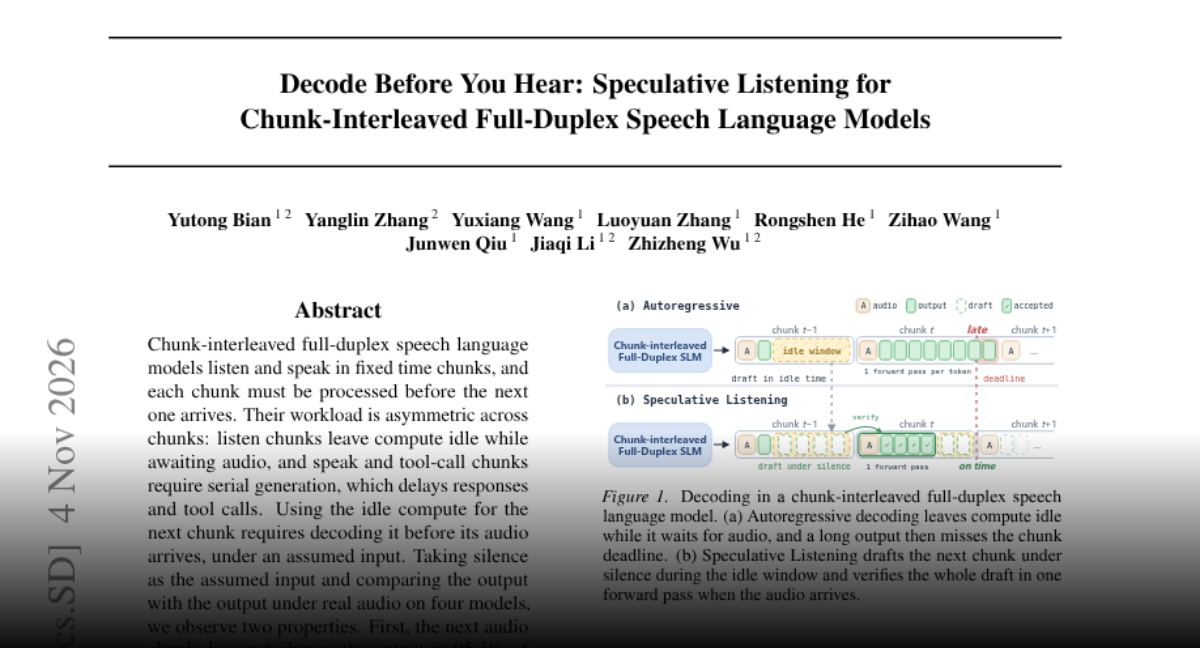
Speculative Listening uses idle compute to reduce speech latency

Speculative Listening uses idle compute to reduce speech latency

Speculative Listening drafts upcoming output while a full-duplex speech model is waiting for its next audio chunk, assuming silence and verifying the draft once real audio arrives. The authors describe the method as training-free and lossless, with branching to handle likely first-token changes. On their TickTock-Bench evaluation, they report 73% lower average decoding delay before response onset and up to 23.4-times faster tool-call chunks. The results concern chunk-interleaved systems and the paper’s evaluated workloads.

05

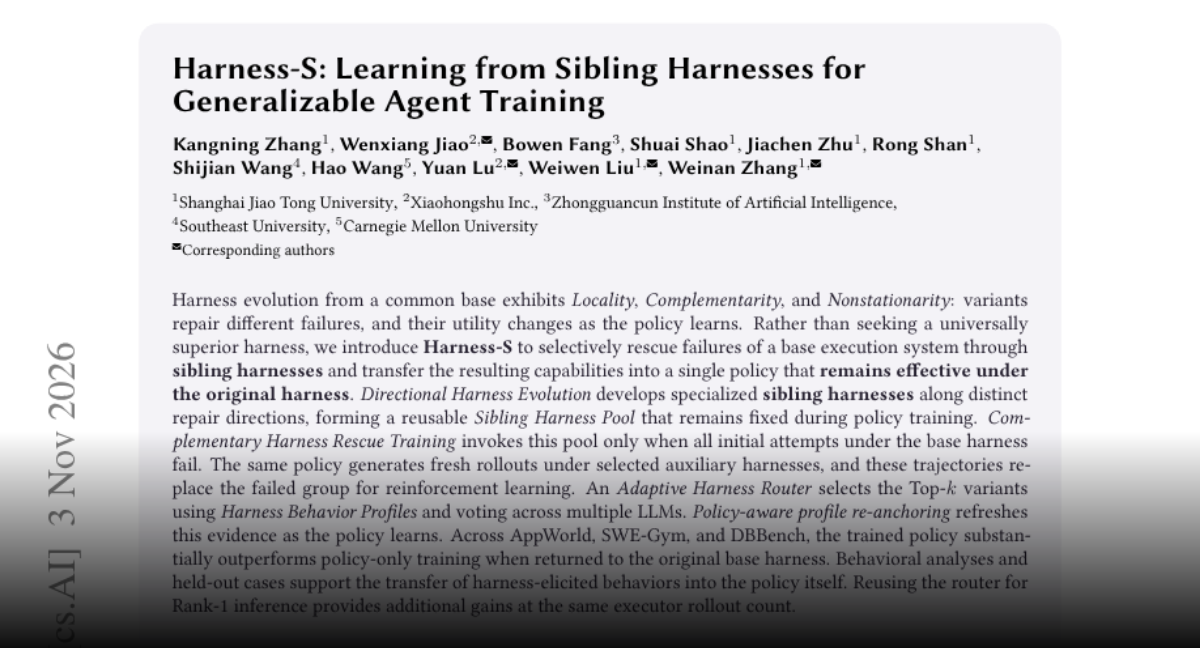
Harness-S transfers lessons from alternative agent execution setups

Harness-S transfers lessons from alternative agent execution setups

Harness-S trains an agent using a pool of related execution harnesses that rescue failures under its base setup. Successful auxiliary trajectories then replace failed groups during reinforcement learning, aiming to retain those behaviors when the policy returns to the original harness. The authors report improvements across AppWorld, SWE-Gym, and DBBench. The work treats orchestration choices as sources of training signal, offering a way to improve the policy without requiring one permanently superior execution environment.

06

VisSearch-Bench exposes gaps in sustained visual search

VisSearch-Bench exposes gaps in sustained visual search

VisSearch-Bench evaluates whether multimodal agents can maintain and combine visual evidence across extended searches. It contains 204 human-written tasks spanning seven domains and 25 subdomains, with traceable evidence and scoring rules. Across 16 tested models, the best system fully solves only 26.47% of tasks, according to the authors. The benchmark separates complete success from partial process quality, highlighting that access to search tools does not by itself ensure coherent reasoning across images and retrieved information.