NO/FOMO

Independent AI signal, once a day

The AI briefing worth opening.

ISSUE DATE2026-11-07ENGLISH EDITION
This issue
—
All time
—

AI Blog

5 stories
01

OpenAI introduces GPT-6 Cyber for scoped security work

OpenAI introduced GPT-6 Cyber as a cybersecurity model intended to find exploitable vulnerabilities and develop fixes. Its announcement emphasizes training the model to remain within an authorized scope, a central requirement when agents act on security-sensitive systems. The launch is significant because it combines vulnerability discovery with remediation rather than presenting a general coding feature. The collected official description does not include benchmark scores or access terms, and its alignment claims should be evaluated against the full technical documentation.

02

OpenAI partners with Hacktron to test systems and integrations

OpenAI announced a partnership with Hacktron to find vulnerabilities in its systems, test connections with third-party services, and strengthen defenses using frontier AI. The focus on integrations is particularly relevant as assistants increasingly depend on external tools and data. This is a concrete security collaboration alongside OpenAI's new cybersecurity model announcement. The collected description does not report a vulnerability count, remediation outcome, or independent audit result, so it establishes the program's scope rather than its effectiveness.

03

BioBasicsBench tests agents on everyday wet-lab data interpretation

OpenAI introduced BioBasicsBench, a 100-task benchmark intended to measure how well AI agents interpret raw experimental data and handle everyday wet-lab science. The choice of routine laboratory work shifts attention toward practical scientific assistance rather than only high-profile discovery demonstrations. This could help researchers ask whether agents support the work surrounding experiments. The collected description does not provide model rankings or evidence of safe autonomous laboratory operation, and those should not be inferred from the benchmark's existence.

04

SemiAnalysis examines Google TPU’s challenge in inference

SemiAnalysis examines Google TPU’s challenge in inference

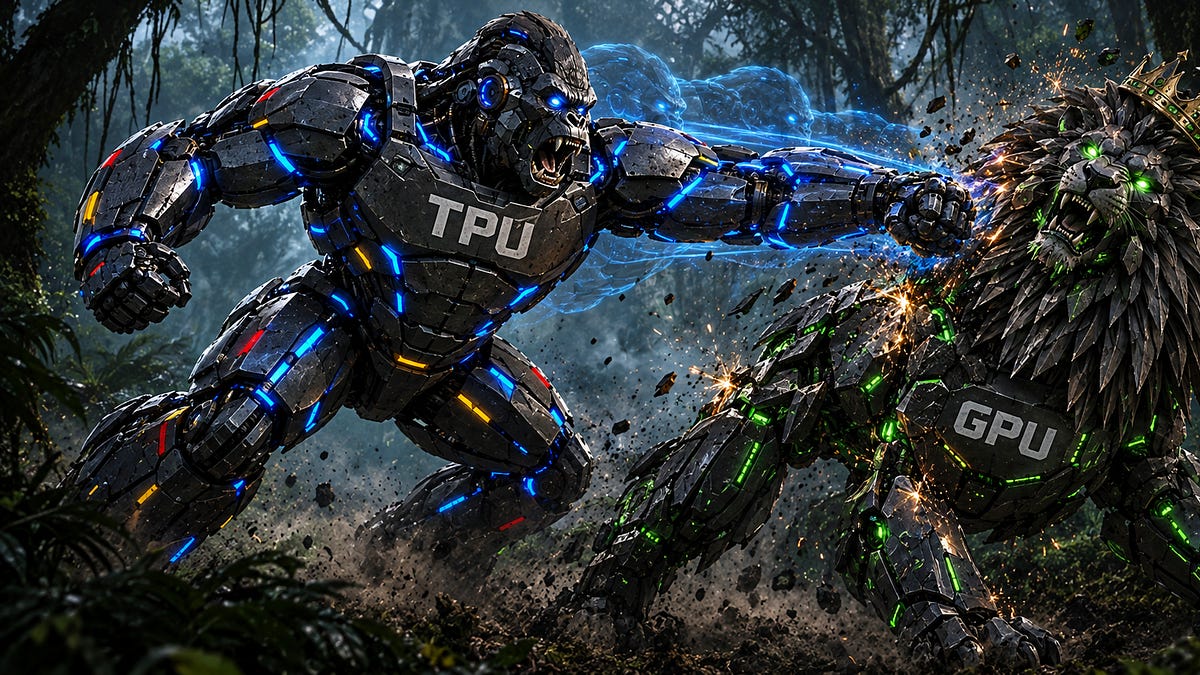
SemiAnalysis published an analysis of Google's TPU position in inference, framing it as a potential alternative to Nvidia's CUDA-centered ecosystem. The collected description references model support and infrastructure projects including vLLM, SGLang, Ray, and TorchTPU. The important commercial question is whether software compatibility can make alternative accelerators easier to adopt. This is an analytical thesis, not a verified market-share result; the collected summary does not supply cost benchmarks sufficient to decide which hardware is best for a workload.

05

a16z examines why AI applications can still command a premium

a16z examines why AI applications can still command a premium

Andreessen Horowitz argues that falling inference costs create a mixed picture for AI application businesses. Lower costs can improve margins, while stronger models and easier development tools may make parts of an application easier to replace. The article frames durable willingness to pay as the key commercial question, with exposure varying by product. This is useful context for infrastructure price reductions and expanding agent capabilities, but it is a strategic argument rather than a measured forecast for any individual company.

Hacker News

2 stories
01

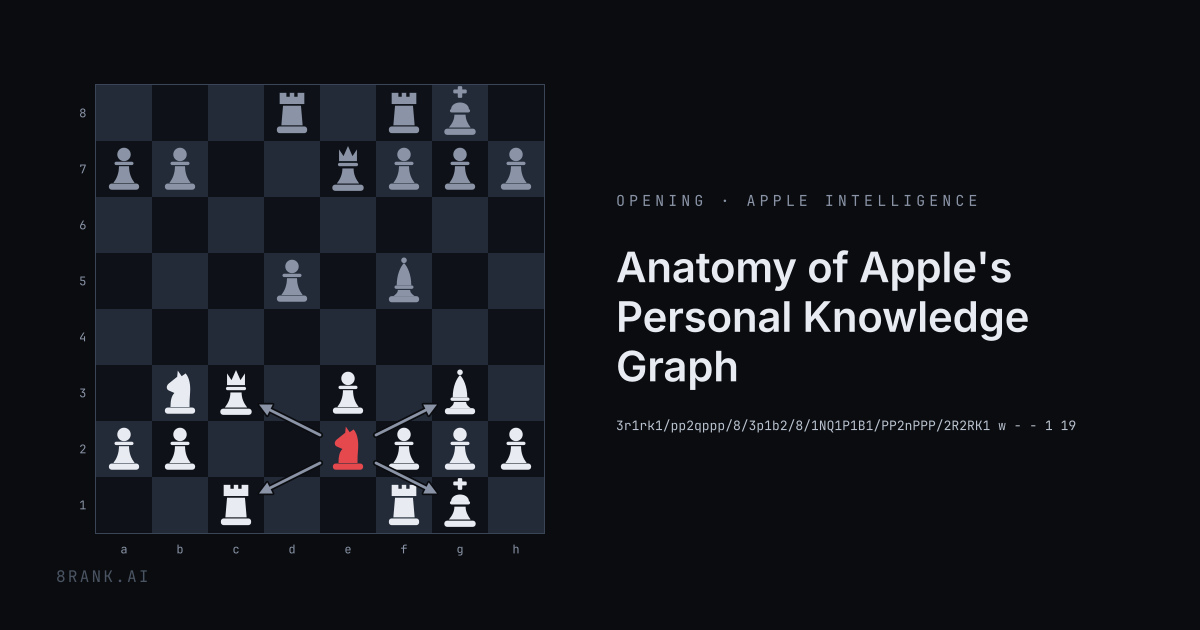
Apple personal knowledge graph investigation draws HN attention

Apple personal knowledge graph investigation draws HN attention

A Hacker News submission titled 'Every Mac comes with an (undocumented) family member classifier' drew 357 points and 205 comments at collection time. Its linked investigation concerns Apple Intelligence and a personal knowledge graph, making inferred relationships and transparency the central issues to examine. The collected record contains the headline and discussion metrics, not the article's supporting evidence. Readers should therefore treat the classifier claim as the author's report rather than an independently verified finding in this edition.

02

A Firecracker experiment examines agent sandbox design

A report-date engineering post describes building and measuring a Firecracker-based agent sandbox after examining Google's description of its own approach. The submission had limited Hacker News engagement at collection time, but addresses a concrete deployment concern: isolating the code that agents execute. The collected record does not include the measurements or detailed design, so it cannot support performance comparisons. It is a useful implementation lead for teams assessing microVM boundaries for agent workloads.

Twitter

12 stories
01

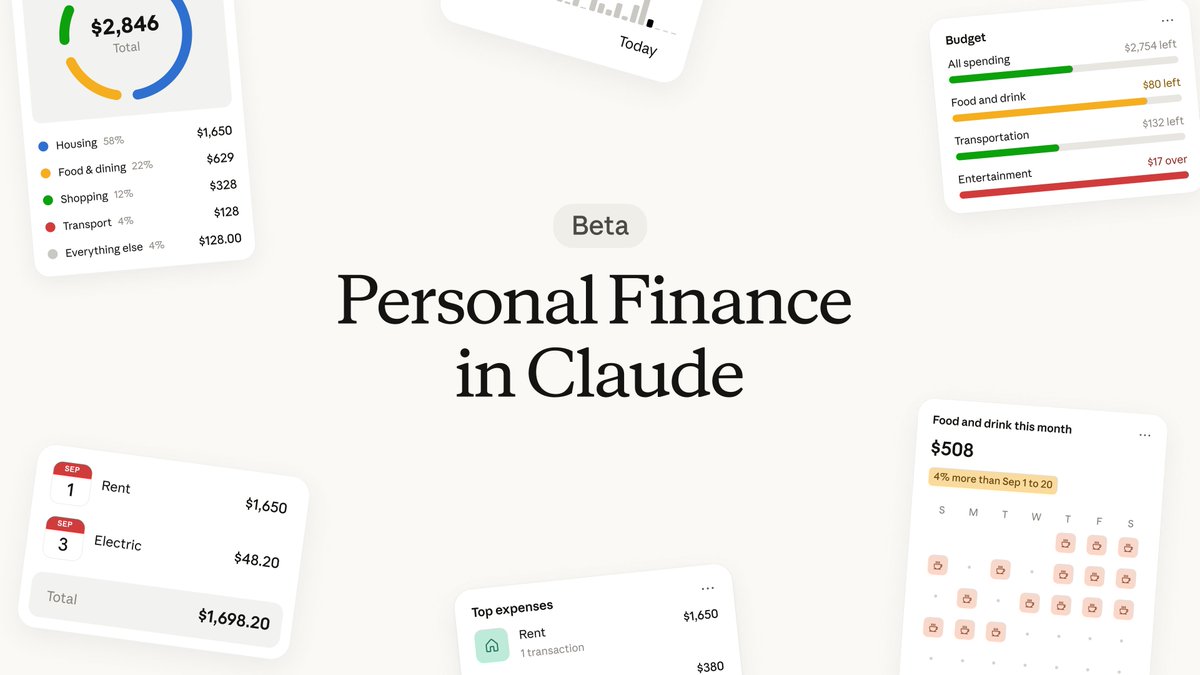
Claude launches a read-only personal finance beta in the US

Claude launches a read-only personal finance beta in the US

Anthropic announced Personal Finance in Claude as a US beta, letting users connect selected financial accounts and ask questions grounded in their balances and transactions. The company says access is read-only: Claude cannot move, manage, or invest money. This is a significant extension of assistants into sensitive consumer workflows, where useful personalization depends on account permissions and clear limits. The announcement describes availability and boundaries, rather than evidence of financial advice quality.

02

Claude Code cloud sessions gain reusable environment setup

Claude Code cloud sessions gain reusable environment setup

Anthropic says Claude Code cloud sessions can now determine needed dependencies, network access, and API keys, then save the resulting environment for later sessions. The update covers Pro, Max, and Ultra plans. According to the announcement, keys are stored securely without being exposed to Claude. Reducing repeated setup could make repository-based agent work easier to resume, although the post does not provide reliability measurements or detailed controls for reviewing the inferred environment requirements.

03

Anthropic explains how agent memory benefits from “dreaming”

Anthropic explains how agent memory benefits from “dreaming”

Anthropic highlighted an engineering post explaining how a process it calls dreaming helps Claude organize experience, correct mistakes, and retrieve useful information in later work. The emphasis is on making accumulated memory usable, rather than simply retaining more conversation text. For teams building persistent agents, this raises practical questions about memory maintenance, correction, and retrieval. The announcement describes the intended mechanism but does not itself supply quantitative evidence of improvement or deployment constraints.

04

DeepMind reports AI-assisted findings in legacy RSA systems

Google DeepMind says human-guided AI agents uncovered two major weaknesses in legacy 1024-bit RSA cryptosystems while studying how to accelerate encryption stress testing. The claim concerns specific older cryptographic systems, and should not be read as evidence that modern encryption broadly fails. The announcement is notable alongside new security-focused models because it points to agents supporting specialist research. The collected post does not include enough technical detail to independently assess the weaknesses or their scope.

05

John Schulman announces Inkling 2 Small

John Schulman announces Inkling 2 Small

John Schulman announced the release of Inkling 2 Small and pointed readers to a blog post discussing the model's training process. He singled out lessons about alignment as a particularly interesting part of the release. The announcement adds a new small-model entry to the current release cycle while drawing attention to training transparency. The collected post does not establish benchmark results, deployment costs, or licensing terms, so those details should be checked in the release documentation.

06

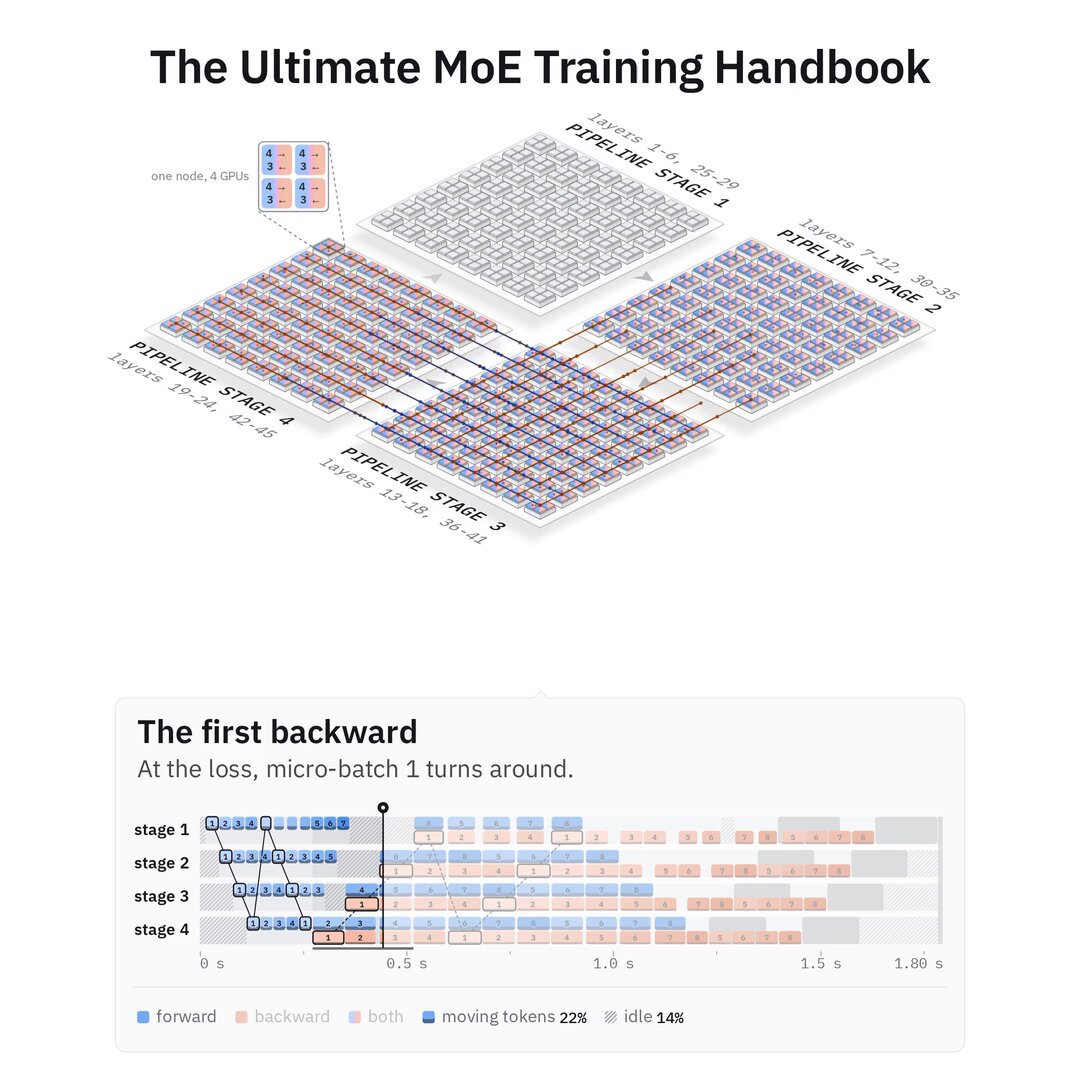
Hugging Face shares lessons from 800,000 GPU hours of MoE experiments

Hugging Face shares lessons from 800,000 GPU hours of MoE experiments

Thomas Wolf says his team spent 800,000 GPU hours on experiments to document how to train mixture-of-experts models. He argues that MoE dominates leading open models while much of the practical training knowledge remains concentrated in a few teams. The value of this release is the attempt to make that experience accessible. His ranking claim is an author characterization, and the post alone does not establish a controlled comparison between dense and sparse architectures.

07

Google announces lower-cost Gemini Omni 1.2 Flash video generation

Google announces lower-cost Gemini Omni 1.2 Flash video generation

Google introduced Gemini Omni 1.2 Flash with claims of stronger consistency, more creative control, and faster video creation. Its announcement says costs are 30 percent lower and quotes drafting at 360p or 720p for $0.07 per second, with upscaling to 1080p or 4K. Those are vendor-stated capabilities and pricing, rather than independent quality measurements. The practical appeal is cheaper iteration before committing to higher-resolution output, especially for workflows that explore multiple versions of a scene.

08

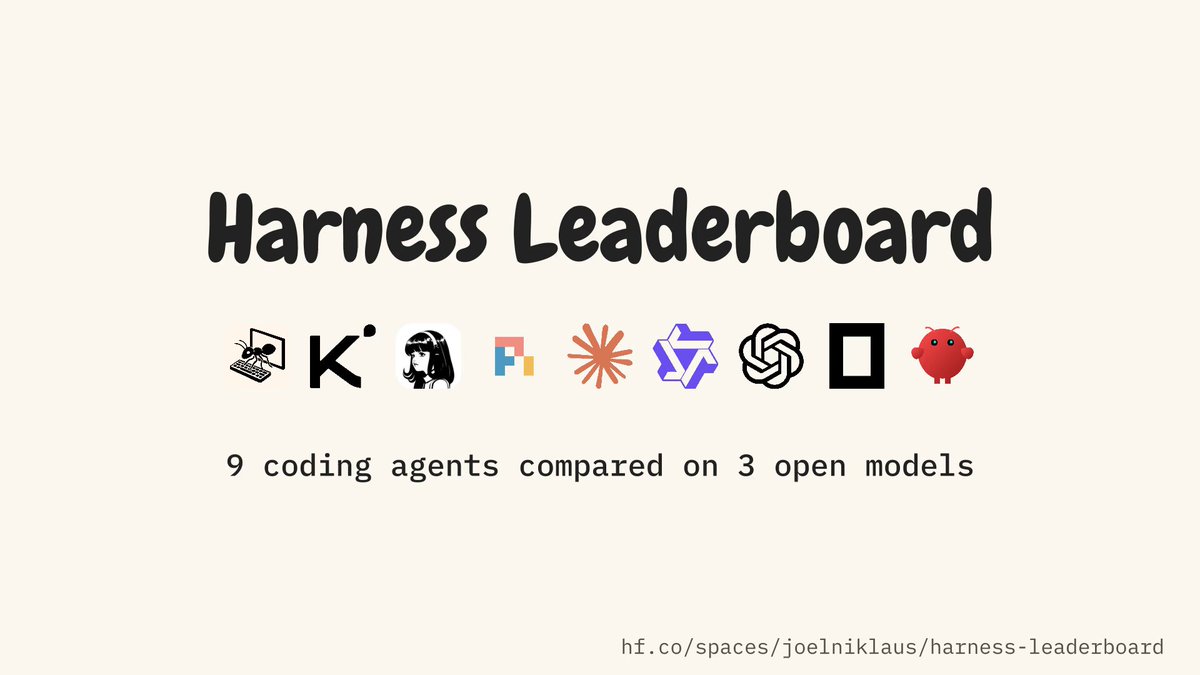
Thomas Wolf highlights how harness choice changes open-model results

Thomas Wolf highlights how harness choice changes open-model results

Thomas Wolf highlighted a comparison of agent harnesses using open models, arguing that the same model can produce very different results depending on the surrounding harness. The report-date post points to work investigating which setup extracts the most from those models in November. For practitioners, it is a reminder to evaluate orchestration and tooling together with model weights. The collected excerpt does not identify a winning harness or provide enough measurements to rank specific implementations.

09

VFlash targets parallel visual prediction for physical AI

VFlash targets parallel visual prediction for physical AI

Jim Fan introduced VFlash as a system for parsing the visual world in parallel for physical AI. His post connects the approach to embodied tasks whose outputs are fixed-length numerical vectors, including object localization, robot trajectory planning, and dense three-dimensional motion. This is an interesting direction for reducing reliance on sequential output generation in perception pipelines. The announcement makes strong speed claims, but the collected excerpt does not provide benchmark methodology or numbers that would substantiate them.

10

OpenAI and JPMorganChase announce a strategic AI partnership

OpenAI and JPMorganChase announce a strategic AI partnership

Greg Brockman announced a strategic partnership between OpenAI and JPMorganChase to explore advanced AI across the bank's enterprise. The stated areas include helping engineers build software, supporting security teams, and improving capabilities available to employees and customers. This is a material enterprise relationship, although the announcement frames the work as exploration rather than reporting measured production outcomes. It does not disclose financial terms, deployment scale, or a timetable for specific customer-facing services.

11

Runway adds GPT Image 2.6 with GIF and SVG capabilities

Runway adds GPT Image 2.6 with GIF and SVG capabilities

Runway announced availability of GPT Image 2.6, describing image generation as 50 percent faster and adding GIF creation and SVG vector export. The company also highlights precise editing while preserving characters, products, and brand details. These capabilities matter for teams moving between illustration, animation, and reusable design assets. The speed and consistency statements are vendor claims in the announcement; it does not supply a benchmark setup, pricing comparison, or independent assessment of exported vector quality.

12

Pierre joins OpenAI as developer tooling becomes a strategic focus

Pierre joins OpenAI as developer tooling becomes a strategic focus

Greg Brockman welcomed Pierre to OpenAI and said Pierre's open-source developer tools already power parts of Codex. The announcement ties the move to collaborative software development with AI, making it a relevant team and tooling development rather than simply another model update. The collected post does not state transaction terms or organizational details. Its concrete signal is the existing tooling relationship and OpenAI's stated intent to build further on that foundation.

GitHub

3 stories
01

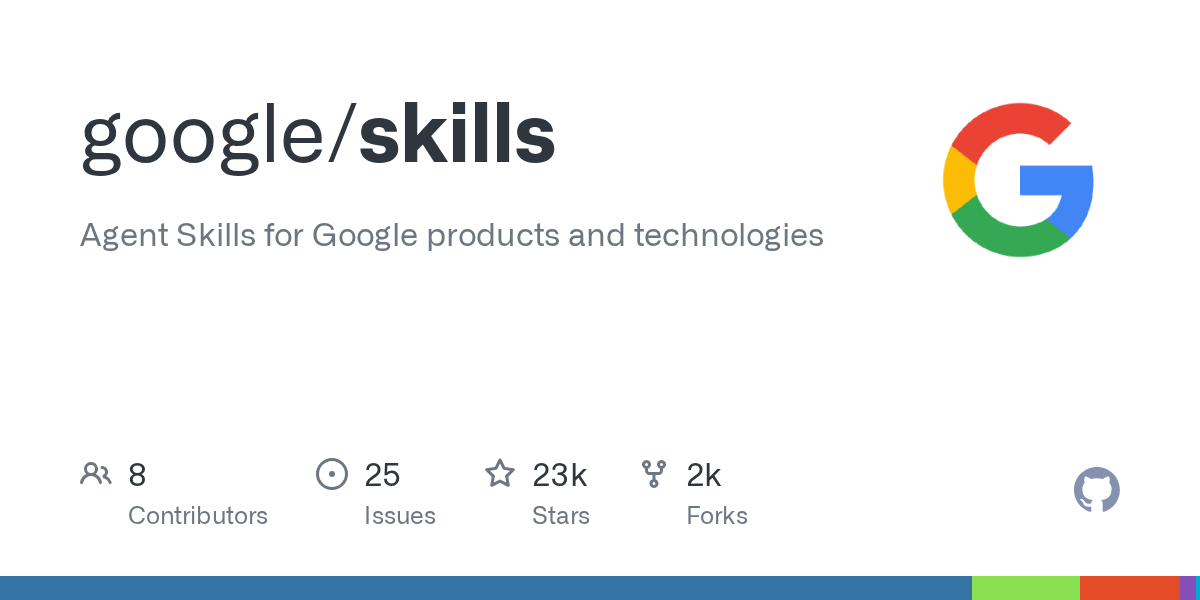
Google publishes agent skills for its products and technologies

Google publishes agent skills for its products and technologies

Google's skills repository provides agent skills for Google products and technologies and appeared among the day's collected GitHub projects. The repository had 23,175 stars at collection time, indicating substantial developer interest without establishing the quality of any individual skill. For teams connecting coding agents to vendor-specific workflows, a maintained source of reusable instructions can reduce repeated setup. Compatibility, permissions, and the behavior of each selected skill still need to be assessed in its own documentation.

02

Anthropic’s public skills repository remains a major agent resource

Anthropic’s public skills repository remains a major agent resource

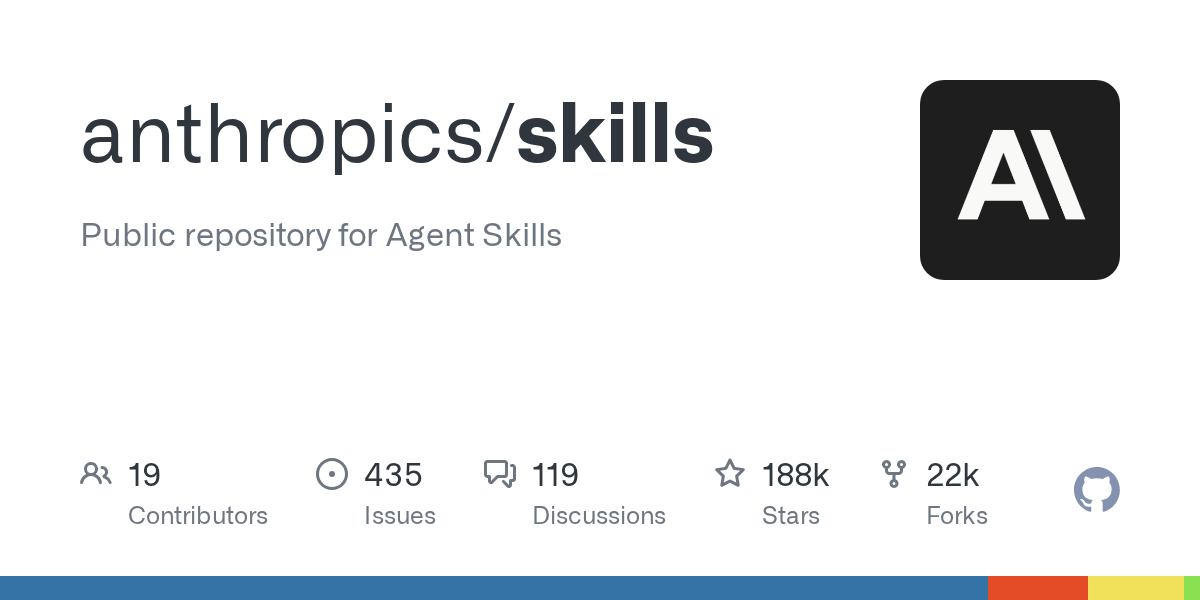
Anthropic's public Agent Skills repository appeared in the collected GitHub selection with 188,496 stars and a recent commit timestamp. Its relevance is the reusable skill layer around agents, rather than a newly announced model or benchmark. For developers, the repository offers a place to examine how task guidance can be packaged for repeated use. The collection does not describe a specific new release, so this item highlights the project without attributing undocumented functionality to its latest changes.

03

Vercel’s agent-browser provides a browser automation CLI for agents

Vercel’s agent-browser provides a browser automation CLI for agents

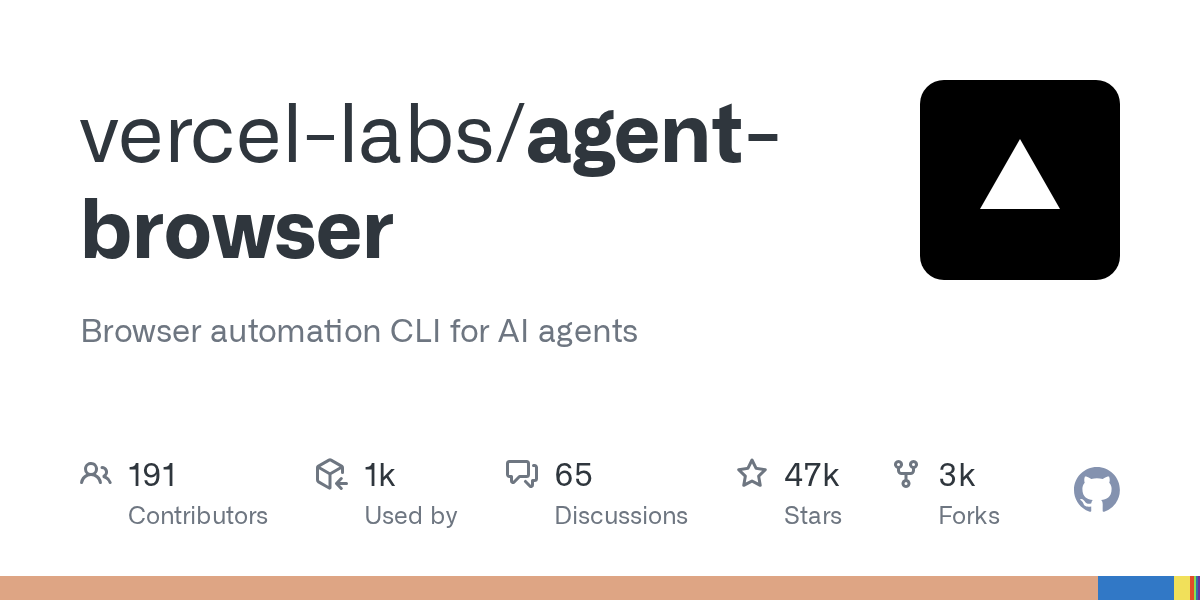
Vercel Labs' agent-browser is described as a browser automation command-line interface for AI agents. The Rust repository appeared in the collected GitHub projects with 46,573 stars and a recent commit timestamp. It addresses the practical need for agents to interact with browser-based workflows through tooling. The collection does not specify a new feature release or comparative performance, so teams should inspect the project's supported commands and operational requirements before choosing it for their own automation stack.