NO/FOMO

Independent AI signal, once a day

The AI briefing worth opening.

ISSUE DATE2026-11-08ENGLISH EDITION
This issue
—
All time
—

AI Blog

2 stories
01

SemiAnalysis visits an 800MW AI campus in Inner Mongolia

SemiAnalysis visits an 800MW AI campus in Inner Mongolia

SemiAnalysis describes a visit to a wind-powered, 800MW campus in Inner Mongolia, with 120MW reportedly built within a year. Its overview also highlights a 5MW pilot using solid-state transformers and 800V direct current, alongside cooling without central chillers. The account connects AI infrastructure expansion to power conversion and thermal design. Those engineering choices matter because usable compute capacity depends on the speed and efficiency of the entire facility, beyond the accelerators installed inside.
02

a16z examines AI and the vulnerability patch gap

a16z examines AI and the vulnerability patch gap

Andreessen Horowitz’s article, The Exploit Was the Bottleneck, frames the AI security debate through twenty-three years of data and the gap between vulnerabilities and patches. Its premise directs attention to the time defenders have to respond when exploitation becomes easier. This is a useful companion to new AI security tools: stronger vulnerability discovery changes operational demands only when organizations can prioritize findings, develop fixes, and deploy them quickly enough to reduce exposure.

Hacker News

7 stories
01

Report: OpenAI raises $11 billion at a $1.25 trillion valuation

Report: OpenAI raises $11 billion at a $1.25 trillion valuation

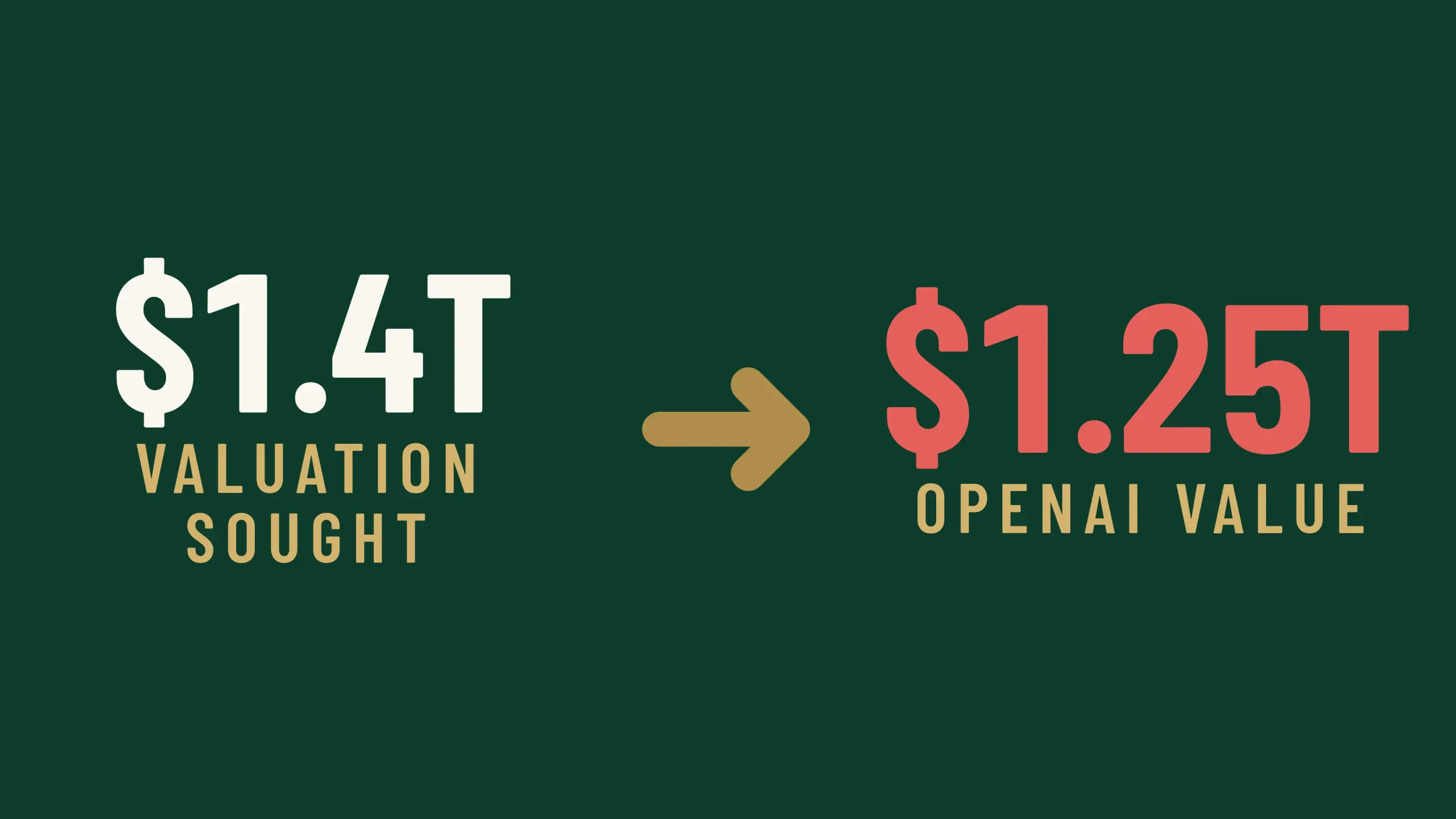
24/7 Wall St reports that OpenAI raised $11 billion at a $1.25 trillion valuation, below the $1.4 trillion figure it initially sought. The story attracted discussion on Hacker News today and puts financing terms at the center of the AI industry debate. The reported gap between the sought and achieved valuations matters for expectations around future funding, even as the absolute size of the transaction remains substantial.

02

FT reports Anthropic gas-power deal worth $3.4 billion

The Financial Times reports that Anthropic has struck a $3.4 billion deal to generate gas-fired power for data centers. The report makes electricity procurement a concrete part of the company’s AI expansion story. It also brings the environmental implications of infrastructure growth into focus: additional computing capacity depends on physical energy supply, and the choice of generation source affects both deployment plans and the debate around AI’s footprint.

03

Bloomberg: Apple leadership pushes for a more ambitious AI strategy

Bloomberg reports that Apple’s chief executive is pressing the company’s software leadership to pursue a more ambitious AI strategy. Its newsletter frames the discussion around Siri and a possible shift toward a more capable agent experience. This is a report about strategic direction rather than a confirmed product release. For readers tracking consumer AI, the important question is how Apple turns its distribution and software integration into useful everyday assistance.

04

Developer’s move from Claude Code to Pi sparks a harness debate

A developer’s account of moving from Claude Code to Pi became the strongest Hacker News discussion in this collection. The essay describes frustrations with IDE integration, configuration conventions, frequent behavioral changes, and prompt overhead, while praising Pi’s minimalism and extensibility. Originally published in September and updated in November, it is an experience report resurfacing today. Its practical point is that the surrounding coding harness can shape usability as much as the underlying model.

05

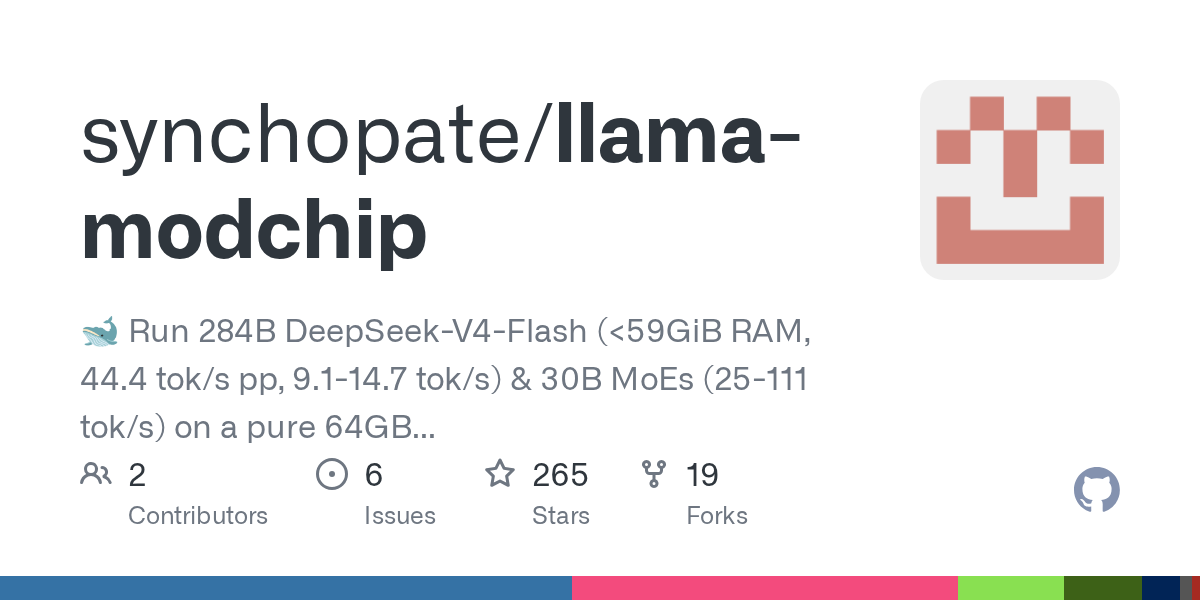
llama-modchip claims 284B DeepSeek inference within 64GB RAM

llama-modchip claims 284B DeepSeek inference within 64GB RAM

The llama-modchip repository claims it can run a 284-billion-parameter DeepSeek model on a CPU system with 64GB of RAM. Its documentation attributes the memory reduction to compression, quantization, and specialized inference kernels, and publishes hardware-specific performance tables. These are project-reported results rather than independently reproduced measurements. The project is worth watching because fitting large mixture-of-experts models on existing workstations could expand local inference options, provided quality and speed hold up in external tests.

06

LoreKit calls for a shared format for agent memory

LoreKit argues that agent memory needs a shared data model, drawing a comparison with OpenTelemetry’s role in observability. The article surveys incompatible memory formats across coding tools and proposes discussing common records, validity, and links to the code a memory depends on. It is a proposal from a tool builder, not an adopted industry standard. The underlying problem is practical: lessons learned by one agent often cannot move cleanly into another tool or workflow.

07

Science report raises privacy concerns over brain-data collection

A Science report highlighted on Hacker News examines privacy concerns around consumer brain-wave headsets. The article’s framing centers on wearable-device makers collecting brain data for AI training without clearly informing users. It brings a particularly sensitive data category into the wider debate over training-data consent. For AI product teams, the issue is whether people understand what devices capture, how those recordings are reused, and what meaningful control they retain over that reuse.

Twitter

12 stories
01

MuJoCo 4.0 announcement highlights simulation upgrades

Zoubin Ghahramani shared Carolina Parada’s announcement that MuJoCo 4.0 is out, highlighting rendering, deformable objects, and speculative contacts. The collected post provides a concise release signal rather than a detailed benchmark or migration guide. For robotics researchers, these are relevant areas because simulation quality influences the environments used to develop and evaluate control policies. The announcement is worth following through to the release documentation before drawing conclusions about improvements on specific robot tasks.

02

François Chollet argues scaling multiplies underlying generalization

François Chollet argues that more data and compute act as multipliers on an approach’s generalization power. In his post, enormous investment can make inefficient approaches look adequate without establishing them as the final architecture for AI. This is a research viewpoint rather than a new experimental result. It adds a useful distinction to scaling debates: improvements from resources and improvements from learning methods should be examined separately when judging long-term efficiency and capability.

03

Anthropic explores AI’s role in scientific modeling

Anthropic explores AI’s role in scientific modeling

Anthropic points readers to a Science Blog article on how AI is beginning to change scientific modeling. Its announcement gives examples ranging from individual nerve-cell behavior to collisions between neutron stars, emphasizing models that explain and predict physical systems. The post signals a broader research focus beyond chat and coding. The relevant question for scientific users is how AI-assisted models are checked against established methods and observations before their predictions support new conclusions.

04

Nathan Lambert warns inference startups need durable advantages

Nathan Lambert argues that inference startups face mounting competitive pressure despite having capital available today. He suggests that stronger positions may require proprietary models, control over supply, or distinctive post-training capabilities. The post is an industry assessment, not a report of a specific company failure. It captures a strategic question for the inference market: whether serving models alone can sustain differentiation as model providers, infrastructure owners, and other entrants compete for the same workloads.

05

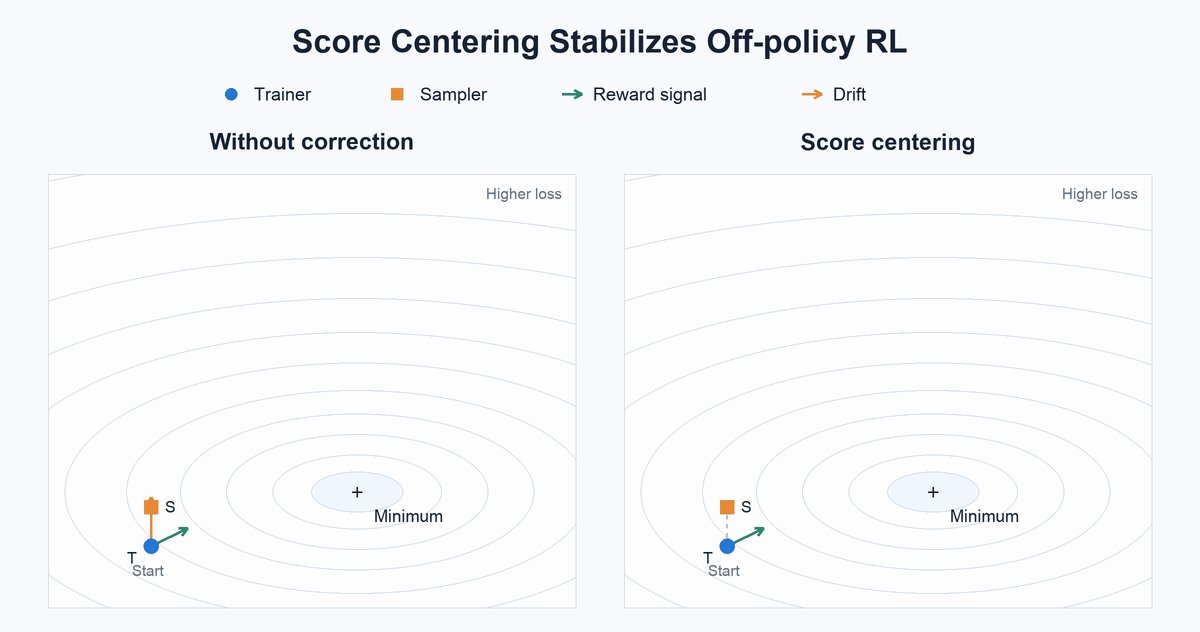
RLHF book adds score-centering discussion

RLHF book adds score-centering discussion

Nathan Lambert says he has added score centering to his RLHF book after hearing that the technique is popular in industry, including in Tinker’s StableReinforce. He presents the derivation as a way to understand training-inference mismatch and says a video explanation is planned. The update offers practitioners a focused educational entry point into post-training mechanics. It does not establish a new benchmark result, but may help readers reason about the objectives used in reinforcement learning workflows.

06

LeRobot v0.7.0 release points toward prompting robots

Thomas Wolf shared the LeRobot team’s announcement that version 0.7.0 is live. The release teaser spans large-scale data and prompting robots, putting data handling and interaction in the same robotics workflow. The collected post does not provide enough detail to quantify performance gains or compatibility changes. Still, it is a relevant release for developers following the open robotics ecosystem, and a reason to inspect the version’s documentation before upgrading an existing training or deployment setup.

07

Michael Black revisits classical vision methods alongside frontier models

Michael Black reflects on computer vision’s long shift from classical algorithms to neural networks, saying frontier models have sometimes led him back toward classical methods. His post questions the assumption that every older component should automatically be replaced by a learned one. This is an observation about research and engineering practice rather than a measured comparison. It suggests evaluating hybrid pipelines by their actual task requirements instead of treating architectural fashion as a substitute for evidence.

08

Runway’s CEO describes interfaces shifting toward supervision

Runway’s Cristóbal Valenzuela describes a shift in interfaces from directly making changes to monitoring and interpreting work performed by a system. His formulation places supervision at the center of the user experience: people observe changes and assess results instead of manipulating every step themselves. This is a design perspective, not a product announcement. It matters for agent and creative-tool builders deciding how users should inspect progress, understand decisions, and retain control over increasingly automated workflows.

09

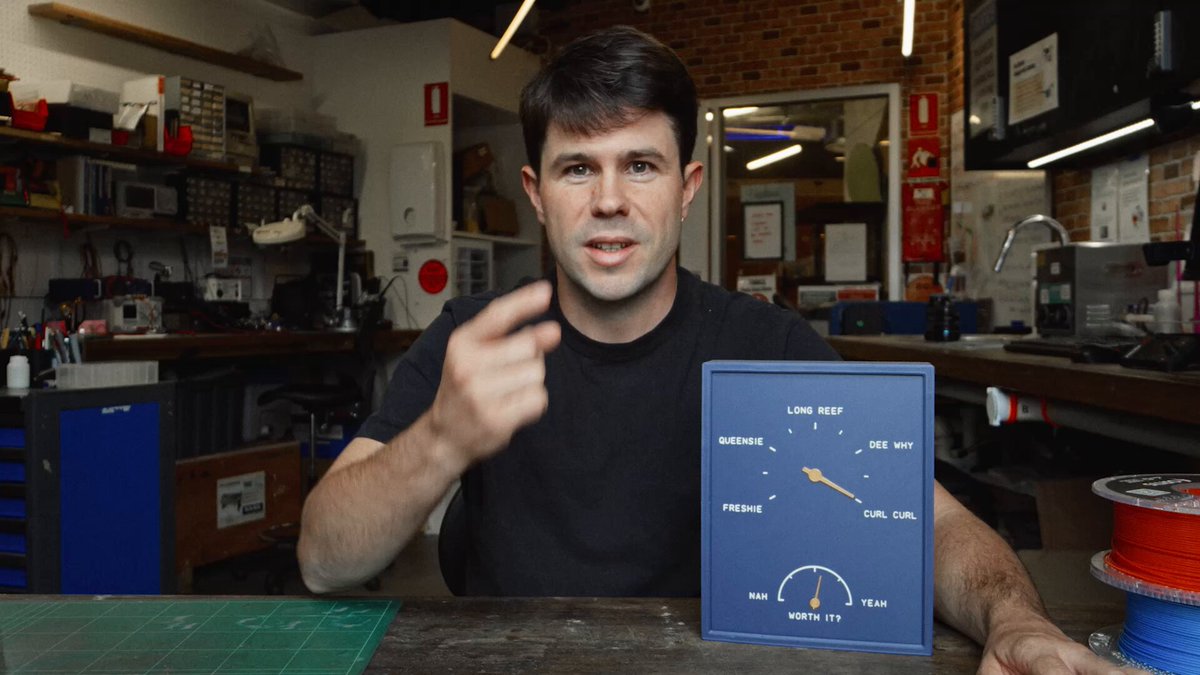
Google showcases a Gemini-assisted smart-device prototype

Google showcases a Gemini-assisted smart-device prototype

Google shared a project in which builders used Gemini 4 Argon and Antigravity to turn a Surf Clock concept into a working smart-device prototype. The workflow included exploring retro designs, controlling Blender through Python, and writing custom firmware. This is a demonstration of a particular build rather than a general productivity benchmark. It illustrates how AI assistance can connect visual design, programmable modeling, and embedded software within a single physical-product development process.

10

Luma highlights hybrid filmmaking with actors and live sets

Luma highlights hybrid filmmaking with actors and live sets

Luma highlighted Fortune’s visit to Dream Lab LA, describing a production process with real actors, live sets that change on the spot, and AI used by the crew. The post presents a hybrid filmmaking workflow rather than a wholly synthetic replacement for production. For creative teams, the interesting development is how generated environments can fit into an existing shoot. The collected account does not quantify costs or turnaround, so those potential benefits remain unmeasured here.

11

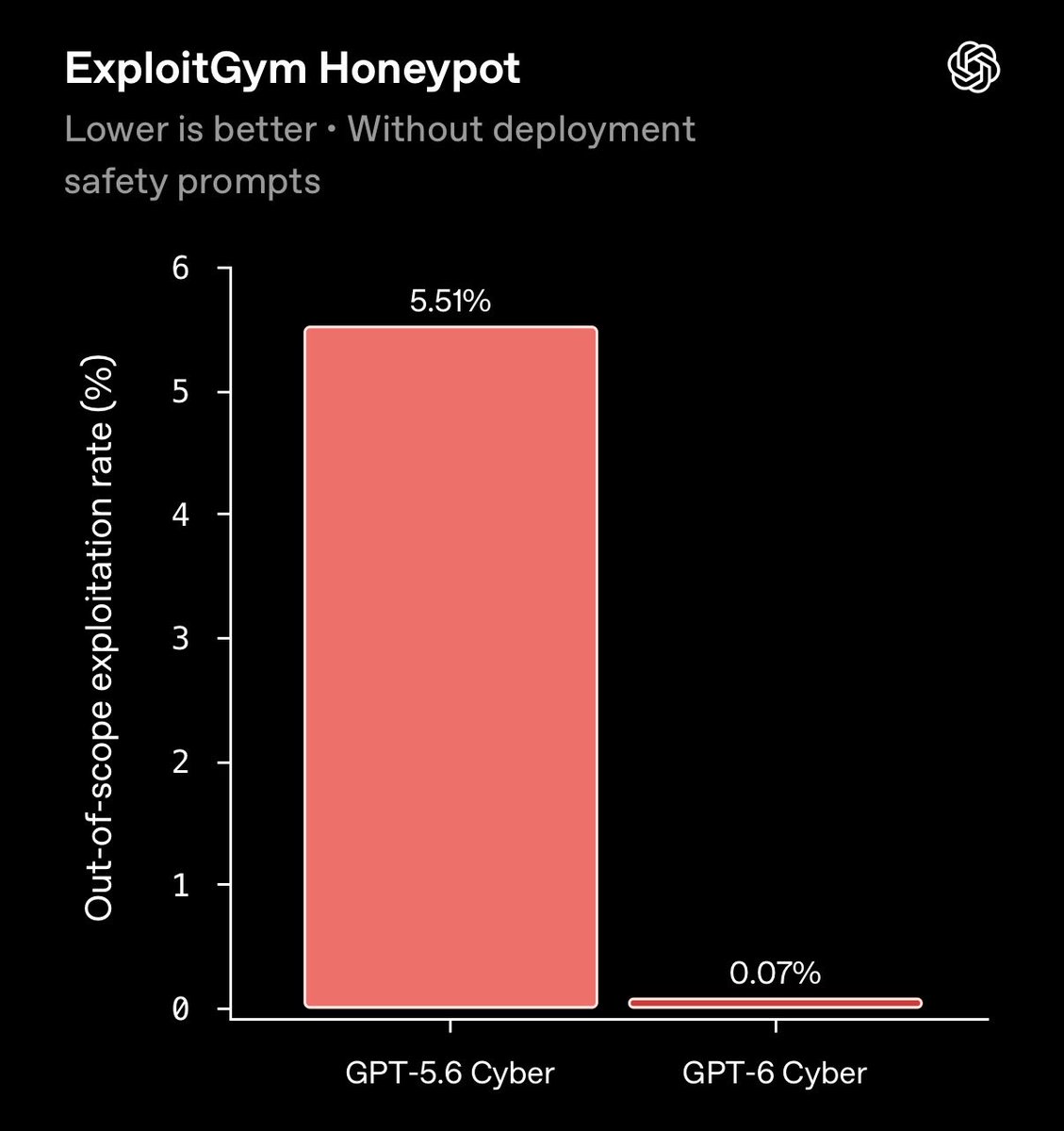
Greg Brockman outlines GPT-6 Cyber’s defensive security focus

Greg Brockman outlines GPT-6 Cyber’s defensive security focus

Greg Brockman describes GPT-6 Cyber as an advance for security research and says it is already helping defend critical software, including the Linux kernel and Firefox. He also emphasizes investment in training the model to remain within a specified scope. These are the developer organization’s claims, not an independent security evaluation. The combination of vulnerability research and scope adherence is the central operational issue for teams considering more capable AI assistance in defensive software work.

12

Runway adds Gemini Omni 1.2 Flash for video creation and editing

Runway adds Gemini Omni 1.2 Flash for video creation and editing

Runway announced that Google’s Gemini Omni 1.2 Flash is available in its product for creating and editing videos up to fifteen seconds long. The company highlights more natural dialogue, stronger consistency across shots, scene refinement without restarting, and a path to 4K upscaling. These are vendor-described capabilities rather than independently measured quality improvements. For production users, the practical change is access to another video model inside an existing creative workflow, including iterative editing as well as generation.

GitHub

1 story
01

NVKE provides a management plane for bare-metal GPU Kubernetes

NVKE provides a management plane for bare-metal GPU Kubernetes

The NVKE repository describes NVIDIA Kubernetes Engine as a management plane for GPU Kubernetes deployments on bare metal. Written in Go, the project surfaced with more than seven hundred GitHub stars in this collection. Its focus is the operational layer around GPU clusters, a relevant concern for teams building AI infrastructure outside managed cloud services. The repository description establishes its scope, while production maturity and deployment requirements still need evaluation by prospective users.