NO/FOMO

Independent AI signal, once a day

The AI briefing worth opening.

ISSUE DATE2026-11-15ENGLISH EDITION
This issue
—
All time
—

AI Blog

1 story
01

Armin Ronacher argues for nuance about AI’s benefits and costs

Armin Ronacher argues for nuance about AI’s benefits and costs

Armin Ronacher uses Princess Mononoke’s Irontown as an analogy for AI’s empowering effects and the costs borne by others. He describes using AI every day while recognizing harm, moral tensions, and the dangers of pursuing overwhelming power without understanding its consequences. The essay argues for a conversation that acknowledges incompatible interests and remaining choices. It is thoughtful commentary on adoption and governance rather than a product or research announcement.
Hacker News

6 stories
01

Anthropic IPO filing draws new scrutiny

Anthropic IPO filing draws new scrutiny

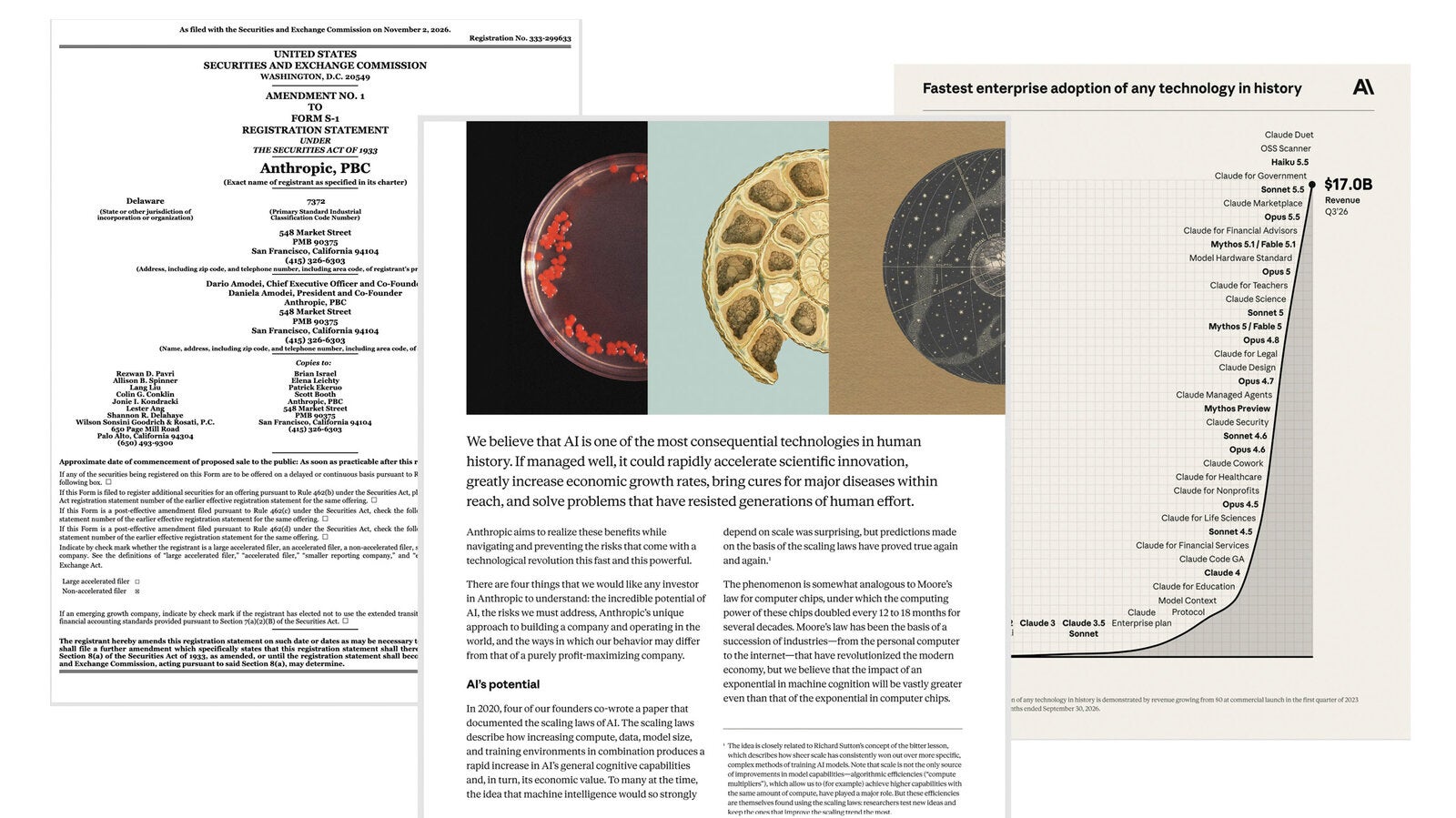
A New York Times article examining Anthropic’s IPO filing appears among today’s Hacker News submissions. Its focus brings the company’s public offering disclosures into the wider AI discussion. The collected entry supplies the headline and link, rather than the filing’s financial details, so no valuation or revenue figure is asserted here. The story is relevant to readers tracking how major AI companies present their business to investors.

02

Debate grows over whether AI generated code should be open source

Debate grows over whether AI generated code should be open source

An essay arguing that all AI generated code should be open source attracted 196 points and 131 comments in the collected Hacker News snapshot. The headline states a normative position, not an enacted legal requirement or a settled licensing rule. Its prominence shows sustained interest in ownership and openness around coding tools. Developers should distinguish the author’s proposal from the actual licenses and obligations governing their projects.

03

A practical guide to positional embeddings in modern LLMs

A practical guide to positional embeddings in modern LLMs

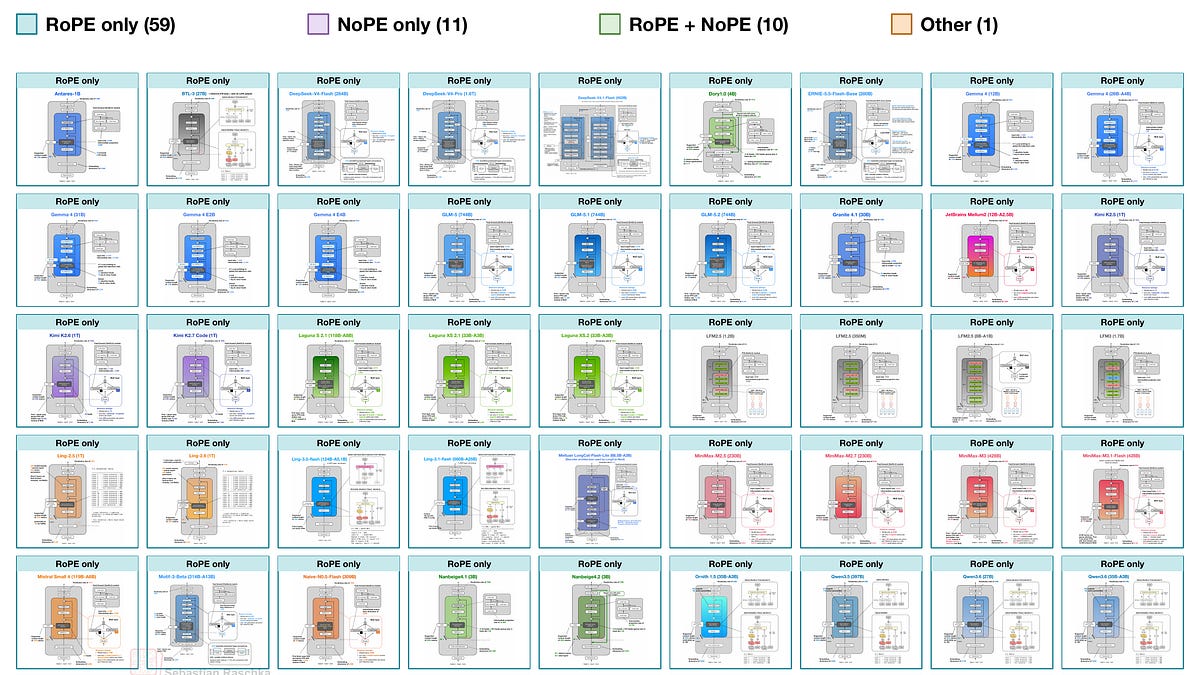
Sebastian Raschka publishes a guide to positional embeddings in modern language models, including a from scratch RoPE tutorial and discussion of NoPE, partial RoPE, and hybrid designs. The original article also appears on Hacker News, where it received 86 points in the collected snapshot. It is a useful technical resource for readers comparing architectural choices and understanding how sequence position enters a language model’s computation.

04

Report scrutinizes Lutnick’s push to loosen chip rules

Report scrutinizes Lutnick’s push to loosen chip rules

The New York Times reports that Howard Lutnick pushed to weaken chip rules overlapping with his family business, according to the headline collected from Hacker News. The submission drew 169 points and 62 comments. The available candidate does not establish the detailed rules or their eventual disposition. The story places semiconductor policy and potential conflicts of interest alongside the technical developments shaping the AI industry.

05

Turbo Browser MCP proposes batching and submit guards

Turbo Browser MCP proposes batching and submit guards

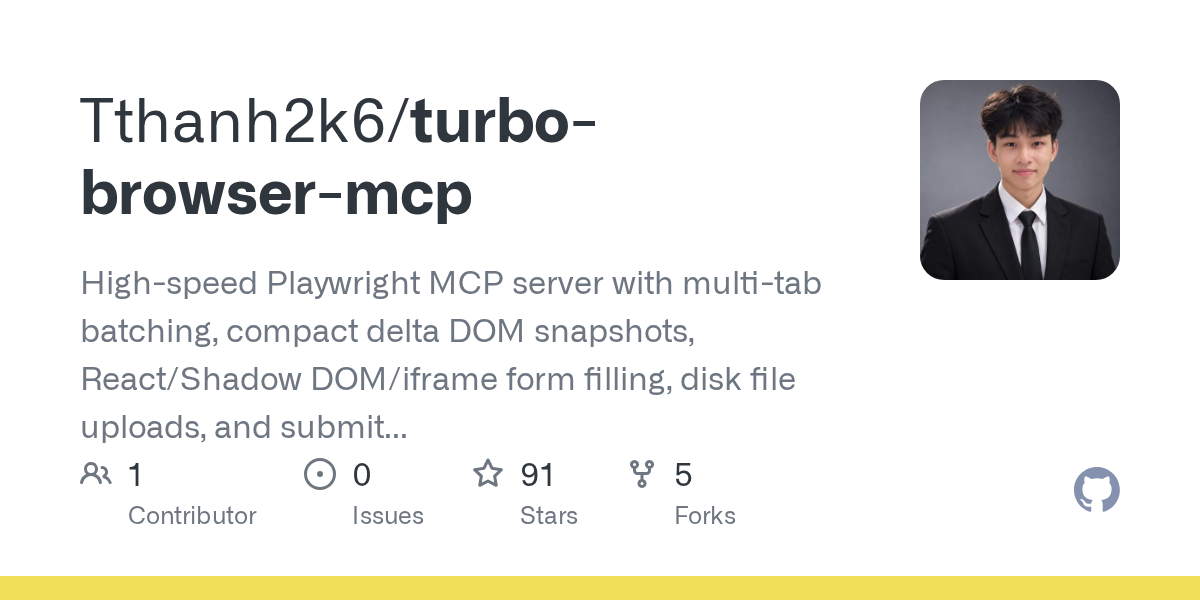
Turbo Browser MCP appears in a Show HN submission describing batch forms, DOM deltas, and submit guards for browser automation through MCP. The collected listing received 44 points and eight comments. These advertised features target recurring friction in agent driven browsing: repeated form operations, changing page state, and consequential submissions. The candidate contains no independent reliability results, so the repository remains the place to assess implementation and suitability.

06

DRAM price fixing lawsuit survives dismissal motion

DRAM price fixing lawsuit survives dismissal motion

A report that a court denied a motion to dismiss a DRAM price fixing case led the relevant infrastructure discussion on Hacker News, with 360 points and 151 comments in the collected snapshot. The linked report identifies Samsung, SK Hynix, and Micron in the dispute. Surviving dismissal is a procedural development, not a finding of liability. Memory supply economics remain relevant to the broader computing infrastructure market.

Twitter

12 stories
01

Inkling 2 Small draws attention for its architecture

Inkling 2 Small draws attention for its architecture

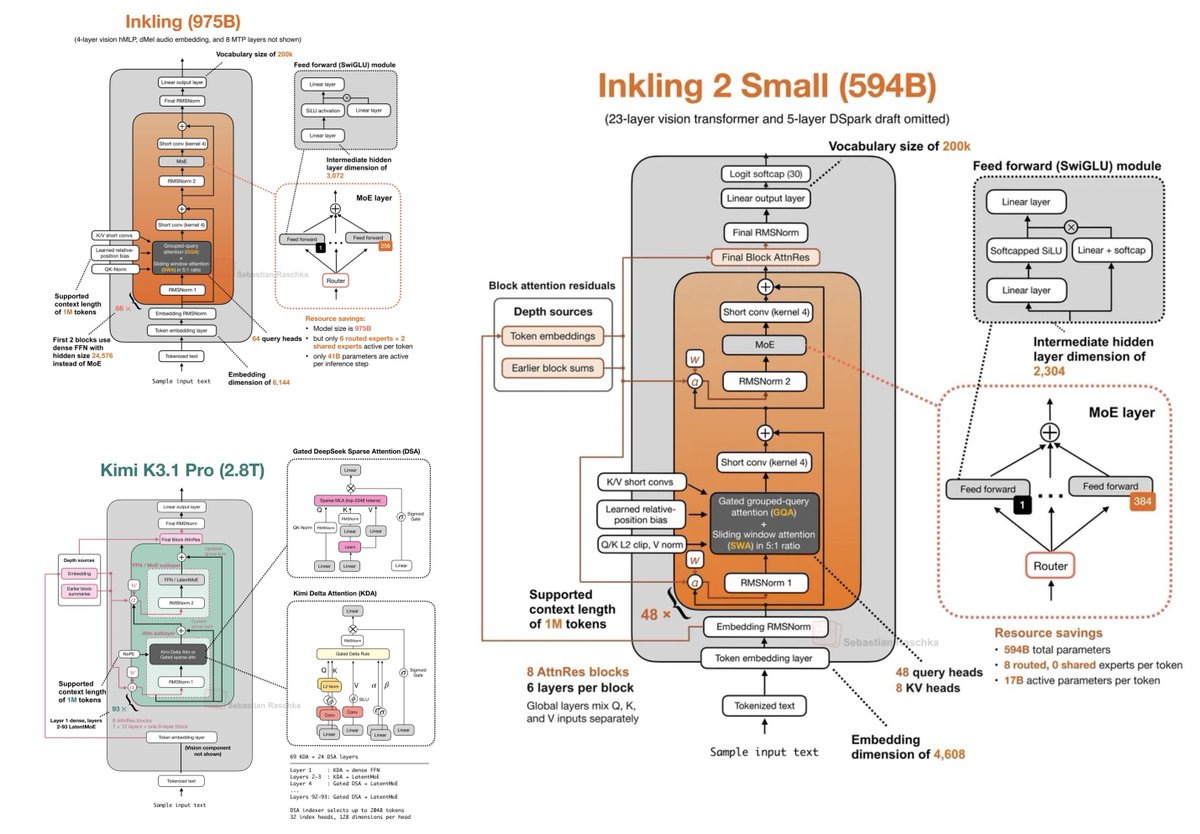
Sebastian Raschka highlights Inkling 2 Small as more interesting than he initially expected, pointing to attention residuals similar to Kimi K3 without a linear attention hybrid. His post frames the design as material for a broader review of model architecture trends. The useful takeaway is an architectural comparison, rather than a new benchmark claim: recent models are experimenting with different combinations of attention and residual pathways.

02

Nathan Lambert flags political and funding risks for open models

Nathan Lambert flags political and funding risks for open models

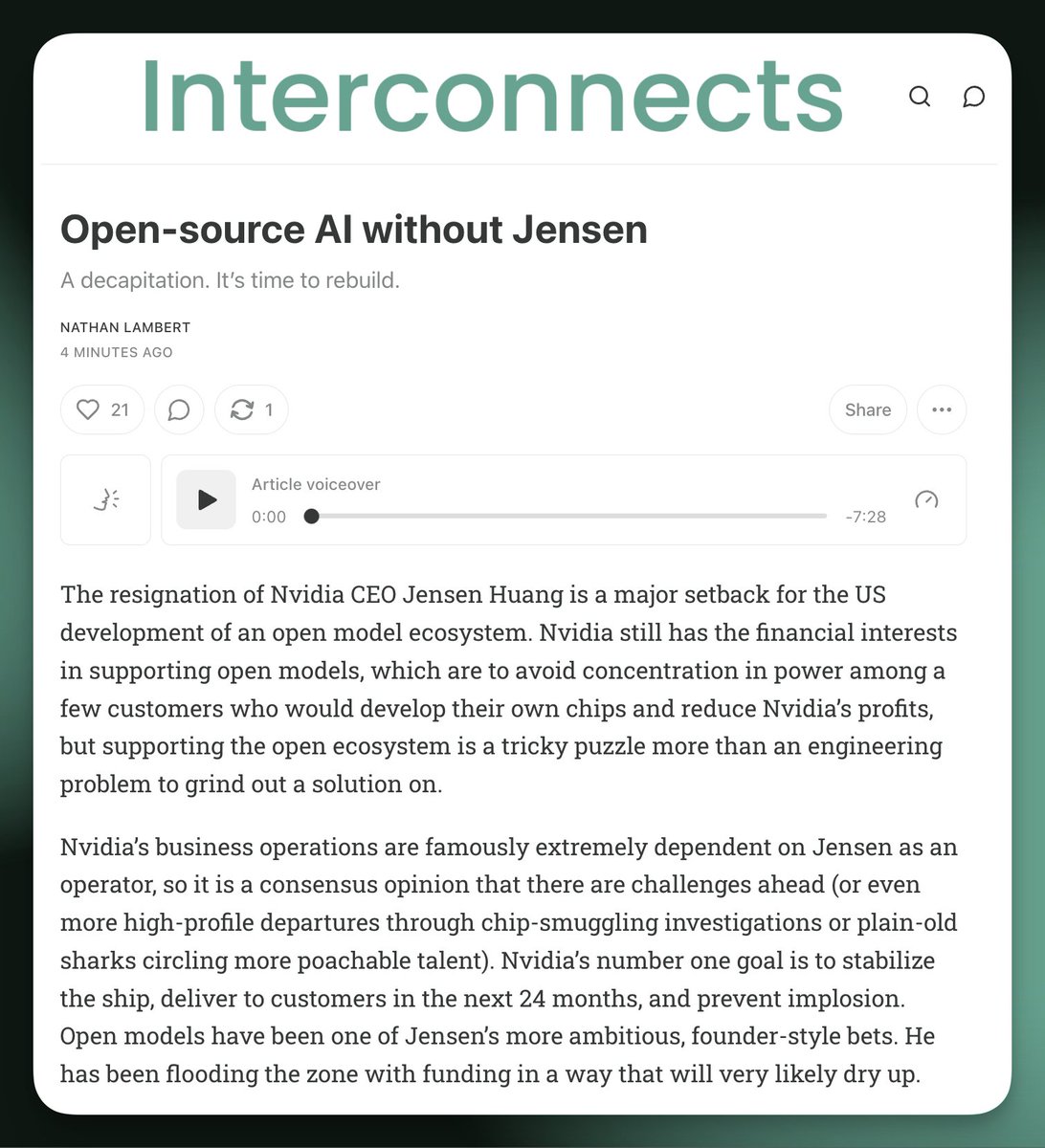
Nathan Lambert argues that the open model ecosystem faces two challenges in what he calls a post-Jensen world: reduced political support in Washington and pressure for model builders to find profitable products sooner. This is his assessment of ecosystem exposure, not a confirmed funding withdrawal. It matters because open model development depends on institutional support and commercial sustainability as well as technical progress.

03

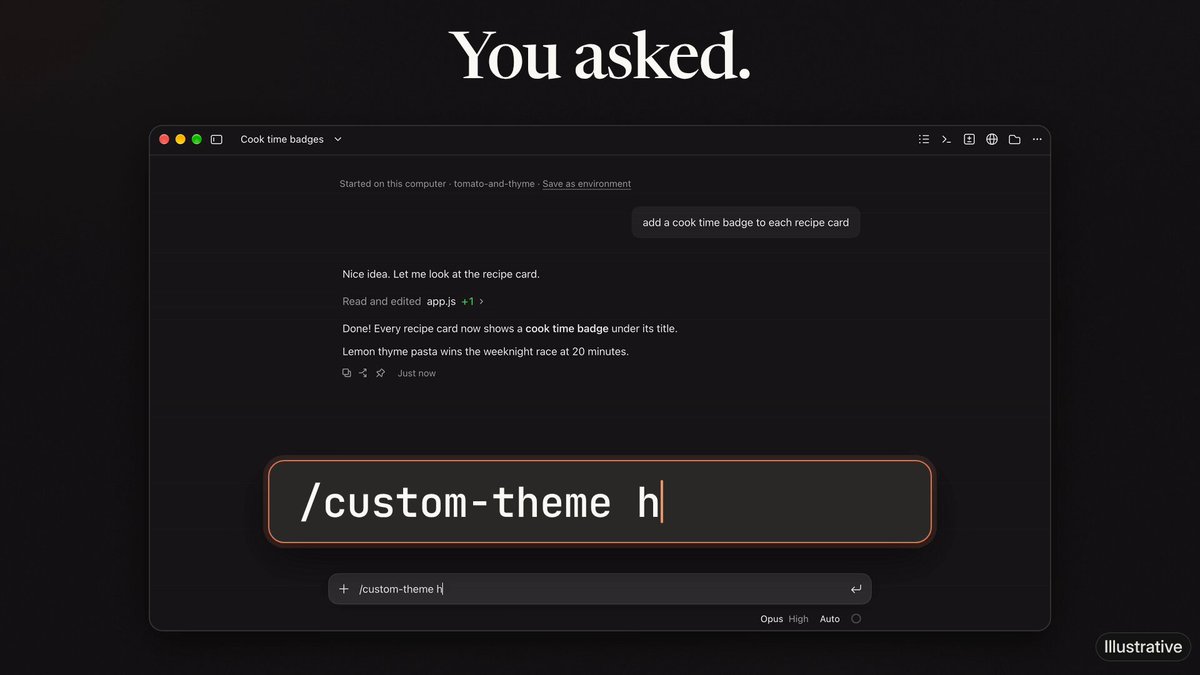
Claude Code desktop adds custom themes through mods

Claude Code desktop adds custom themes through mods

Anthropic’s Claude developer account announces custom themes for Claude Code on desktop through mods. Users can change colors, add animated backgrounds, and ask Claude to help shape the appearance, with a theme examples plugin offered as a starting point. The announcement attracted strong engagement in the collected posts. It extends interface customization around the coding agent, without establishing any change to the underlying model’s coding capabilities.

04

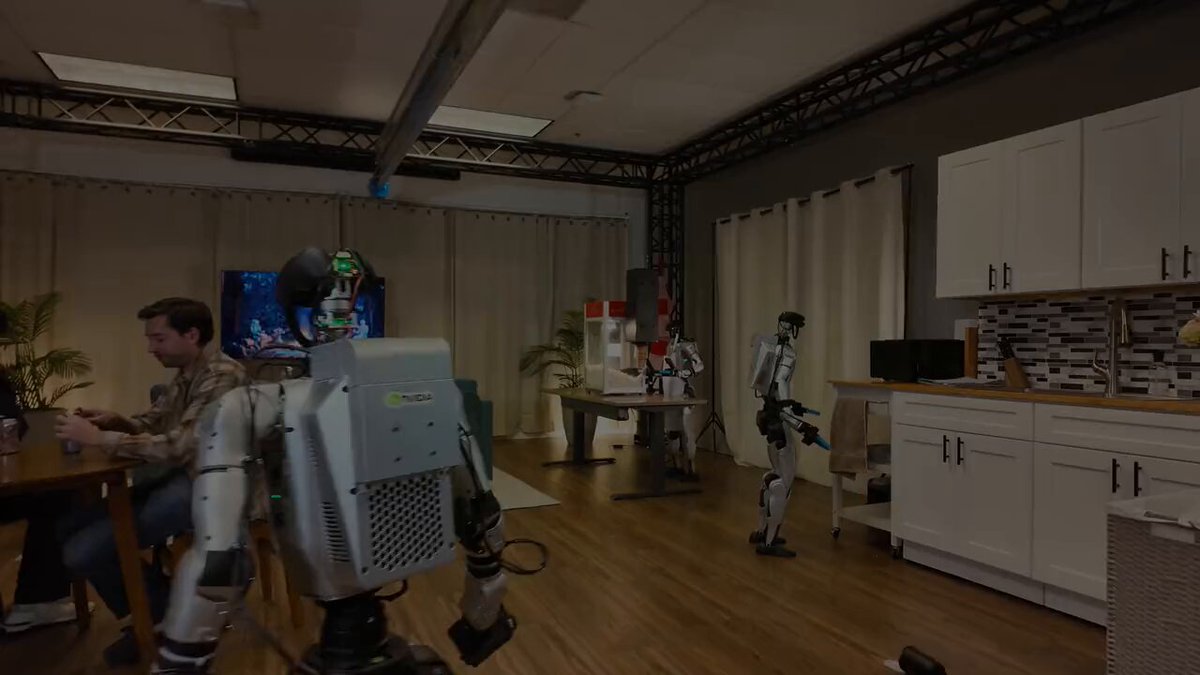
Hugging Face signals LeRobot integration work for GR00T 2

Hugging Face signals LeRobot integration work for GR00T 2

Thomas Wolf praises NVIDIA’s GR00T 2 open weights robotics work and says LeRobot integration is underway. The post is a signal of ecosystem integration, rather than a completed compatibility release or an independent performance evaluation. For robotics developers, connecting a model to established open tooling can be as important as model availability, because it determines how readily researchers can reproduce workflows and experiment with hardware.

05

Model specifications gain importance as agents act independently

Model specifications gain importance as agents act independently

Nathan Lambert describes model specifications as a useful mechanism for organizational alignment and lightweight external oversight, while pointing to their growing importance as agents act more independently. The post raises a governance question rather than announcing a new specification. As AI moves from producing text toward taking actions, written behavioral expectations become a practical reference for evaluating whether systems operate within intended boundaries.

06

Greg Brockman announces payment partnerships for dot

Greg Brockman announces payment partnerships for dot

Greg Brockman says users can make secure purchases with dot through partnerships with American Express, Mastercard, and Visa. The collected announcement identifies the payment partners but does not provide transaction limits, rollout coverage, or implementation details. It is a notable signal for agent commerce: connecting assistants to established payment networks moves the product discussion toward authorized purchases and execution, beyond recommendations or shopping search alone.

07

llama.cpp announces version 1.0.0

llama.cpp announces version 1.0.0

A release announcement from llama.cpp creator Georgi Gerganov, shared by Thomas Wolf, states that version 1.0.0 is now available. The collected post establishes the version milestone but does not enumerate changes or offer comparative performance results. For developers following local model inference, the release is worth reviewing at the project itself before upgrading, especially where existing integrations depend on specific runtime behavior or interfaces.

08

Runway adds Seedance 2.5 Flash

Runway adds Seedance 2.5 Flash

Runway announces that Seedance 2.5 Flash is available on its platform, positioning the model as a faster and lower cost option for video generation. The post does not give specific prices or timing measurements, so those comparative claims remain vendor descriptions. The addition gives creators another model choice inside an existing workflow and reflects the continuing emphasis on generation speed and cost in creative AI tools.

09

OpenAI announces two Daybreak cybersecurity products

OpenAI announces two Daybreak cybersecurity products

Greg Brockman announces Daybreak Defense Factory and Daybreak Red Team, describing both as ways to put frontier cybersecurity capabilities to work defending companies. The collected post names the products and their intended role but does not include evaluation results, access conditions, or deployment requirements. The announcement is significant as a product direction: advanced model capabilities are being packaged into explicit defensive and red teaming workflows.

10

Anthropic discusses measuring model upgrades by cost per task

Anthropic discusses measuring model upgrades by cost per task

Anthropic’s developer account points to a discussion of API model launches, associated features, and how developers should rethink their harness when upgrading. A central topic is measuring cost per task rather than treating a model replacement as a simple configuration change. The collected announcement offers no numerical comparison, but highlights an operational concern: surrounding orchestration and evaluation affect the practical economics of adopting a newer model.

11

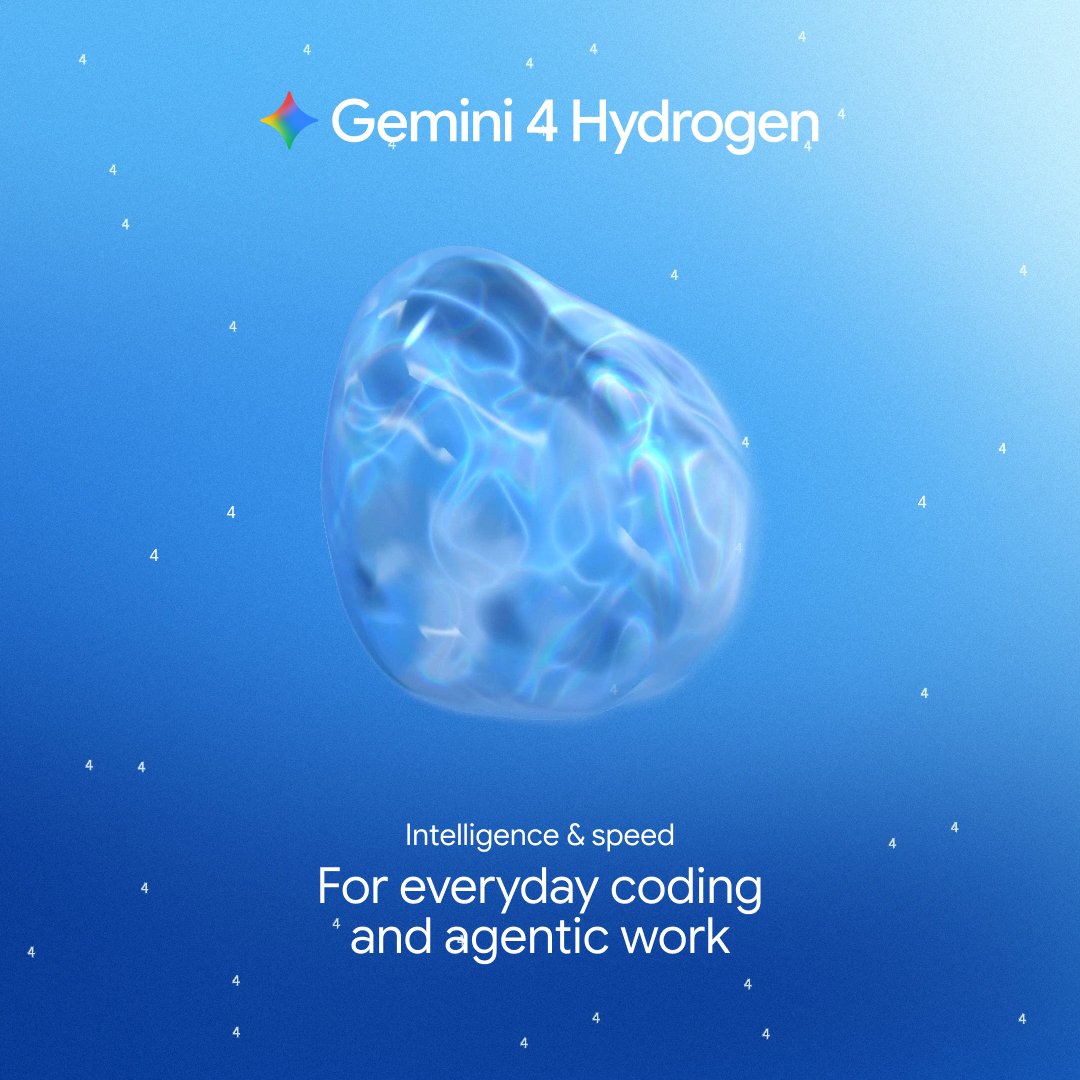
Google introduces Gemini 4 Hydrogen for coding and agent tasks

Google introduces Gemini 4 Hydrogen for coding and agent tasks

Google introduces Gemini 4 Hydrogen as a model aimed at everyday coding and agentic work, with four thinking levels and the ability to work alongside Carbon and Argon. Google claims it is 2.5 times faster than 3.8 Flash. That speed comparison is a vendor claim in the collected announcement, not an independent benchmark here. The release emphasizes configurable reasoning and efficiency for broader use.

12

Adaption presents Expand for targeted training data growth

Adaption presents Expand for targeted training data growth

Sara Hooker describes Adaption’s Expand feature as a way to grow small example sets into larger training datasets while matching the original topics and domains. She claims a progression from twenty examples to a hundred thousand training examples in hours. The collected post does not provide quality or downstream accuracy measurements. The substantive idea is objective specific data expansion, whose usefulness depends on fidelity and evaluation.

GitHub

2 stories
01

AG UI connects agents with frontend applications

AG UI is an Agent User Interaction Protocol project intended to bring agents into frontend applications. The TypeScript repository appears in the collected GitHub trending set with 17,650 stars and recent activity on the report date. Its relevance is the integration layer between agent execution and user facing software. Repository popularity is a discovery signal, however, and does not by itself establish production reliability or compatibility with a particular application.

02

Univer offers an office SDK for people and agents

Univer offers an office SDK for people and agents

Univer describes an office SDK that brings editing, calculation, collaboration, and file processing into products for people and AI agents. Built around an extensible open source core, the TypeScript project has 25,351 stars in the collected GitHub snapshot. It represents infrastructure for embedding office workflows into software. The description establishes the project’s scope, while deployment requirements and feature coverage still need to be checked against its documentation.