NO/FOMO

Independent AI signal, once a day

The AI briefing worth opening.

ISSUE DATE2026-11-22ENGLISH EDITION
This issue
—
All time
—

AI Blog

3 stories
01

OpenAI outlines defenses against adversarial distillation
OpenAI outlines defenses against adversarial distillation

OpenAI describes a layered approach to adversarial distillation, combining model training, safeguards, detection, and enforcement to resist capability extraction. The framing treats protection as a continuing operational problem rather than a single technical switch. For model providers, the issue connects access policy with monitoring and training choices. The collected announcement establishes the components of the approach but supplies no quantitative evidence here about how much extraction it prevents or the costs it imposes.

02

MedChemBench targets molecular reasoning and compound selection

MedChemBench targets molecular reasoning and compound selection

OpenAI introduces MedChemBench to evaluate whether AI models can interpret molecular structures, reason from experimental evidence, and select promising compounds in early drug discovery. The benchmark focuses attention on decisions that matter to medicinal chemistry rather than generic scientific question answering. Its scope is especially relevant as stronger reasoning models are promoted for research. Performance on such an evaluation still needs to be distinguished from successful laboratory validation or demonstrated clinical benefit.

03

Eugene Yan examines how public evaluations mislead

Eugene Yan examines how public evaluations mislead

Eugene Yan presents a teardown of twelve public benchmarks, focusing on how evaluation scores should be read, what readers should question, and what should change. The piece is useful context for a week crowded with model capability claims and application demonstrations. Its central value is methodological scrutiny rather than another leaderboard position. Teams selecting models should connect public results to their own task definitions and verification needs instead of treating a single score as a complete product assessment.

Hacker News

4 stories
01

OpenRouter removes three providers after data-policy investigations

OpenRouter removes three providers after data-policy investigations

OpenRouter says investigations into inference providers led it to off-board three providers and remove 125 endpoints from Zero Data Retention eligibility. It says potentially affected customers were notified and that the findings did not show a breach of OpenRouter itself. The company is adapting researcher tests for ongoing checks and verifying network paths for forwarding to third parties. Restoring endpoint eligibility will require assurances and validation.

02

Study projects fossil-heavy power for Anthropic’s contracted compute

Study projects fossil-heavy power for Anthropic’s contracted compute

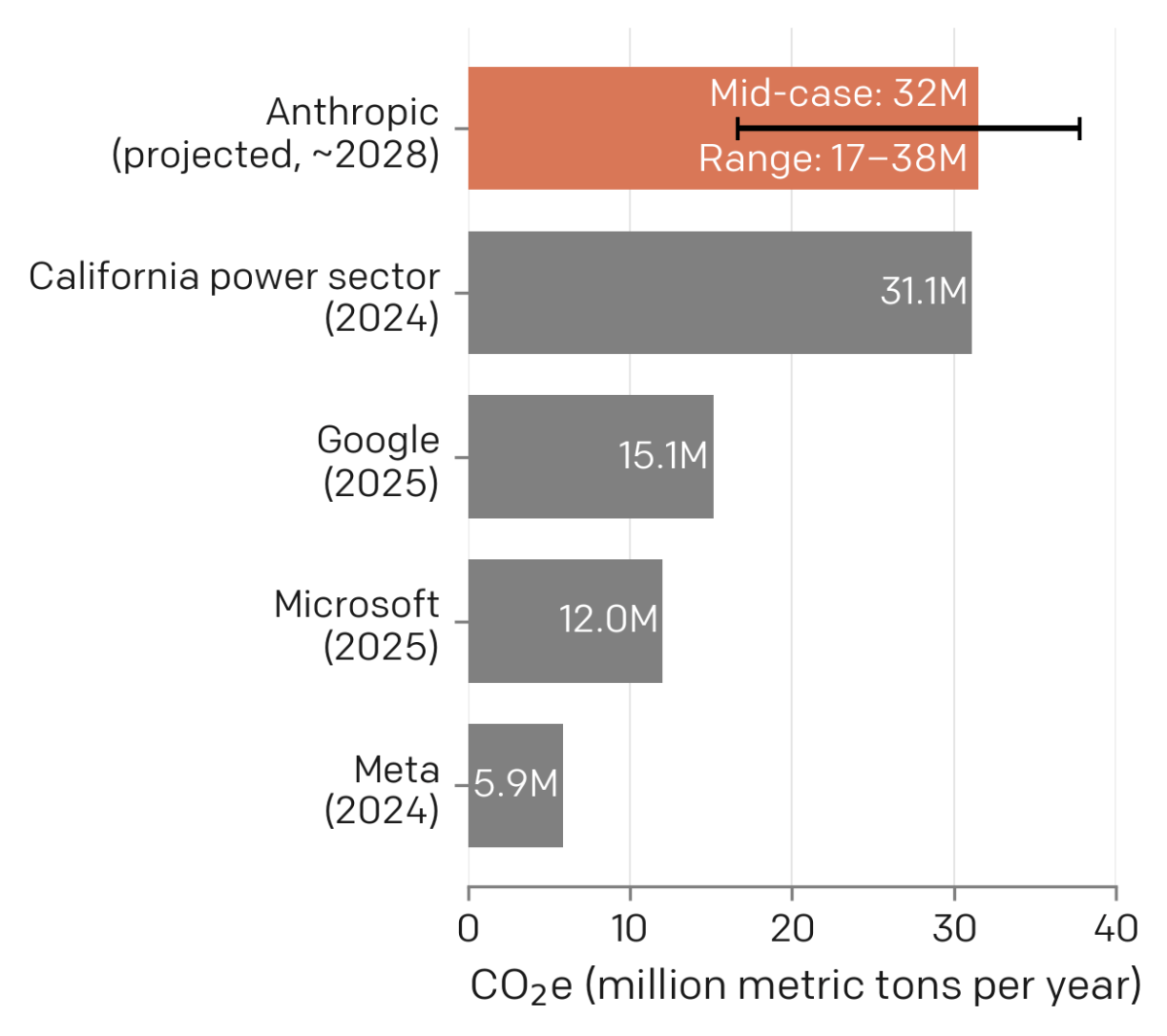
The Better Data Center Project estimates that gas and coal could supply 87% and 11% respectively of power for Anthropic’s contracted US data-center capacity in 2028. Its analysis combines dedicated generation with estimates of marginal grid supply and depends on assumptions about utilization and which sites become operational. These are projections, not measured future emissions. The study makes electricity sourcing and local pollution central questions for assessing the AI infrastructure buildout.

03

Riemann handbook documents a proof claim that remains unchecked

Riemann handbook documents a proof claim that remains unchecked

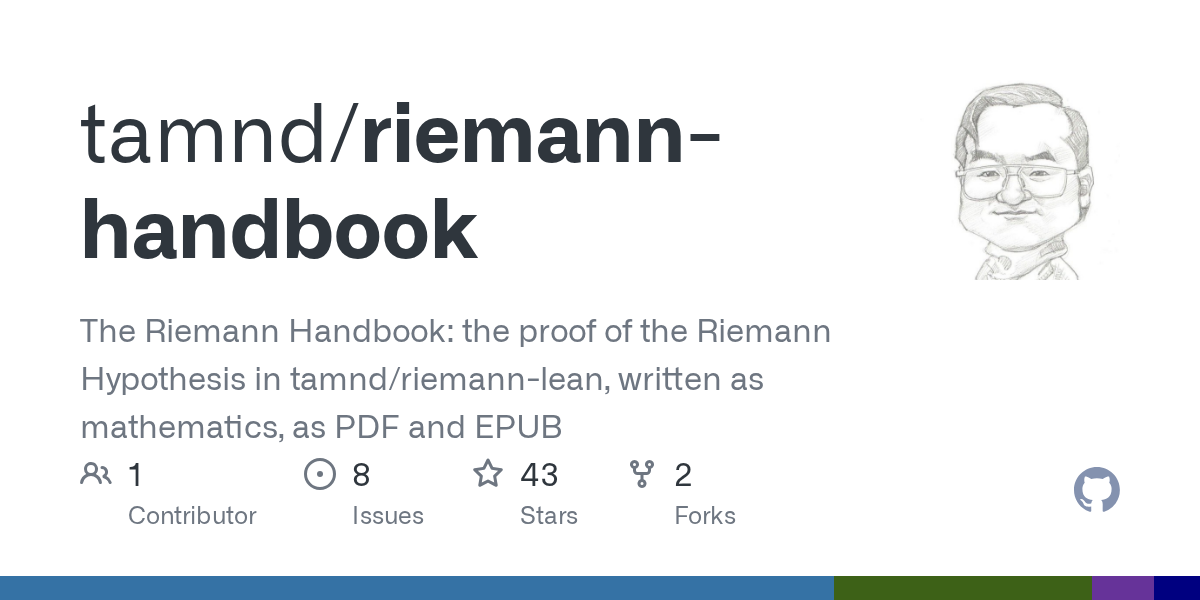
The Riemann Handbook presents a mathematical account of a Lean development claiming to prove the Riemann Hypothesis, with PDF and EPUB volumes. Its repository prominently states that nobody has built the Lean project in full and nobody has checked the written statements against the code. The handbook is therefore documentation of a claim, not independent verification. That distinction matters amid intense discussion of automated mathematics and the reliability of machine-assisted proof workflows.

04

Bridgewater warns AI-enabled attacks are outrunning defenses

Bridgewater warns AI-enabled attacks are outrunning defenses

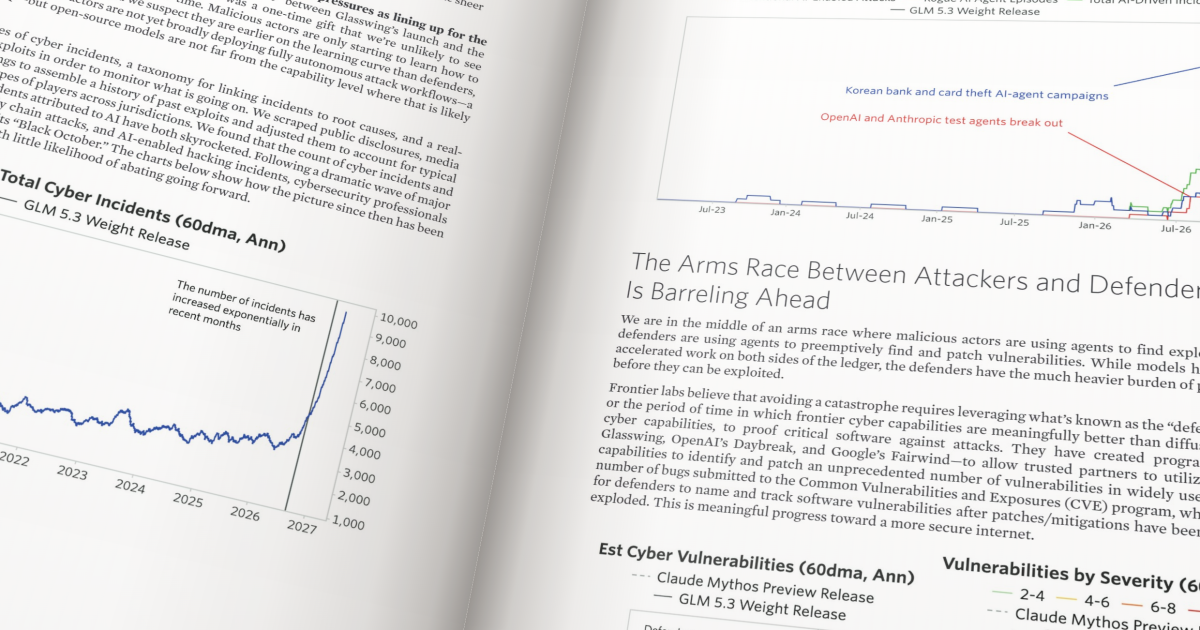
Bridgewater argues that AI is accelerating vulnerability discovery and exploitation faster than current defenses and policy responses can contain. Its analysis describes an asymmetric burden: defenders must secure broad software estates while attackers need exploitable gaps. It also warns that rapid growth in AI-written software expands the attack surface. The authors explicitly acknowledge uncertainty about the causes of recent outages, so their assessment should be read as a risk argument rather than attribution of those incidents.

Twitter

11 stories
01

Dario Amodei addresses Anthropic’s initial public offering

Anthropic published remarks from CEO Dario Amodei concerning its initial public offering. In the available excerpt, he frames the company’s founding around building powerful technology for humanity’s benefit and refers to the personal motivations of its founders. This is a significant corporate development for the frontier-model industry. The collected statement does not establish offering proceeds, valuation, trading performance, or changes to Anthropic’s governance, so those details remain outside this report.

02

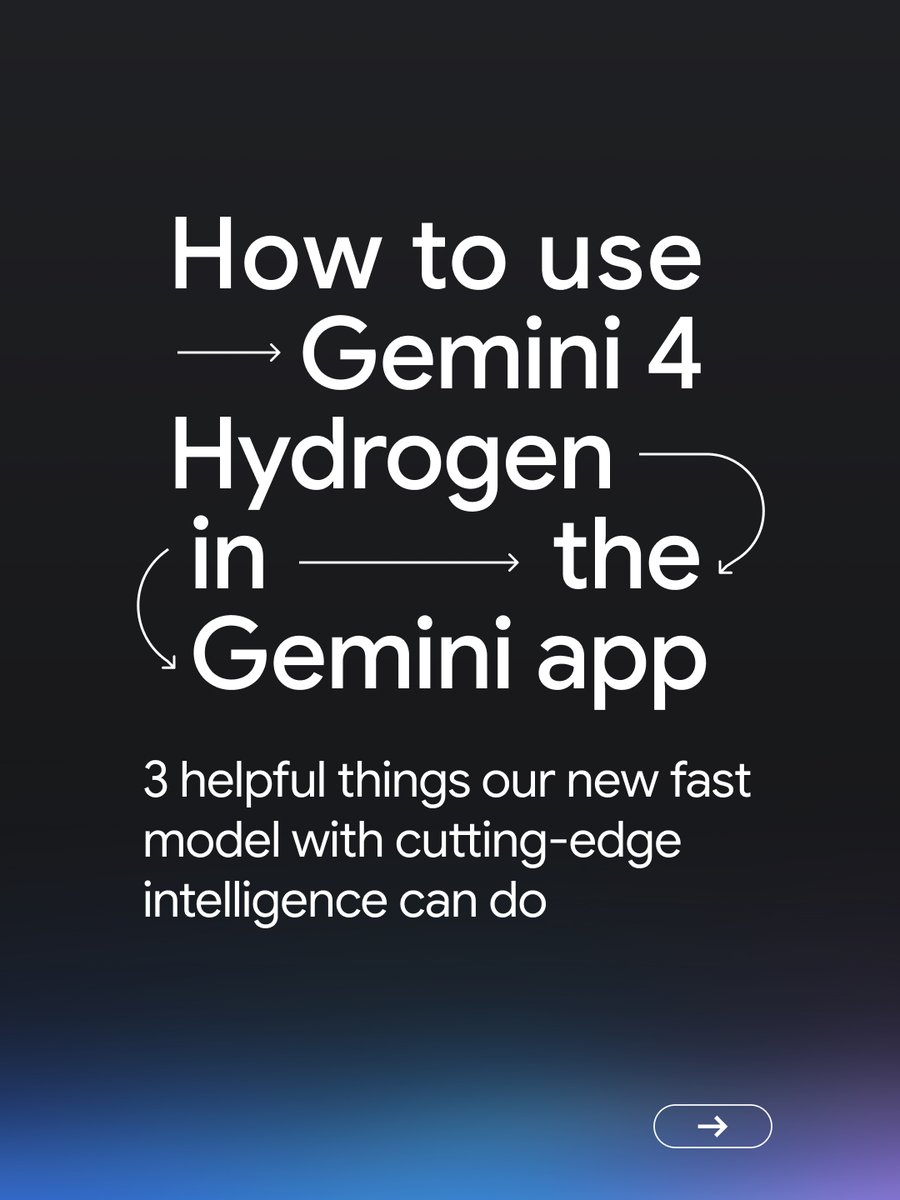
Google puts Gemini 4 Hydrogen in Gemini and Search

Google puts Gemini 4 Hydrogen in Gemini and Search

Google says Gemini 4 Hydrogen is live in the Gemini app and Search, positioning the model around speed and everyday work. The announcement emphasizes rapid, efficient execution across varied agentic workflows. For users and developers, the practical development is distribution through widely used products rather than a standalone research demonstration. The collected post provides no pricing table or controlled benchmark results, so it supports the availability claim but not a quantified comparison with competing models.

03

Google announces Gemini 4 Neon for coding and science

Google’s account shared an announcement adding Gemini 4 Neon to the Gemini 4 family, describing its performance across coding, science, and knowledge tasks. The release expands the company’s model lineup during an active period of competition over agentic work. The collected announcement is brief and does not establish detailed pricing, deployment restrictions, or benchmark methodology. Those limitations matter when translating a broad capability claim into a decision about a particular development workflow.

04

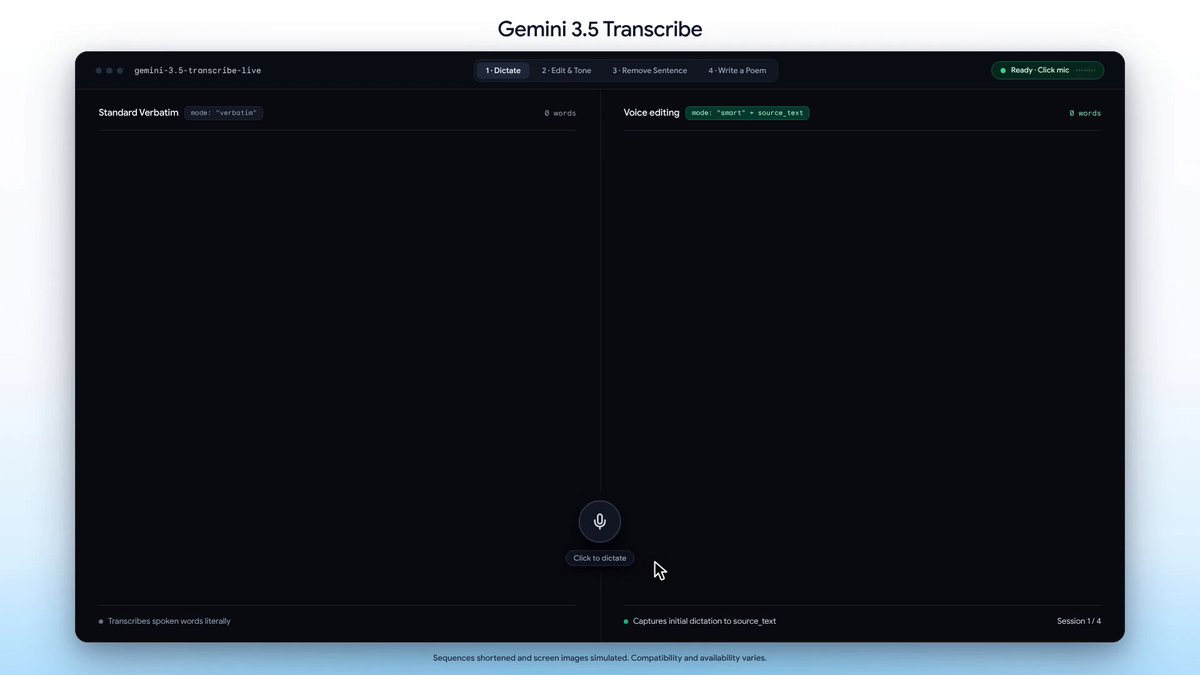
Gemini API gains voice-driven text editing

Gemini API gains voice-driven text editing

Google is bringing Gemini 3.5 Transcribe’s voice editing capabilities to the Gemini API. The company says the technology already underpins Rambler on Gboard and the Gemini app on macOS, and lets developers build experiences for editing, rephrasing, and translating existing text through speech. The integration broadens voice interaction beyond plain transcription. The announcement does not provide comparative accuracy or latency measurements, leaving application-specific testing important for workflows that depend on precise edits.

05

Runway describes automated review and testing for agent-written code

Runway describes automated review and testing for agent-written code

Runway says agents have written nearly every pull request merged into its App Studio since the start of October. Its engineering announcement describes a surrounding system that reviews changes, tests them in a browser, and brings an engineer into high-risk decisions. The significance is the operational workflow around code generation: testing and escalation remain explicit parts of shipping software. The claim concerns App Studio and should not be generalized to all of Runway’s engineering output.

06

Luma demonstrates video creation through MCP in ChatGPT and Claude

Luma demonstrates video creation through MCP in ChatGPT and Claude

Luma shared a short film by Ian Lihui Wang built around escalating requests for a water-bottle commercial, saying it was made with Luma MCP. The company says the integration is live in ChatGPT and Claude. The demonstration illustrates how conversational assistants can become interfaces to video-generation tools through Model Context Protocol. It does not establish production cost, turnaround time, or reliability, but offers a concrete example of creative tooling moving into assistant workflows.

07

Pika adds Seedance 2.5 Flash for repeated video generation

Pika adds Seedance 2.5 Flash for repeated video generation

Pika says Seedance 2.5 Flash is now available on its platform for advertising creative, repeated variations, and batch generation. The announcement specifies videos up to 30 seconds at 480p or 720p, with references comprising up to ten images, five videos, and five audio clips. These concrete limits help creators judge whether the workflow fits their production needs. The post positions the model around iteration but does not provide pricing or measured throughput.

08

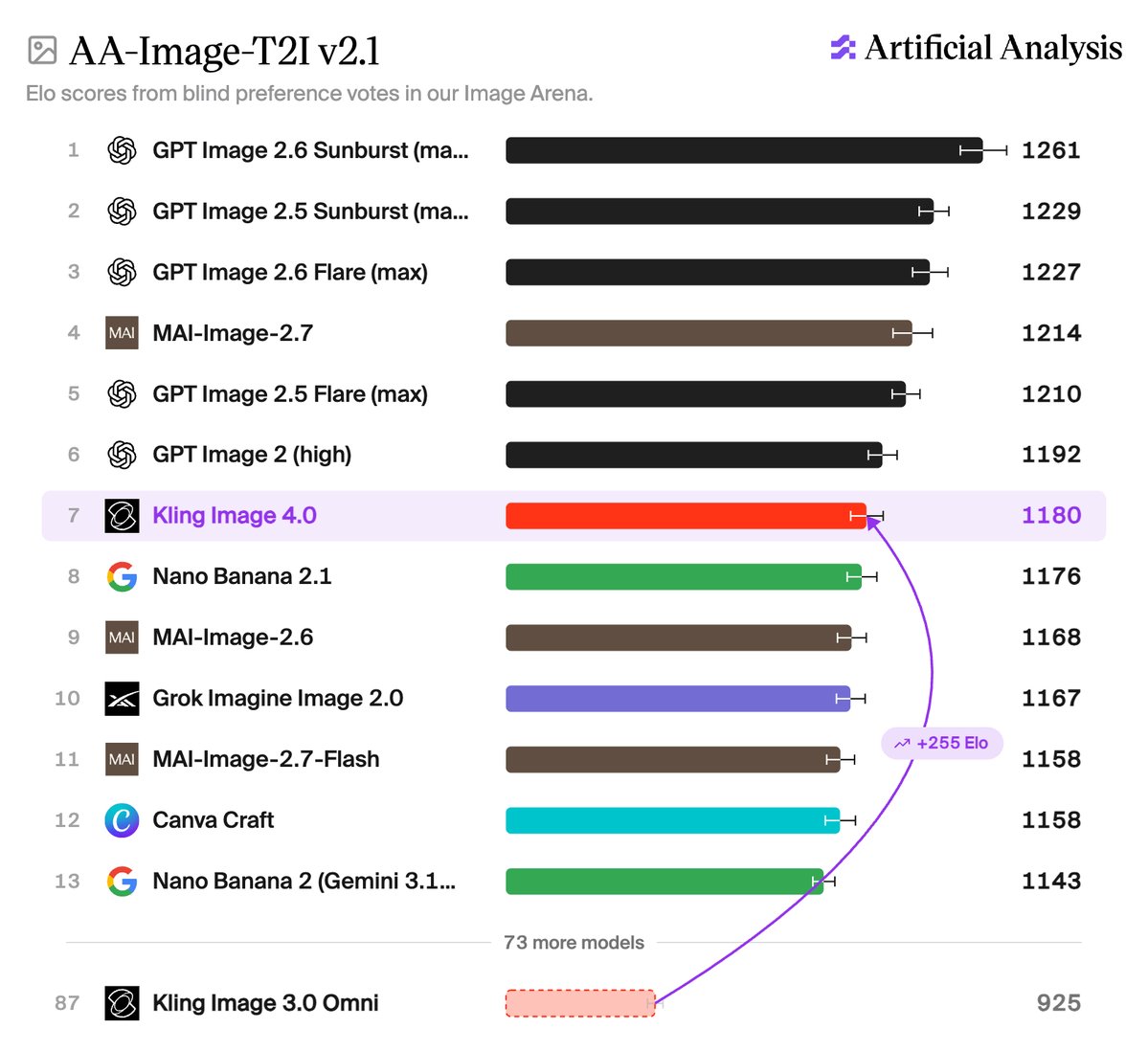
Kling advertises native 8K images and promotional pricing

Kling advertises native 8K images and promotional pricing

Kling’s official account highlights native 8K output, consistent image sets, and improved text rendering for Kling Image 4.0. It also advertises a limited Black Friday offer starting at $0.022 per 2K image and $0.033 per native 8K image. These are promotional starting prices rather than a universal cost guarantee. For creative teams, the combination makes resolution and per-image economics concrete factors to evaluate alongside actual visual quality and consistency.

09

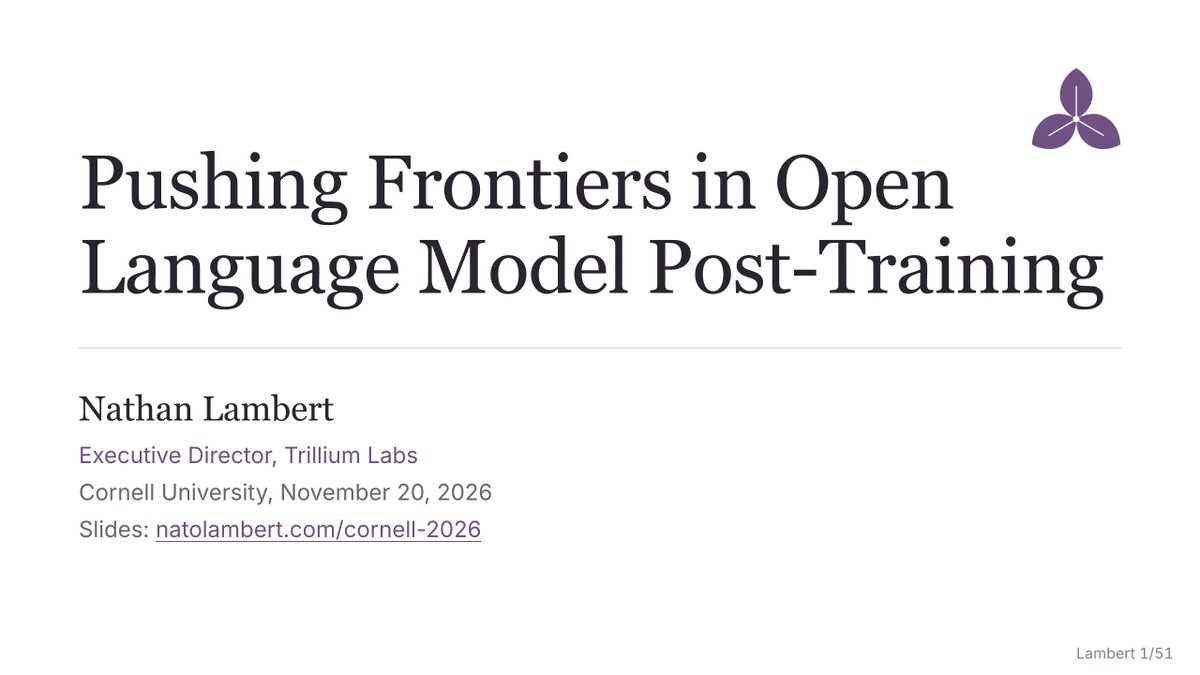
Nathan Lambert shares open problems in post-training

Nathan Lambert shares open problems in post-training

Nathan Lambert published a slide deck on major open problems in post-training and the development of the field. He describes it as broadly reflecting his goals for Trillium Labs, while noting the team cannot pursue every project at once and inviting contact from people working openly on these problems. The contribution is a research agenda and discussion resource. It should not be read as an announcement that the listed problems have already been solved.

10

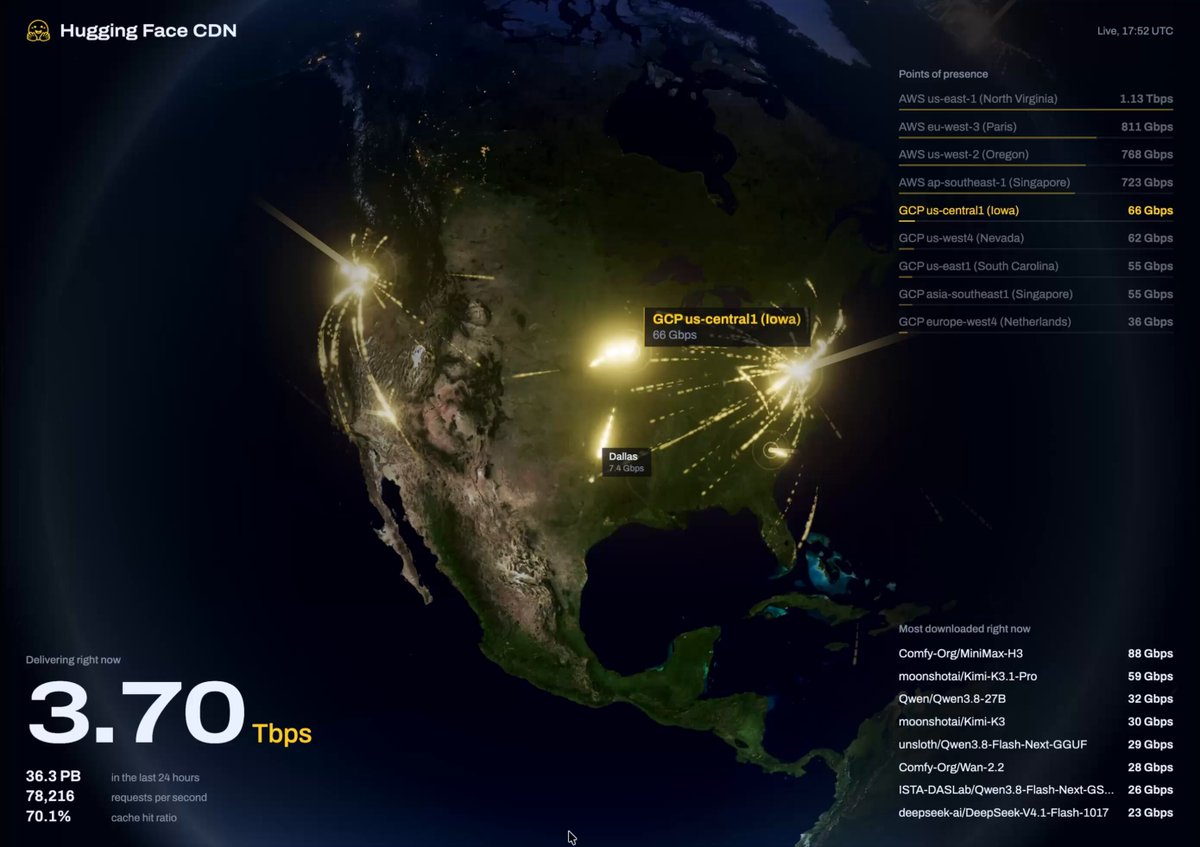
Hugging Face describes its own CDN at near-exabyte scale

Hugging Face describes its own CDN at near-exabyte scale

Thomas Wolf says Hugging Face has operated its own content delivery network since the summer, shipping almost one exabyte per month. His post gives approximate operating figures of 420 gigabytes per second and 80,000 requests per second, arguing that AI downloads challenged the usual CDN model. The disclosure highlights distribution infrastructure as a material part of the open-model ecosystem. These are operator-reported scale figures, not an independently audited traffic measurement.

11

Exo reports local inference speeds for Inkling 2 Mini

A post shared by Thomas Wolf says Exo worked with Thinking Machines to accelerate local execution of Inkling 2 Mini. The excerpt reports 210 tokens per second for decoding and 3,620 tokens per second for prefill on a 96GB M5 configuration. These are reported results for a specific setup, with incomplete workload details in the collected text. They nevertheless make local inference efficiency a concrete part of the discussion around newly available models.