NO/FOMO

Independent AI signal, once a day

The AI briefing worth opening.

ISSUE DATE2026-11-26DEFAULT EDITION
This issue
—
All time
—

AI Blog

2 stories
01

SemiAnalysis compares recent frontier models on GDPx

SemiAnalysis compares recent frontier models on GDPx

SemiAnalysis published a GDPx evaluation of recent model releases, describing GPT-6.2 Astra as the overall leader while criticizing its software-engineering performance. Its summary calls Gemini 4 Neon a substantial improvement but overrated, and Fable 5.2 capable but expensive, alongside coverage of Chinese models. These are the publication's assessments, not universal model rankings. The useful takeaway is to compare task-specific performance and cost rather than choose solely by a single headline score.


02

a16z examines how products get discovered and chosen by agents

a16z examines how products get discovered and chosen by agents

Andreessen Horowitz frames a business-to-agent economy around a practical question: what makes a product or tool get found, chosen and used by agents? The collected article summary establishes this commercial framing without providing a detailed implementation recipe. Its relevance is the changing audience for product discovery and purchasing interfaces. As agents participate in workflows, companies may need to evaluate how clearly their services expose capabilities and support automated decision-making.

Hacker News

3 stories
01

Reported GPT-6.2 usage changes draw attention on Hacker News

Reported GPT-6.2 usage changes draw attention on Hacker News

A highly discussed Hacker News submission reports that GPT-6.2 Astra reaches usage limits 40 percent faster and Sol 25 percent faster. The linked source is a public post, while the collected record contains the headline and discussion metrics rather than the full policy details. The practical issue is effective access to expensive reasoning models. Users should distinguish these reported quota effects from a confirmed change in model quality or a published per-token price.

02

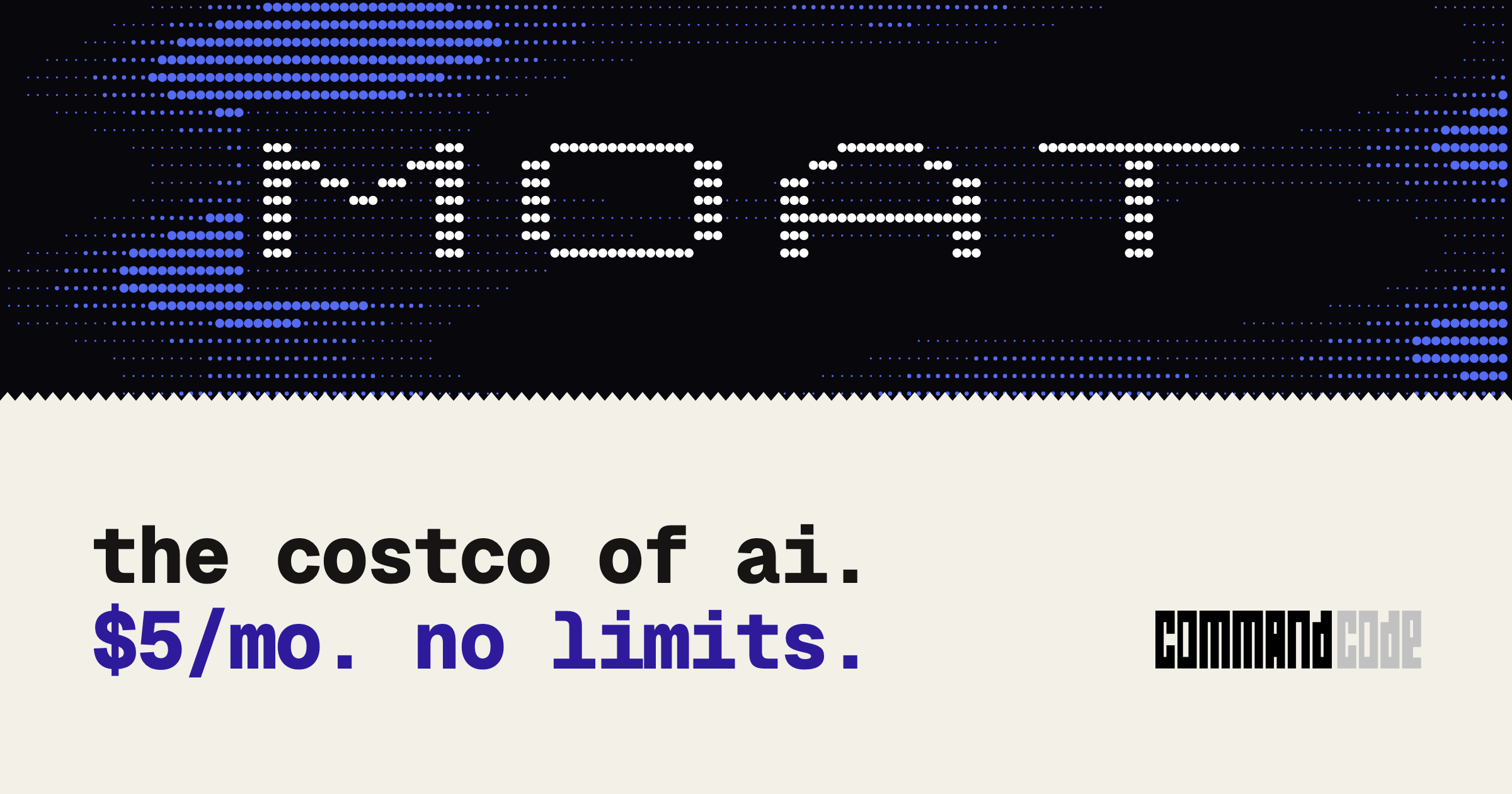
Moat pitches an alternative to OpenRouter

Moat pitches an alternative to OpenRouter

Moat attracted Hacker News discussion with a product positioning itself as an OpenRouter replacement. The collected record identifies the product and its positioning but does not provide enough detail to compare provider coverage, routing behavior or pricing. The story is relevant because model access and routing are increasingly important infrastructure choices. Teams considering a switch should evaluate compatibility and operating economics against their actual workloads rather than infer parity from the replacement claim.

03

Warmer data-center cooling draws infrastructure interest

Warmer data-center cooling draws infrastructure interest

A Register article highlighted on Hacker News argues that 45-degree-Celsius inlets can eliminate the need for chillers in some data-center cooling designs. The collected record supplies the headline rather than the underlying engineering conditions, so it does not establish universal applicability. For AI infrastructure, the relevant question is how cooling architecture changes power demand and facility economics. Hardware compatibility, local climate and system design remain necessary context for any claimed saving.

Twitter

9 stories
01

OpenAI tests Private Inference with a small customer group

Sam Altman says OpenAI is testing Private Inference with a small group of customers as part of OpenAI Private Intelligence. He frames stronger business privacy as a way to make frontier models useful for more work. The announcement establishes a limited testing phase, rather than general availability. It makes privacy protections an important part of the enterprise AI competition, alongside model capability and cost.

02

Anthropic uses Claude teams to migrate its Messages API to Rust

Anthropic uses Claude teams to migrate its Messages API to Rust

Anthropic says it recently migrated its Messages API from Python to Rust, using the existing service to verify the replacement. Teams of Claude agents tracked down and fixed differences between the implementations. The engineering account is a concrete example of agents supporting a production migration with an established behavioral reference. Its practical lesson is the importance of checking compatibility throughout automated code changes, beyond simply producing a working rewrite.

03

Dario Amodei rejects surrendering human free will to AI

Dario Amodei rejects surrendering human free will to AI

Dario Amodei publicly rejected the suggestion that he believes humans should surrender free will to AI systems. He pointed to his essays and described legitimate democratic governance as a recurring principle. The statement drew substantial attention on X and belongs in the broader debate over who should control powerful AI. It is a direct clarification of his stated position, not evidence that the underlying governance disagreements have been resolved.

04

AI researchers welcome Jensen Huang back

AI researchers welcome Jensen Huang back

Sebastian Raschka welcomed Jensen Huang back and emphasized CUDA's role in the rise of deep learning. His post recalls AlexNet training on two GTX 580 GPUs in 2012 and argues that Nvidia hardware remains central to the field. Similar reactions from prominent AI figures made this a notable industry conversation. The collected post provides a public reaction, rather than a detailed corporate account of the circumstances surrounding Huang's return.

05

Runway reports faster Praxis-1 inference with ExecuTorch and TensorRT

Runway reports faster Praxis-1 inference with ExecuTorch and TensorRT

Runway says it worked with Meta's PyTorch team to bring its open-weight Praxis-1 world action model to ExecuTorch with NVIDIA TensorRT. The company reports up to 1.7 times faster execution than its reference code on H100 and A100 GPUs, with similar accuracy. This is a deployment optimization for robotics models rather than a new capability benchmark. The reported hardware and baseline matter when judging the speedup's relevance to other systems.

06

Google demonstrates a formula-only image reconstruction in Sheets

Google demonstrates a formula-only image reconstruction in Sheets

Google demonstrated Gemini 4 Neon turning a photograph into a 100,000-cell Google Sheet using the swarm feature in Antigravity. The company says the result uses native formulas for edge detection, depth shading and six lighting modes, with no embedded images or Apps Script. It is an unusual illustration of code and spreadsheet generation. As a selected demonstration, it shows a possible workflow rather than establishing general reliability across arbitrary photographs.

07

Sakana announces a 30B Japanese-focused model

Sakana AI announced Sakana Namazu Small, a 30B model built through continued pretraining and post-training of NVIDIA Nemotron 3 Nano. The announcement highlights its average performance across 25 benchmarks and compares it with a substantially larger model. The collected excerpt does not include the complete comparison, so the headline result should be read cautiously. A smaller Japanese-focused model is relevant to organizations weighing language specialization against deployment cost and infrastructure constraints.

08

Anthropic discusses the architecture behind Claude Managed Agents

Anthropic discusses the architecture behind Claude Managed Agents

Anthropic's developer account shared a discussion of how the Claude Managed Agents architecture was redesigned through product iteration. The platform is presented as a way for developers to build intelligent and secure agents. The collected announcement points to an engineering conversation rather than a new release or quantified performance result. It is relevant to teams evaluating how much agent infrastructure to build themselves and how much to delegate to a managed platform.

09

Runway connects everyday agents to creative production

Runway connects everyday agents to creative production

Runway describes a workflow in which an everyday agent plans an advertisement and connects to Runway to produce the creative assets. Its post mentions moving from one brief to user-generated-content-style video, motion graphics and static formats, with language and platform variations. This signals a broader move toward connecting general assistants with specialist creation tools. The announcement describes the intended workflow and does not supply independent measurements of production quality or time savings.

HF HuggingFace

8 stories
01

Agentic LongLive adds asynchronous memory to streaming video

Agentic LongLive adds asynchronous memory to streaming video

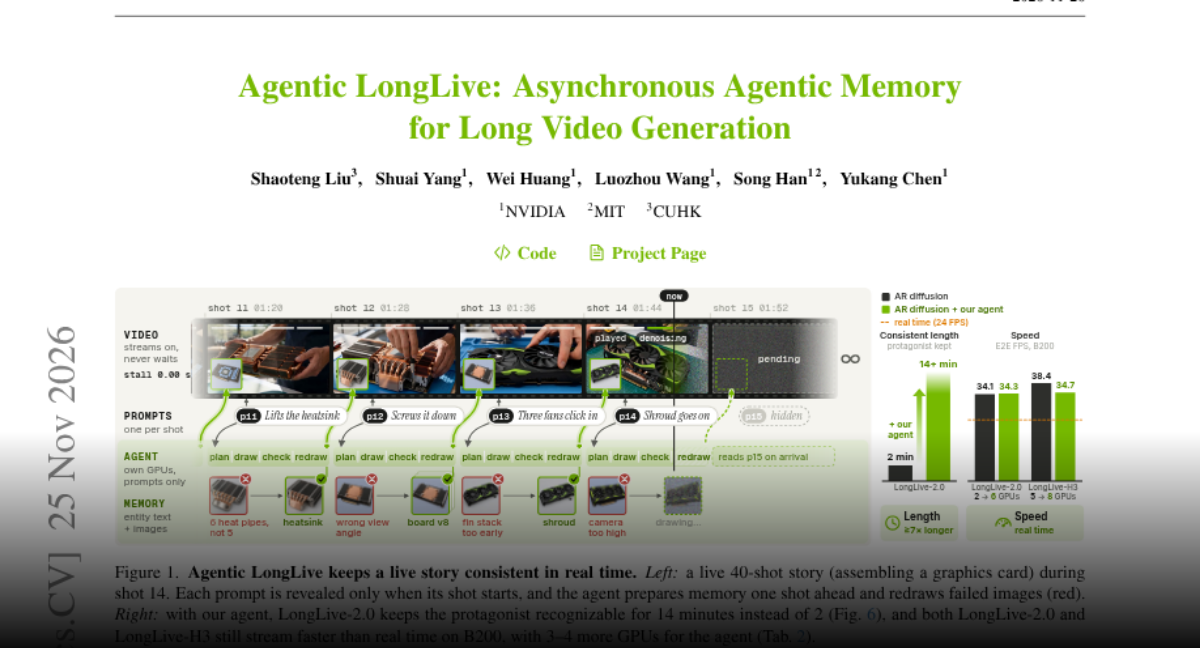
Agentic LongLive separates a memory agent from a real-time video generator, maintaining text and image state for people, objects and scenes without reading generated video back into memory. The authors report stronger identity and scene consistency on a 25-story benchmark, with about one percent additional generation time on H100. They also report real-time streaming on an eight-B200 node. The contribution addresses continuity across long interactive stories, with hardware requirements central to interpreting its efficiency.

02

SPLICE learns from agent rollouts that all fail

SPLICE learns from agent rollouts that all fail

SPLICE targets a failure mode in group-based reinforcement learning: when every long-horizon rollout fails, relative rewards offer no useful learning signal. A proposal model inserts bounded alternatives into current-policy trajectories, then evaluates them through learner continuations. The authors report gains of 2.8 to 9.8 percentage points over GRPO across software-engineering and deep-research settings. The approach seeks useful local supervision without requiring expensive complete solutions from a stronger model.

03

SPARC uses geometry to prune video attention and preserve scenes

SPARC uses geometry to prune video attention and preserve scenes

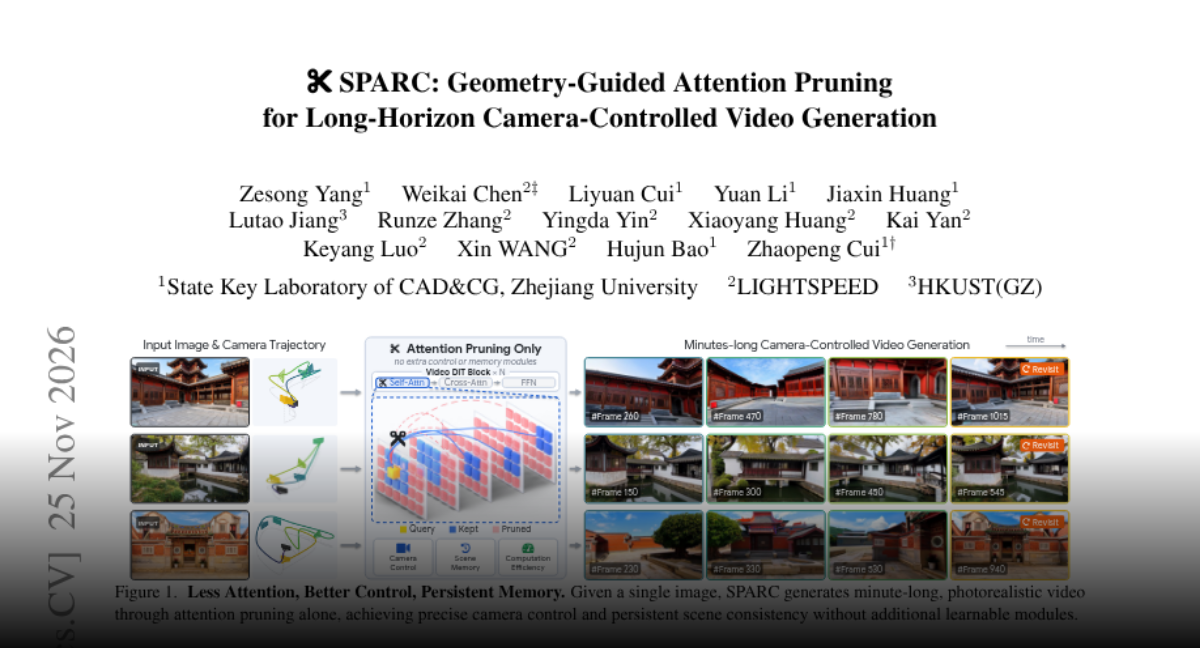
SPARC uses geometry-guided attention pruning to connect camera control with persistent scene memory in video diffusion transformers. Observed regions attend to corresponding historical tokens, while unseen regions retain dense attention for synthesis. The authors report improved camera adherence and scene revisitation without adding separate learnable control or memory modules. Their reported speedup exceeds fifty times when combined with four-step distillation, so that figure reflects the combined setup rather than pruning alone.

04

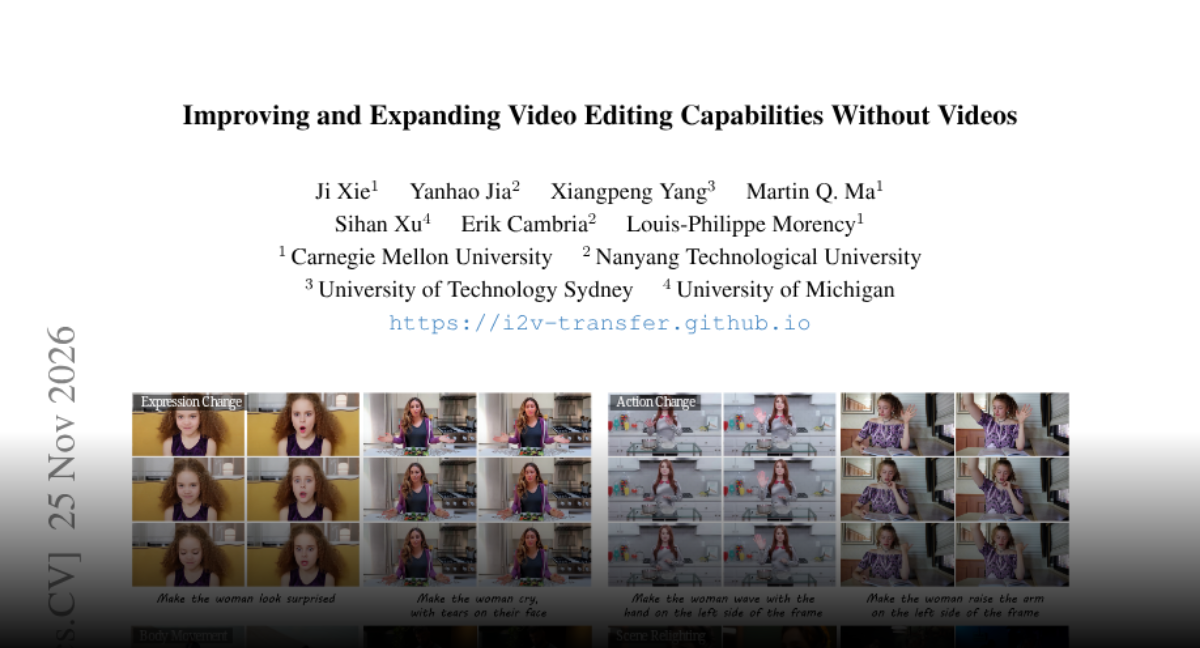
I2VT transfers image-editing skills to video without new videos

I2VT transfers image-editing skills to video without new videos

Image-to-Video Transfer trains a video editor to act on single images while an image editor guides its denoising predictions. The authors say this transfers richer editing capabilities without changing the architecture or collecting new paired videos. Their evaluation spans three video editors and an expanded benchmark covering action, expression, body movement and relighting edits. The approach is significant for reducing video training-data demands while attempting to preserve temporal consistency at inference.

05

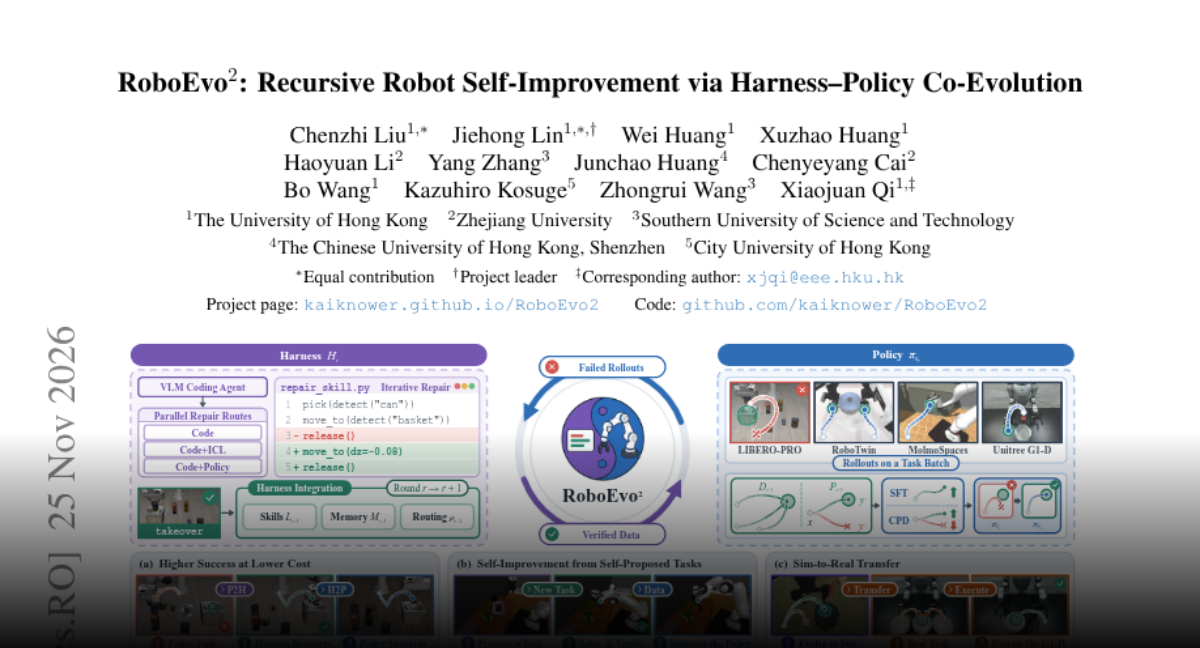
RoboEvo2 couples robot policies with evolving agent tools

RoboEvo2 couples robot policies with evolving agent tools

RoboEvo2 alternates between improving an agent harness from policy failures and training the policy on verified successful trajectories. Reusable skills, routing strategies and memory support the first direction, while supervised learning and preference distillation support the second. The authors report large gains on LIBERO-PRO without additional human demonstrations, plus tests on other robot settings. The work illustrates a feedback loop between deliberative problem solving and efficient control, with results tied to the evaluated environments.

06

CARE-OPD reduces the cost of training long-horizon agents

CARE-OPD reduces the cost of training long-horizon agents

CARE-OPD improves on-policy distillation by collecting histories that include student mistakes and allocating replay to consequential decisions. Confidence gating filters unreliable teacher responses, while downstream evidence determines which turns deserve more training. On SWE-bench Verified, the authors report 59.5 percent success with 45 percent less training time and 44 percent fewer environment actions than asynchronous online distillation. The result connects better coverage of agent behavior with more efficient use of expensive interaction data.

07

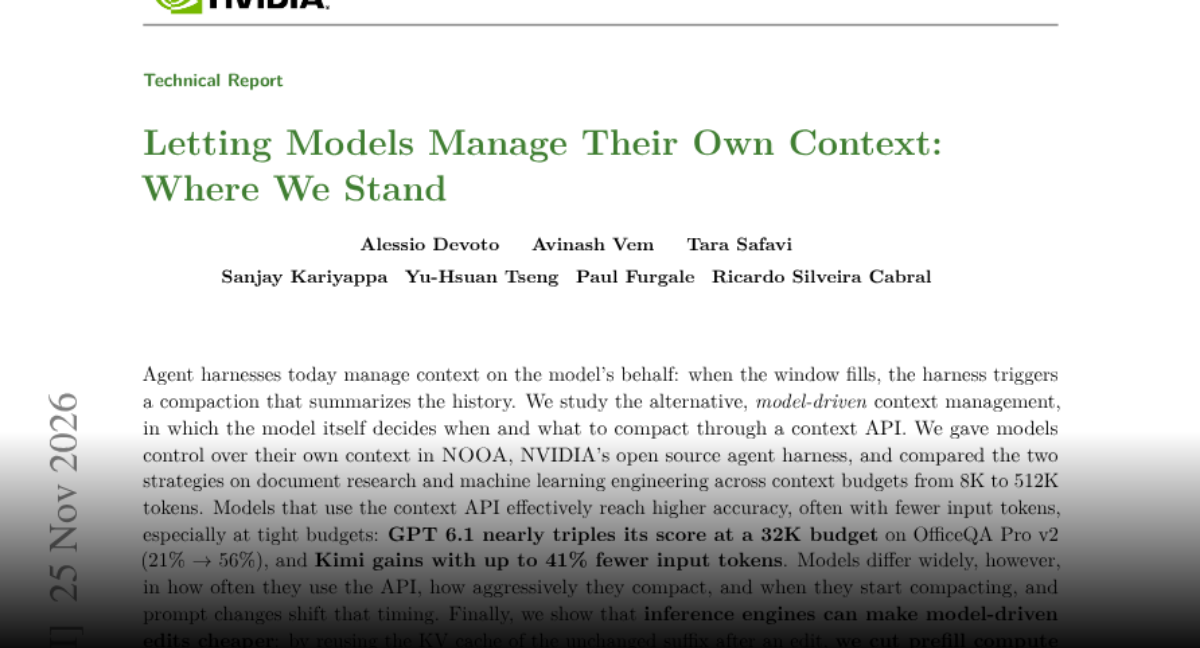
Models managing their own context show uneven but promising gains

Models managing their own context show uneven but promising gains

Researchers compared model-directed context editing with harness-triggered compaction across document research and machine-learning engineering tasks. Effective users of the context API achieved better accuracy, particularly under tight token budgets, but behavior differed substantially across models and prompts. The paper also reports that reusing unchanged suffix KV caches reduces prefill compute. Its central implication is that context management should be evaluated jointly with model training and serving-system support, rather than treated as a fixed summarization rule.

08

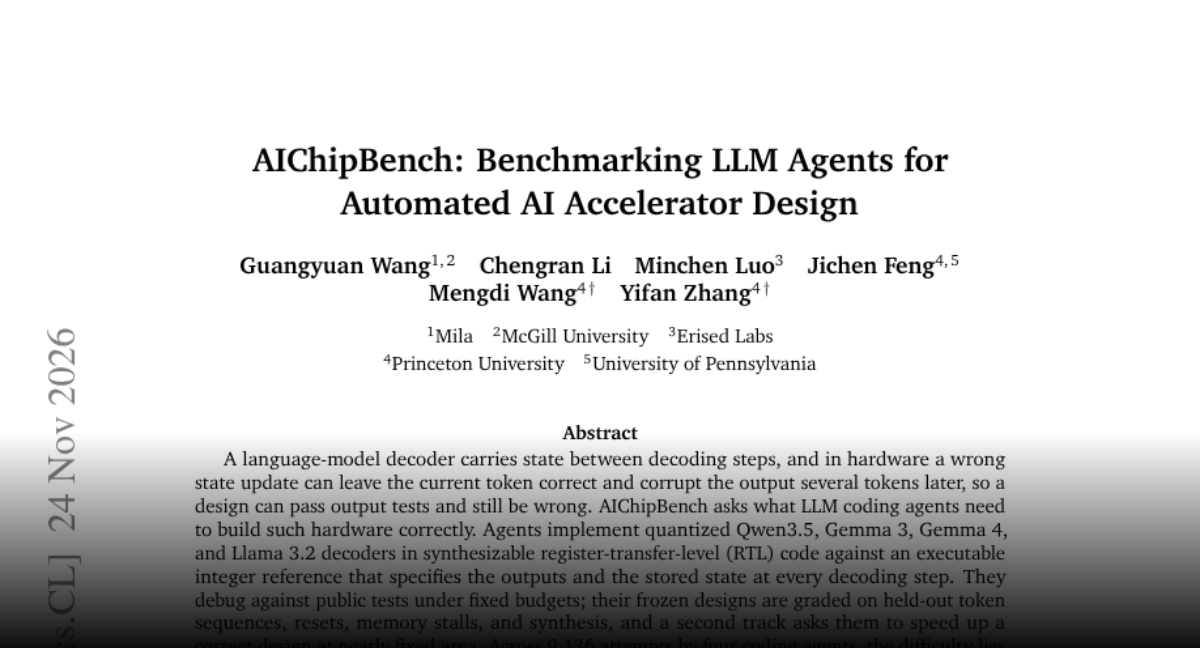
AIChipBench exposes hidden state errors in agent-designed hardware

AIChipBench exposes hidden state errors in agent-designed hardware

AIChipBench evaluates coding agents implementing language-model decoders in synthesizable hardware descriptions. It tests stored state as well as outputs, because a wrong update may only corrupt later tokens. Across thousands of attempts, the authors find that feedback identifying the first state mismatch improves acceptance substantially. Many previously accepted designs fail broader retesting. The benchmark emphasizes that passing development cases is insufficient evidence of correctness for stateful accelerator designs or subsequent performance optimizations.